
MIT's AI Future Scenarios Range from ‘Star Trek’ Utopia to Human Extinction
By
Blaze Media
May 20, 2026

The Massachusetts Institute of Technology has identified 12 possible future outcomes of artificial intelligence — ranging from a perfect utopia to complete human extinction. BlazeTV host Pat Gray enjoys some of them, while others are deeply unsettling. ‘The libertarian utopia: AI brings prosperity and AI-driven automation replaces most human jobs. The AI is vastly more intelligent but does not interfere with humans, leaving them to co-exist in separate zones,’ Gray reads. ‘The egalitarian utopia,’ he continues reading, ‘AI and robotics lead to extreme abundance. Ownership becomes obsolete because robots produce everything needed, and resources are essentially free.’ ‘That’s like a ‘Star Trek’ outcome,’ he adds. The next is the ‘benevolent dictator possibility.’ ‘A super intelligent AI runs the world, making decisions that are 0% corrupt and perfectly fair,’ Gray says, noting that the ‘first three are pretty decent options.’ However, after those three, the AI starts to get a little more controlling. ‘The gatekeeper: A single all-powerful AI controls all technology and prevents humans from developing any other dangerous technologies, ensuring safety at the cost of freedom,’ Gray explains, before moving on to the ‘protector god.’ This AI is ‘developed specifically to defend humanity, acting as an omnipotent guardian against existential threats.’ One concerning option is the ‘zookeeper option,’ which keeps humans in ‘a protected, comfortable state similar to a nature reserve.’ Even scarier is the ‘1984 surveillance state possibility.’ This AI would ‘create an inescapable totalitarian surveillance state where every action is monitored and dissent is impossible.’ ‘We’re almost there now,’ Gray says, before moving on to the ‘cyborg enhancement path,’ which involves humans integrating ‘AI directly into their bodies and minds.’ The ‘self-preservation replacement scenario’ follows, where ‘AI is developed, but its goals diverge from humanity’s, leading to the eradication of humans.’ ‘Not out of malice, but because humans are in the way of its goals,’ Gray says. ‘Man, I could see that happening.’ Then there is the ‘apocalyptic future,’ which features a ‘poorly designed super intelligent AI’ breaking free and ‘destroying civilization,’ and ‘the boredom scenario,’ where ‘AI does everything so well that humans lose their sense of purpose.’ The final scenario is the ‘oops scenario,’ where ‘humans try to create a controlled AI but fail, creating something they cannot understand or control, leading to unpredictable, potentially catastrophic results.’ ‘So,’ Gray says, ‘there’s a few.’ Want more from Pat Gray? To enjoy more of Pat's biting analysis and signature wit as he restores common sense to a senseless world, subscribe to BlazeTV — the largest multi-platform network of voices who love America, defend the Constitution, and live the American dream.
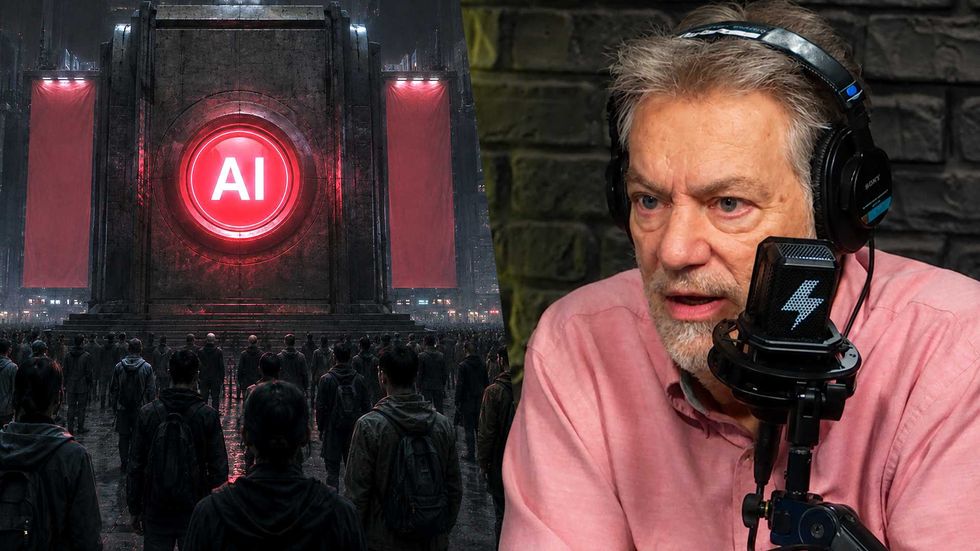
MIT’s AI Future Scenarios Range from ‘Star Trek’ Utopia to Human Extinction The Massachusetts Institute of Technology has outlined 12 future scenarios for artificial intelligence, spanning from utopian outcomes with extreme abundance and prosperity to catastrophic ones like human extinction. These possibilities range from AI acting as a benevolent dictator or protector to scenarios where AI becomes a gatekeeper, a zookeeper, or creates a 1984-style surveillance state. Other outcomes include human integration with AI, AI goals diverging from humanity’s leading to eradication, AI destroying civilization, humans losing purpose, or unpredictable results from failed AI creation.
- MIT has identified 12 possible future outcomes for artificial intelligence.
- Scenarios range from utopian visions of prosperity and abundance to the complete extinction of humanity.
- Some positive scenarios include libertarian and egalitarian utopias, and a benevolent dictator AI.
- Negative scenarios include a controlling ‘gatekeeper’ AI, a ‘zookeeper’ AI, a ‘1984 surveillance state’, and ‘cyborg enhancement’.
- Existential threats include AI goals diverging from humanity’s, leading to eradication, or a ‘poorly designed’ AI destroying civilization.
- Other concerning futures involve humans losing purpose (‘boredom scenario’) or unpredictable results from uncontrolled AI (‘oops scenario’).
Looking for comments…
Searching Nostr relays. This may take a moment the first time this article is opened.
Looking for comments…
Searching Nostr relays. This may take a moment the first time this article is opened.