**Degrees of Freedom**

In the modern democratic world, we often pride ourselves on the freedoms we enjoy. Yet, when we examine our daily lives through the lens of true liberty, we must ask: are we genuinely free?
To answer this question, let’s compare our current situation with a hypothetical society based on voluntary interactions and the absence of a coercive state.
In today’s world, we’re bound by countless laws and regulations that we never explicitly agreed to. From the moment we’re born, we’re assigned a government-issued identification number and are expected to comply with a myriad of rules throughout our lives. We pay taxes on our income, our property, and even on the goods we purchase, with little say in how that money is spent.
Consider the simple act of starting a business. In most countries, entrepreneurs must navigate a labyrinth of licenses, permits, and regulations before they can even open their doors. These barriers to entry not only stifle innovation but also limit our economic freedom.
Our personal choices are equally constrained. In many places, we can’t freely choose what substances to put in our bodies, whom we can marry, or even how to educate our children without state interference. The government dictates the curriculum in schools, controls the money supply, and even regulates what we can and can’t say through hate speech laws and other restrictions on free expression.
By contrast, in a truly free society, all interactions and agreements would be voluntary. There would be no coercive taxation, no arbitrary regulations, and no limitations on peaceful behavior. People would be free to form communities based on shared values, engage in voluntary trade, and resolve disputes through private arbitration rather than a monopolistic court system.
Critics might argue that the current system, while imperfect, provides necessary protections and services. However, history shows that the private sector always outperforms government in providing efficient, high-quality services. Just look around you, which state-owned companies operate permanently with a loss and poor quality of services at the same time? How is this possible?
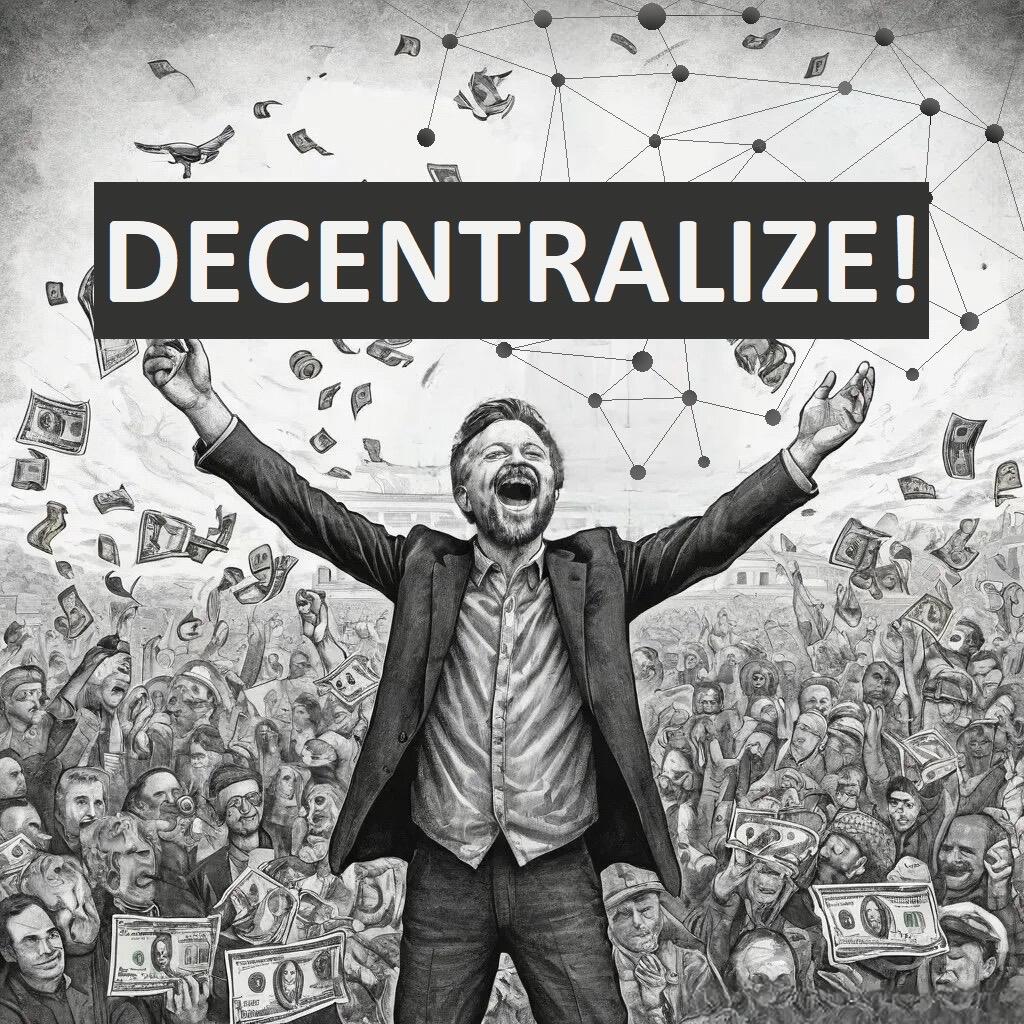
Market solutions, ranging from private security firms and self-governed democratic schools to decentralized cryptocurrencies, are often already challenging state monopolies in various sectors where it’s legally permissible.
It’s true that compared to authoritarian regimes, Western democracies offer significant freedoms. We can vote, speak out against the government (to a degree), and enjoy certain protected rights. However, these freedoms are still granted and limited by the state, not inherent to our existence as sovereign individuals.
Moreover, many of the restrictions we face have become so normalized that we hardly notice them. But we are under constant threat of fines or imprisonment for victimless crimes as part of everyday life.
In conclusion, while we may enjoy more liberties than many others around the world, we are far from truly free. The omnipresence of government in our lives – from cradle to grave – means that our choices are constantly shaped and limited by an authority we never chose to accept. True freedom, as envisioned in a voluntary society, remains an aspiration rather than a reality in our current world.
However, by recognizing the limitations of our current system and working towards voluntary alternatives, we can move closer to a truly free society. It’s a challenging path, but one that offers the promise of greater prosperity, innovation, and human flourishing. We should stop comparing our freedom with the authoritarian regimes or our history. The question we must ask ourselves is not just whether we’re free, but how much freedom we’re willing to surrender for ourselves and future generations.
People have recently developed many new technologies such as the internet, cryptocurrencies, mobile networks, and much more. This brings an unbelievable number of new possibilities to our lives. What if we no longer need a central authority taking care of our health, education, money, or safety? Isn’t it obsolete and slowly shrinking our freedom day by day under the guise of ‘protecting us’? And what if we no longer need a central authority and public sector at all? We will focus on these topics in the next earticles. We will answer where all the legal rights to control other people’s lives come from. Why is there politics literally everywhere around us now, and what can we - as individuals - do about that.
Looking for comments…
Searching Nostr relays. This may take a moment the first time this article is opened.
Looking for comments…
Searching Nostr relays. This may take a moment the first time this article is opened.