Inside the $200 Billion Mormon Empire. (full documentary)
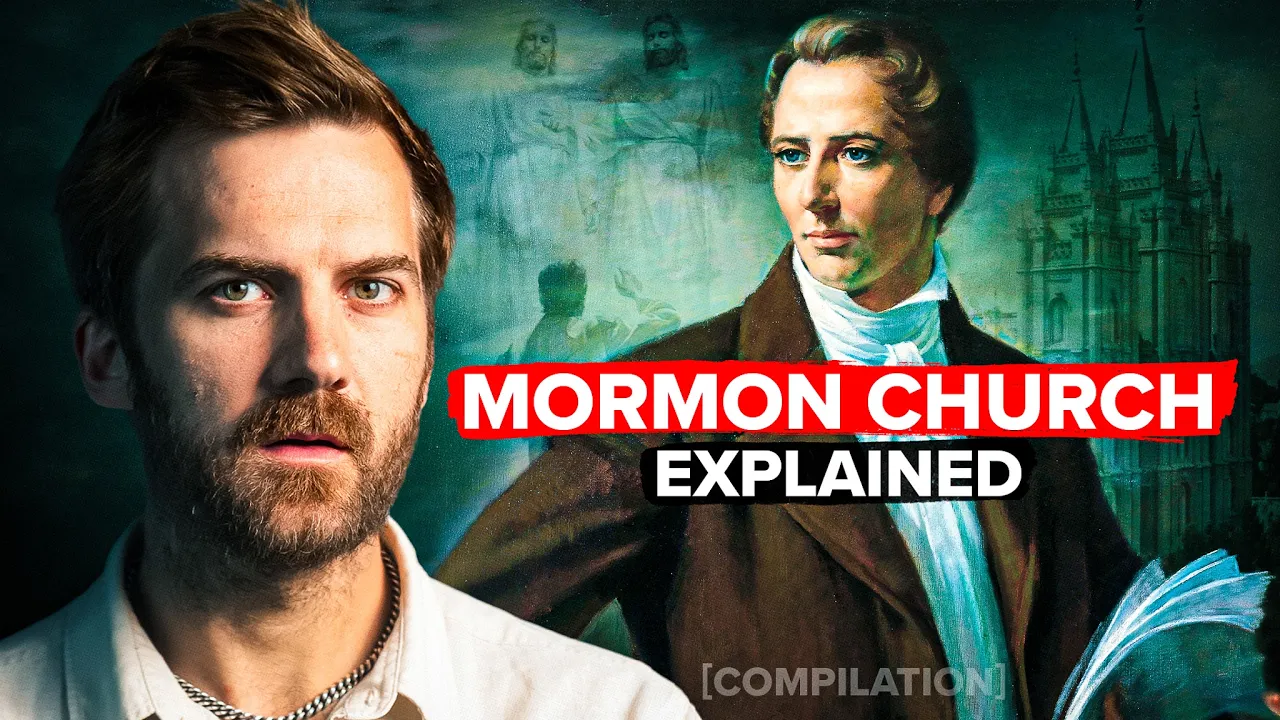
Source: Inside the $200 Billion Mormon Empire. (full documentary) Channel: Johnny Harris Published: May 23, 2026 | Archived: May 29, 2026
Video: Inside the $200 Billion Mormon Empire. (full documentary)
Channel: Johnny Harris
Published: May 23, 2026
Duration: 2:10:07
Views: 384,445
Category: Education
Video ID: Pc6sCGS6Jfc
Description
Compilation: The story of the Mormon Church episodes 1-3 Get $20 off your first order at http://cometeer.com/johnnyharris I’ve made three mini docs about the history of the LDS church, a lot of people were finding them in isolation so we decided to put them together.
Check out all my sources for this video here: https://docs.google.com/document/d/1j3_N2gXrSHflYDlVMZKtx-iMmp3pIKFm9wJeGR22tQg/edit?usp=sharing
I’ve been on a years-long journey to understand the Mormon Church I grew up in. This compilation begins with the organization’s origins in upstate New York, explains the wild story of how the Mormons created Utah, and ends with how the church became an almost $300 billion global empire. This is the story of both a unique religious institution, and of my own experience being shaped by that system and wrestling with its teachings.
Join Newpress, our community-driven hub for creator journalism: https://newpress.com/go
MORE CHANNELS: Check out my new channel with Max Fisher - The Bigger Picture: https://www.youtube.com/@maxfisher
Check out my channel with Christophe Haubursin - Tunnel Vision https://www.youtube.com/@christophe
Check out my channel with Sam Ellis - Search Party https://youtube.com/@SearchParty
Original music for this video was composed by Tom Fox.
Do you have an insider tip or unique information on a story? Do you have a suggestion for a story you want us to cover? Submit to the Tip Line: https://docs.google.com/forms/d/e/1FAIpQLSdpNs1ykIwd7KNkwntN897X_SX9hJ8WiTH_erlLU_bQp2GGLg/viewform?usp=sharing
-- VIDEO CHAPTERS – 0:00 The REAL Story of the Mormon Church 38:18 The WILD Story of How the Mormons Created Utah 1:11:39 How the Mormon Church Made $293 Billion
About: Johnny Harris is an Emmy-winning independent journalist and contributor to the New York Times. Based in Washington, DC, Harris reports on interesting trends and stories domestically and around the globe, publishing to his audience of over 5 million on Youtube. Harris produced and hosted the twice Emmy-nominated series Borders for Vox Media. His visual style blends motion graphics with cinematic videography to create content that explains complex issues in relatable ways.
- press -
NYTimes: https://www.nytimes.com/2021/11/09/opinion/democrats-blue-states-legislation.html NYTimes: https://www.nytimes.com/video/opinion/100000007358968/covid-pandemic-us-response.html Vox Borders: https://www.youtube.com/watch?v=hLrFyjGZ9NU NPR Planet Money: https://www.npr.org/transcripts/1072164745
- where to find me -
Instagram: https://www.instagram.com/johnny.harris/ Tiktok: https://www.tiktok.com/@johnny.harris Facebook: https://www.facebook.com/JohnnyHarrisVox
Tags
Johnny Harris Johnny Harris Vox Vox Borders Johnny Harris Vox Borders Vox politics journalism news geopolitics search party tunnel vision sam ellis christophe haubursin Correlation Mormon Correlation Mormon Finances David O. Mckay Eldon Tanner President Mckay Utah Mormonism Migration New Migration Deseret US government Salt Lake beehive Mormons Joseph Smith Religion Prophet LDS Latter Day Saints Pioneers Wilfred Woodruff Brigham Young missionary Temple
Transcript — YouTube panel (human-authored)
0:00 (relaxed music) - [Johnny] Joseph Smith. He’s someone I know well. He’s the author of a worldview that I held for most of my life. I taught it to hundreds of people when I was a missionary. What are we even doing out here? It’s a religion and a gospel that I deeply believed in, one full of hope and meaning and community and unique stories, stories about where we came from and where we’re going. Let me show you what Joseph Smith built and how he did it.
0:33 (anticipatory music) How a non-religious, uneducated kid in upstate New York created a global movement that would gather huge numbers of followers in a very short time and who were pushed out from town to town, often with violence. I want to show you how these people held onto the vision and mission that Joseph Smith taught, the building of a new utopian society, one founded on celestial laws, one that was preparing for the end of the world and the Second Coming of Jesus Christ.
1:06 So let me tell you the story of Joseph Smith, the church he built and how that church and its mission still exists today. (film reel clicks) It’s okay. Because we’re missionaries and everyone’s happy. (relaxed music) Joseph Smith was born in the perfect place at the perfect time. It was the early 1800s and the US had just thrown off England to become a new country and it was going through some massive growing pains.
1:38 Most of these new Americans who had just left the Old World rejected a lot of Old World things, namely religion. Only 10% of white Americans regularly attended church at this time. So to help revive God, you have all these super charismatic preachers who left the cities and went out to the countryside to preach and this led to an explosion of religious thought, especially in upstate New York.
2:00 So now you have all these like hyper-reformist religions that were replacing old style authoritarian-type churches. All these new, wild religious flavors that were more emotional, expressive and personal. I mean, none of us were alive at this time but you can kind of imagine like this brand new country founded on these new ideals. It was unprecedented times. America felt special and different, but also kind of scary.
2:25 Revolution in the New World, new science, magical technology, new ideas, both wholesome and sinful, all of it speeding up at an increasing rate. (anxious rising music) For a lot of people, this was a sign, a sign that the end of the world was coming and that Jesus, like He prophesied, would come back to usher in this thousand years of glory for those who believed in Him and a thousand years of fire for those who didn’t. This was called the Millennium.
2:52 So a lot of these new churches that were cropping up kind of claimed to be the place that was preparing the Earth for the Second Coming, like they were God’s chosen administrators on the Earth in the final days before it all ended. It was scary, it was exciting and God was talking to people again in new ways. And this is the context that Joseph Smith was born into in 1805, born to a mother who was swept up in the excitement of all these new religions and a father who wasn’t really religious at all.
3:20 It was kind of, like a lot of people at the time, a family that was religiously lost, but not for long. In addition to being a frothy religious environment, upstate New York was also a place where people hunted for treasure. There was this culture of folk magic and legends that led to the search for riches and jewels that were potentially buried by Spanish explorers or pirates of the past or artifacts that were hidden in Native American burial mounds and their methods for hunting for all this treasure were mystical and magical.
3:54 They used seer stones, crystals, rods, visions through dreams, all of this to help them locate buried treasure and young Joseph Smith was very caught up in this treasure hunting craze. He wasn’t educated, he barely had any schooling. He could kind of read and write. He wasn’t religious but from a young age, he showed himself as a skilled treasure hunter. I mean, let’s keep some perspective.
4:20 In all of our research, we didn’t find a single like document showing that he actually found any treasure but he managed to convey to the people around him that he was an expert treasure hunter using mythical methods. So this is the context that you need to know to really understand this story. We’re in upstate New York in the early 1800s. There is this frenzy of folk magic and treasure hunting and the place is ablaze with religious fervor and there’s talk of the Last Days and the Millennium of fire and glory that was coming any day now.
4:49 But the story really begins in the spring of 1820. (birds chirping) (soft music) Joseph, a 14-year-old boy, gets curious about religion and after visiting a bunch of churches and finding no answers, he decides to go into a grove of trees to ask God which church was true. This movie that we’re watching right now I know by heart because I’ve watched it hundreds of times, of course dubbed in Spanish.
5:20 I was a missionary in Tijuana and the first thing that I would teach people was this story and I would often show them this movie. - [Joseph] I kneeled down and began to offer up the desires of my heart. - [Johnny] So Joseph Smith is in this grove and he’s praying and after a run-in with the Devil. - [Joseph] Exerting all my strength to call upon God. (dramatic music) - He sees a pillar of light brighter than the sun directly over his head and within that light, he sees two people whose brightness defy all description and he finds out that it’s God the Father and His Son Jesus Christ and Jesus goes on to tell him that none of the churches that he’s been investigating are true and that instead, Joseph is being called to do the work of God, to restore the real true church that had been lost from the Earth, to restore this church to prepare the world for the Second Coming of Jesus and the Millennium that He will usher in.
6:26 This event is referred to as the First Vision and it is the founding story of the LDS Church, the Mormon Church, like most people know it. As a member of the Church, from a very young age, you learn this story, you sing about it, you talk about it, you study it and every few years, the church comes out with a new video version representing the First Vision. (soft anticipatory music) Okay, so this is just the beginning.
6:51 A few years go by, Joseph doesn’t tell anyone about his vision but by 1823, Joseph is a late teenager and one night, he’s sleeping in his like little humble cabin with his family and he says that an angel appears to him. The angel is named Moroni. By the way, if you ever see a Mormon temple, big white building, you will see a depiction of the angel Moroni on the top of that temple with a trumpet pointing east.
7:14 But for now, he’s an angel in Joseph Smith’s room telling young Joseph that yes, the Second Coming of Christ is right around the corner and that yes, just like God and Jesus told him a few years ago, he has been called to prepare the world for the Second Coming. And if that wasn’t enough, Moroni tells him that there is a book that is written on golden plates that is buried in a hill near Joseph’s house.
7:37 The book is an important record of a group of Jews who left Jerusalem in 600 BC and came to the Americas. Anyway, I’ll explain that in just a second. And don’t worry, says Moroni, along with the plates, there’s the gear you need to translate these plates into English. Joseph just needs to get a bit older and he’ll be ready to translate the plates. At this point, Joseph tells his family what’s been happening and they believe him.
7:59 So by the time he’s 21, he’s instructed to go to the Hill Cumorah near his house and get the plates. Okay, so now Joseph Smith in his 20s, he’s this uneducated, unreligious treasure hunter and he starts to focus in on something totally new. In the words of one believing Mormon historian, Richard Bushman, he starts to orient himself away from treasure and towards translation. He’s becoming a prophet.
8:25 (mysterious music) So Joseph says he goes and gets these plates and people try to rob him but eventually he gets them secured and in a little cabin in rural New York, Joseph begins the work of translating this stack of metal plates that no one else is allowed to see. (relaxed music) He would sit on one side of a curtain so that no one else could see and he says he looked through these stones at the Egyptian engravings on these golden plates and they would turn into English and then he would dictate them out loud to as scribe, sometimes his wife or other early believers who were supporting him and that scribe would write them down.
9:09 At other points, Joseph didn’t even need the plates to translate. He could hide them somewhere else and he would use his personal seer stone, the one that he used back when he was just a treasure hunter before he says he was called as a prophet. This little chocolate-colored egg-shaped stone, he would put it into a hat and then he would bury his face in the hat and he said that the stone would light up with the word that he was supposed to dictate to his scribe.
9:31 His scribe would write it down and the Book of Mormon was being written. Now listen, all of this seems really weird and wild to us now very easily. Like, “Okay, clearly this guy’s making it up” but at the time, mystical visions and treasure hunting and seer stones, this was all very normal in society. Folk magic, Native American artifacts, none of this was very fringe and Joseph, Joseph had been doing stuff like this for a decade, which is why his parents and other people in his community supported him.
9:58 The difference though at this time is that he was blending his treasure hunting skills and his folk magic sensibilities with this religious revival that was happening at the time to create something kind of unique. (birds chirping) So anyway, he’s in his early 20s, he’s translating the Book of Mormon. He faces a bunch of ups and downs, he goes through a few scribes and after a very productive 90-day window, 24-year-old, barely-educated Joseph Smith finishes dictating 588 pages of text that would become the Book of Mormon.
10:30 (birds chirping) Joseph says that he gives the plates back to Moroni and then takes the manuscript of the pages to a printer. That’s how we have the Book of Mormon. This is my Book of Mormon. (pages rustling) Maps, my early exposure to maps. So the Book of Mormon is incredibly important to this story because it was the main validator for Joseph Smith in those early days and continues to be a foundational part for believers in the LDS faith.
11:03 That’s because Joseph Smith wasn’t religious or educated and now suddenly he’s writing this Bible-like book in a few months? And yes, this book is definitely full of a lot of like full blown copy-and-paste jobs from like the Bible. But there’s also like a lot of really compelling stuff in here in terms of religious lessons, complex histories, nods back to like an understanding of Hebrew language and culture.
11:30 This is not the type of guy that his town saw him as. He was a treasure hunter and a farm kid, not a religious man and definitely not a prophet. - [Woman] Mr. Smith, could you tell me more about that book? - Yes, yes I could. - Okay, so let’s be clear on what Joseph Smith said the Book of Mormon is. It’s not what a lot of people say, which is like the Mormon Bible. The book tells the story of a group of Jews in Jerusalem in around 600 BC. They’re told to leave the city before it gets destroyed.
11:58 So they leave the city, they walk in the desert for awhile, probably ‘til like Oman is what a lot of Mormons think and then they build a boat and travel across the ocean for a very long time until they reach the Americas, somewhere in like North, Central or South America. The foundation of the story is about these brothers of the original family who like eventually split off and they like hate each other and they grow up into these two different civilizations, the Nephites and the Lamanites who are always fighting with each other and there’s all these prophets and there’s all this drama that happens.
12:27 And the introduction to my Book of Mormon says the Lamanites, these people who came over from Jerusalem, are quote, “the principle ancestors of the American Indians.” And a few years ago, they did change that to the Lamanites being “among the ancestors of the American Indians.” But yeah, the point is that the Book of Mormon is a history of these Jews turned indigenous Americans and unsurprisingly, there’s a whole community of believers who work to validate that this is actually a historic record.
13:00 But no, in reality, there’s no archeological, genetic or linguistic evidence that supports the Book of Mormon’s assertion that Jewish people migrated to the Americas around 600 BC. For believers, the most important part of this book is the climax of the whole thing where in 33 AD, Jesus, having recently been crucified over in the Old World in Jerusalem, gets resurrected over there and comes to visit the people in America, which is where this painting came from.
13:29 This is a painting that is hanging in a lot of LDS churches. It shows Jesus Christ among the ancient civilizations of the Americas. Yeah, some pretty wild stories. (birds chirping) So yeah, I know we’re all over the place and we’ll get back to Joseph Smith’s life for a second. But as someone who has read this book dozens of times, I can tell you that when you’re a believer, this is a really compelling piece of work.
14:00 You can read these pages, you can read about the stories and the lessons and the metaphors and you can take a lot from it and the biggest thing that you take from it is that it is proof that Joseph Smith was actually called of God to prepare the world for the Second Coming, that he was a legitimate prophet. So Joseph Smith by 1830 has the Book of Mormon, he has proof that he’s a prophet and he starts to gain followers, followers that believe him and a group of those followers get together in April of 1830 in a little house in Fayette, New York and they start a church.
14:36 At this point, Joseph Smith is behaving like a full blown prophet. He says he’s getting almost daily communication from Jesus and he starts to develop a theology that is unlike anything else on offer. (soft music) It turns out that God is actually a man with a body of flesh and bone and He has a wife. God lives near a star that’s far away and we, all of us here on Earth, are these little eternal balls of light called intelligences but our heavenly parents have birthed us into spiritual children and then they sent us down onto this Earth to get a physical body.
15:18 To get married, to create an earthly family, to learn and to grow so that someday, we can return to live with God with our families and then we can become like God with our spouses. We can create our own spiritual families in some other part of the universe. But in order to do that, we have to pass some tests here on Earth. We have to complete certain rituals and demonstrate obedience to Him and in order to make this all happen, He needs to set up a church.
15:50 The church needs to have proper authority and there would need to be a savior that would come down to account for all of our sins so that we can be pure to enter the Kingdom of God again. Luckily, one of our spiritual brothers named Jehovah, later called Jesus, volunteered to be this savior. Okay, but there’s a big problem, which is that God’s children are super rebellious. So over the years, God calls prophets to organize His church with the proper authority and to do all of these special rituals to teach them about Jesus and eventually, that truth gets eroded and it fades away and the world falls into apostasy until it’s ready again when God calls another prophet to restore His authority and start the whole process over again. This happens over and over until eventually, Jesus came.
16:39 He was like the sixth prophet. He establishes His church, calls His prophets and apostles, gives them the authority by putting His hands on their head and then of course, He suffers for our sins and dies on the cross. But just like has happened over and over, Jesus’ church got corrupted and it got mixed with power and politics and the world fell back into the apostasy. This one’s called the Great Apostasy. But eventually, the world would be coming to an end.
17:06 Jesus would be coming soon and things were about to get really bad. So God helped Europeans come across the ocean to take over North America, colonize the land and create a country that had freedom of religion all so that a few decades later, Joseph Smith could be born and then called to restore His church and that’s how we get to the First Vision. Jesus and Heavenly Father appearing to Joseph Smith in a grove, sending angels to him to tell him where to get the golden plates and to solve for the whole authority thing, Joseph says that the apostles, the original apostles of Jesus Christ came to him to restore the authority, the priesthood that Jesus had given them.
17:45 So now he could establish his church. There was a Restoration. Joseph was the prophet of a newly restored church that he could talk to God, he could get instruction on exactly how to run God’s Kingdom here on Earth to prepare the world for the Millennium. (relaxed electronic music) Okay, that was a lot and let me just say, that was a very summarized version of LDS theology. Someday, I’d like to make a video about the details because it’s actually super complex and super wild.
18:15 The point I’m trying to make here is that Joseph Smith’s church did indeed have a lot of the ingredients of the religious movements of the time. Last Days, Apocalypse, preparing God’s Kingdom on the Earth, preparing for the Millennium, this was all trending at the time. This was not surprising. But a lot of this stuff was totally new, wild, fringe doctrine. God has a body and a wife?
18:38 This was a completely wild blend of Jewish mysticism, American folk magic, reincarnation, evangelical Christianity and eventually he even wove in Freemasonry. A totally fresh thing. There was nothing quite like it. It was super unique and super potent and super polarizing. You either believed that Joseph Smith was an incredibly inspired prophet who was like revealing the truth that none of us had ever heard before or he was just a brilliant, creative visionary inventing this elaborate plan to dupe people, which is what a lot of people in his village started to think as he started to gain followers.
19:16 They had him arrested, calling him a disorderly person. He eventually gets released and he realizes that he and his few members need to leave. (dramatic organ music) This begins the long journey of the Mormons moving West. Joseph and his followers set out. He’s now talking to God directly all of the time and he says that the Lord is telling him to go to Ohio to await instructions for their actual final destination, the place that they’re actually gonna set up their new city, their Millennial Kingdom, this communal utopian society that would be the base for preparing the world for the Second Coming of Jesus.
19:55 They would call it Zion and this is the most important part of the entire story, Zion. If you want to understand Joseph Smith and if you want to understand the rest of the Latter-day Saints movement including modern Mormonism, you have to understand Zion. (dramatic organ music) Joseph says that the Lord is telling him that He will give him the exact location of Zion and He tells him that it will be, quote, “On the borders by the Lamanites.”
20:28 Remember that the Lamanites are the American Indians and so this actually works perfectly because at this time, the US government is ethnically cleansing North America and pushing first Americans West. So there’s a lot of territory where white settlers are butting up against Native Americans. Zion’s gonna be somewhere around here. So Joseph and his followers are now in Ohio and they are growing.
20:52 People love this story and the concept of Zion transitions from this sort of vague, idealistic idea to a very solid plan. A new society called the New Jerusalem, the New Jerusalem from the prophecies of old and it literally became a plan. Like he actually starts to sketch it on paper. (soft music) We got these digital scans of Joseph Smith’s sketches of Zion. He writes in extreme detail on exactly what this city will be.
21:27 This whole thing was based on these gridded streets, on perfectly parceled plots on no more than one square mile of land. Joseph writes that the homes should be 25 feet from the street to leave room for a yard and plant gardens. All the houses were to be brick or brick and stone and there should be farms all around this city that aren’t too far. The central streets of this city nod to Joseph’s love for Jewish history and culture.
21:53 Zion Street, Jerusalem Street, Bethlehem Street, with the temple in the center of the city. Spoiler alert, this is how Salt Lake City and a lot of cities in Utah are actually designed but that’s for Part Two. I mean, what this shows is that Joseph was taking this idea of God’s restored Kingdom on Earth totally literally and it was gonna be hyper-progressive. A new communal society where everyone would share with one another, the resources would be shared and the whole thing would be governed by celestial laws and governmental structures.
22:23 A new government run by the prophet where God could talk to His people while He prepared the world for its end. Zion was a vision that Joseph was uniquely good at rallying around. Charismatic and creative leader, prolific and inspiring, his followers became deeply dedicated to this mission of establishing Zion and it becomes the main calling card for new converts. Joseph Smith’s Millennial Kingdom is the place to be when the world ends and the world’s ending any day now.
22:52 (light electronic music) So the Church is growing in Ohio. They still don’t know where the final location of Zion is gonna be and meanwhile, Joseph is getting more and more and more of these revelations and he’s pushing the belief system of Mormonism further and further from mainstream Christianity. Joseph comes out and says there actually is no Heaven and Hell, but rather there are three kingdoms of Heaven.
23:15 All of us will be sorted into these different kingdoms depending on how obedient we were here on Earth, how much we accepted Christ and repented of our sins. There’s even a spiritual prison and paradise that you go to after you die but before you’re sorted into the kingdoms. In order to get to the highest degree of kingdom, the Celestial Kingdom, you have to be married by the proper authority that will seal you to you and your family forever and soon, Joseph says that more angels are appearing to him to give him the authority to do this sealing thing.
23:45 Family is becoming core to Mormon theology. But the good times don’t last. The locals in Ohio and their government don’t love this vision of a new religious society. The flocks of new members of the Church arriving to this super well-organized, efficient, unified group of people led by this charismatic prophet who has more and more fringe beliefs. One night, Joseph is violently dragged from his home by a mob. He’s covered in tar and feathers.
24:19 They’re telling him to leave and he does. Luckily, one of Joseph’s missionaries and former scribes, Oliver Cowdery, had been out scouting where Zion should be, where the Millennial Kingdom should be set up and he comes back and says he found the place, Jackson County, Missouri, 800 miles away. Indeed, and just as the Lord said, right on the border with the Lamanites. This would be Zion, the Lord tells Joseph.
24:45 The place where He has appointed for the gathering of the saints and now there’s a revelation from the Lord saying that all of this land in Independence, Missouri should be purchased by the saints. Buy up as much land as you can, this is Zion. Oh, and it is revealed to Joseph that this area, Independence, Missouri, Jackson County, Missouri, is right next to the original Garden of Eden, like where Adam and Eve, the first people were.
25:11 It turns out that Missouri is like the holy land. The epicenter for the end of the world and the Garden of Eden is in Missouri. (relaxed music) So Mormons start buying up land and they start moving to Missouri and they did this quickly. This wasn’t theoretical. They thought that the Second Coming was like weeks or months or just maybe a few years away. Martin Harris, one of the early converts, asserted that quote, “In four years, every religion in the US would be broken down and all would become Mormon and that the rest of the human race would just perish.” And then he was so confident that he said that if it didn’t happen, he would cut off his own hands.
25:47 I mean, they were serious about building Zion in Missouri and quick. Okay, but not so fast. The locals like are not into this. They hear about this swarm of Mormons coming to their county who want to turn their city into a new religious, communal society and prepare for the Apocalypse and now they’re arriving by the thousands, which means they will have more political power soon.
26:12 They start to get scared that the Mormons are plotting a takeover of their private property all in the name of building Zion and they’re not gonna stand for it. They want the Mormons out. So they start sabotaging them with violence, vandalizing their stores, destroying their homes, assaulting Mormon leaders. It gets really violent and at first, Joseph tells his followers to not fight back and once again, the Mormons are driven out.
26:38 (relaxed music) The next five years are years of conflict for Joseph and his growing church. They’re on the move all over the Midwest. At each stop, facing violent resistance from local residents and government officials. So Joseph and his followers are done being passive. They start fighting back and it escalates into basically a full-blown war. The Governor of Missouri issues a literal extermination order, saying quote, “The Mormons must be treated as enemies and must be exterminated or driven from the state if necessary for public peace.” It’s getting really bad.
27:12 So they flee once more to Illinois where the government, who includes a young lawmaker named Abraham Lincoln, gives them a special charter to create a city and a government that is fit for their unique Zion principles. They call this city Nauvoo, Hebrew for “beautiful” or “beautiful place.” (relaxed music) Okay, so even though the Lord had said to Joseph that He had prepared Missouri to be the place for Zion, the saints were gonna have to settle for Illinois for now and they feel safe, protected by this charter and they start creating Zion.
27:50 There’s a total merger between church and state, a complete religiously-run settlement where Joseph appoints himself to be in charge of the courts as well as the newly-strengthened militia. They now have a full army to protect themselves. Joseph had been sending missionaries to Europe to preach about the Gospel and invite people to come join his vision of Zion and one of those people is my like great-great-grandfather who was converted by a missionary in England and then traveled to the United States with his family and pregnant wife in pursuit of finding Zion and they arrived to Nauvoo, a city that eventually grew to be more populous than Chicago and it’s in Nauvoo where Joseph says that an angel appeared to him and demanded multiple times against his will that he take on multiple wives, that those wives are sealed to him.
28:38 His first plural marriage is to a teenager and he goes on to have 40 wives in just three years. Many of them were married to other people but then were sealed to Joseph, the prophet. What I find striking here is that up until this point, you have this meticulous documentation of every single revelation and theology rule and new policy in the Church here in what’s called the Doctrine and Covenants, but polygamy stayed quiet and private.
29:06 It was one of those revelations reserved for just Joseph and the leaders that he chose. By 1844, the Zion dream is actually catching fire. It’s growing in Illinois and Joseph decides to run for President. Now he didn’t have a big chance of winning but in his mind and the mind of his followers, this was the natural next step. They were establishing Zion and Zion was going to be the new society on Earth but this presidential campaign miserably backfires because now he is seen as a legitimate political threat.
29:41 He’s too good at gaining new followers. It gets worse when one group of former Latter-day Saints who didn’t agree with Joseph decide to publish a newspaper in Nauvoo that criticized him for polygamy and generally his leadership. Joseph is done messing around at this point. He’s become very militant and he responds by sending his militia to destroy their printing press. He declares martial law and now the government of Illinois who had given them this sort of safe charter sees this chaos and they’re not into it and they arrest Joseph for attempting to incite a riot.
30:13 Now this was one of many run-ins with the law that Joseph Smith had, I didn’t cover them. Some of them were legitimate, some of them were trumped up. But now he’s caused a real disruption. He gets locked up in jail and two days later, a mob of more than 200 men storm this jail. They climb up to the second floor where Joseph and his brother are and they shoot at him. He tries to jump out the window and he falls to his death.
30:38 The prophet is dead at 38. (gunshots booming) Joseph Smith is now a martyr. He died with a Book of Mormon in his hands defending his vision, his belief in his own story. This poured fuel on the fire of his vision for Zion. But the Latter-day Saints start to realize that if they’re gonna build Zion, it’s not gonna be in the United States. They need to look further afoot. They need a place far away where they can build their Millennial Kingdom without being harassed for it.
31:09 So they look far to the West to Mexico and the next chapter of the story is the move into Mexico and the establishment of their Zion next to a large, salty lake in the high desert and that is a story I’ll tell you in Part Two. But for now, I want to just tell you my thoughts on Joseph Smith. As someone who spent most of my life believing this story, basing my life and my worldview around it, doing this story and looking at it from an objective, historical lens has taught me a lot.
31:42 (relaxed music) Joseph Smith created something really powerful. You can’t deny that. It was a story about the Last Days. It was a story full of treasure and visions and angels and modern day revelation from God. It was a story about a chosen people, a utopian society of one heart and one mind, safety, enlightenment. There’s a reason why every year, Latter-day Saints go back to that hill in upstate New York where Joseph said he found the plates and they put on this insanely ambitious production on a stage that’s like 10 levels deep with almost 1,000 characters where they reenact the story of Joseph Smith, their prophet.
32:24 They reenact him finding the plates, translating them and then they act out the story of the Book of Mormon. There’s a reason why Latter-day Saints sing a song called “Praise to the Man” where they laud Joseph Smith, the prophet who opened the last dispensation, who restored the truth to the world. ♪ Jesus anointed the prophet ♪ - I believed this, I believed this well into my 20s. I found deep comfort in it.
32:48 I found community in being a part of a religion that was so different than every other religion and that was very often mocked for it. The martyrdom and the persecution of Joseph and his followers became proof that this was true and that it was being persecuted in these Last Days just like the prophecies in the Bible told us about and I was compelled by this idea of the Last Days.
33:12 The problem with getting caught up in the beauty and the comfort and the narrative of being a chosen people in the Last Days is that it allows you to ignore. I think that’s what a lot of people have done over the decades with Joseph’s story. They ignore. They ignore something that I guess is plain for me to see now on the other side of this. (relaxed piano music) I am Pac-Man. I’ve been a missionary more than a year now. I can relax.
33:51 Joseph Smith was a charismatic leader who knew how to tell stories about magic, about visions and about treasure. He had known how to do that since he was a teenager, well before he decided he was going to become a prophet. He found an audience in doing this. He attracted people to him with his visionary skills and he used those skills to invent a complex set of stories about Native Americans actually being Israelites, about heavenly parents preparing the world for its end and about the priesthood, this authority that we all must participate in to receive the rituals and ordinances that only one church can administer and eventually he used these stories to build a movement around his vision that allowed him to take 40 wives and build an army and break laws and bully his enemies.
34:42 When you are a Latter-day Saint, these facts are written off as anti-Mormon literature or persecution. But for me, having left the Church and spent years rewiring my brain and my programming of these stories, I see them as facts and frankly, they’re not that surprising. This is the same old story of a charismatic visionary man who tells a story of apocalyptic endings to gain followers, to gain power and then decides that he deserves a lot of women and then he dies for the cause, leaving a movement that continues his vision.
35:18 Oftentimes those movements get more and more dogmatic. They use shame to keep their people close to them and they revere their prophet long after that prophet is dead. And yet what’s complicated about this is I can’t help but feel a deep sense of sadness for having lost my belief in Joseph’s story. I can’t explain it but these stories are incredibly comforting when you believe in them, they are motivating.
35:46 These creative stories, unlike any other belief system, can be really beautiful and that is a paradox that there’s really no resolution for. There’s a lot more to say on this but I’m gonna save it for Part Two on the series where we see what happens next after Joseph is murdered and the Latter-day Saints move West to find their vision of Zion. Okay. All right, quick pause because if you love coffee or you want to explore the world of coffee, I have a very cool product for you.
36:19 You see, I grew up Mormon, so I didn’t drink coffee until my late 20s and since starting to drink coffee, I’ve started to really enjoy specialty coffee, tasting different coffees from around the world and exploring the different flavors and profiles to find out what I like best. But the more I got into this, the more I learned that much of the coffee we drink is the opposite of specialty.
36:45 Stale beans that lost their flavor weeks ago burned and brewed into plastic and sold at mass volume. Providing a truly delicious global journey of high quality coffee is why our sponsor Cometeer made this, the World Mug Collection box and honestly, I’m very stoked that this box exists, seriously. In here, you get 32 cups of premium coffee from 16 different countries around the world.
37:12 They’re sourced from specialty roasters, perfectly brewed, flash-frozen and ready to make at home in minutes. You can taste them head-to-head like a global coffee bracket and find out which one’s your favorite. Right now, I’d say my favorite cup of coffee in this box is this one. It’s a medium roast from Australia called Ghost Rider and I can actually tell that it tastes different from the others, and I genuinely like it more.
37:39 Making a Cometeer cup of coffee is ridiculously easy. Just melt this capsule with hot water or melt it and mix it for ice coffee or for lattes. The flash freeze process locks in all of the flavor that is extremely difficult to get at home and even better, there’s no machine, no grinder, no plastic waste to worry about. I’ve been drinking Cometeer coffee here in the office for literally years and I love it.
38:04 So if you like coffee or you want to start to explore the world of coffee, you should start with the World Mug Collection box from Cometeer while it’s available. Use the link in my description and you’ll get $20 off your first order from Cometeer. (anxious music) It started with the murder of their prophet in Illinois. Joseph Smith, leader of 26,000 Mormons, father to 14 children, husband to 40 wives.
38:40 The prophet, seer and revelator was dead and the Mormons were under attack. So they fled. They found safety in the mountains of Mexico where they would go on to build their own utopian society, building the Promised Land with its own language, symbols, government and economy and a new prophet speaking for God, leading the church’s growth, taking 56 wives of his own and continuing Joseph’s vision of building Zion in the mountains.
39:13 Here in the Wild West, the Mormons would go on to draw this shape as the borders for a state of their own, something that would lead them into a war with the United States government, nearly destroying everything they had built. It’s a conflict that helped build the West and it certainly shaped these people, eventually shaping me, the stories that I heard, the culture that I grew up in, the university I attended, the way I saw the world.
39:41 This is a complicated and sensitive topic and as always, my sources are in a document in the description. Please scrutinize and critique them if you don’t agree. I look forward to an interesting discussion in the comments. With that, let’s dive into Part Two of “The Rise of the Mormon Church.” (sparkling chimes) (relaxed electronic music) Watching Part One of this series will be helpful if you’re unfamiliar with Joseph Smith or the establishment of the Church of Jesus Christ of Latter-day Saints or the Mormon Church.
40:13 This is Part Two and we’re starting in the 1840s when the Mormons are kicked out of Illinois and Missouri and they make this thousand-mile grueling journey into what was then the remote mountains of Mexico. - [Public Speaker] Your forefathers and mine came to this country in the first place for one great reason, to escape persecution for their beliefs and to build a free country where everybody might worship God as he pleased.
40:39 - Yes, all of this was Mexico for a very long time. The Mormons believed and still do believe that someday, they would return to the sacred land of Jackson County, Missouri, where they would help usher in the end of the world and the Second Coming of Jesus Christ. But for now, they would build Zion in the mountains of Mexico far away from the American government and people, or at least so they thought and this is where things get really interesting to me because right after the Mormons arrive to these mountains, they start building and they start building fast.
41:14 (anticipatory music) They used the same designs that Joseph Smith had drawn up for the city of Zion, placing the holy temple at the center. Around this temple, they would build their city as a perfect grid. But what’s most impressive to me is how well they cooperated and coordinated with each other, how motivated they were, how industrious and productive they were. They worked tirelessly for their vision of Zion and this became a core part of the Mormon identity.
41:43 They ended up adopting the beehive as a metaphor for their community. A group of industrious, highly motivated people all working together for a common goal. According to the Mormon scriptures, the Book of Mormon, there’s an ancient word for honeybee, that word is “deseret” and Deseret would soon be the name of their proposed state and it became a foundational symbol for these people building their Zion in the mountains of Mexico.
42:11 (frantic music) Okay, but they didn’t just build one city next to Salt Lake. Very soon after arriving, Brigham Young sent members of the church north and south to repeat the same pattern, to find an area, to build it up quickly with this same grid design, putting the temple in the middle and begin developing and settling this land. (soft music) In a very short time, the Mormons spread throughout this Mountain West area, building a network of settlements and displacing native people in a lot of cases, sometimes peacefully with treaties but other times with violence.
42:47 I can’t emphasize enough how industrious these people were. They were doing things that no one else was doing out in the West. They were building sophisticated ditches and canals and reservoirs, getting water into this arid land so that they could farm and grow. They were mining metals. They were very productive and then they would share their surplus with one another because in their mind, Zion was a place of one heart and one mind.
43:11 There would be no poor among them. The community was more important than the individual, which was the complete opposite of what most settlers were thinking and doing in the American West at the time. Shortly after the Mormons arrive, 1848, thanks to a victory against Mexico, the US gets all of this land, which places the Mormons back inside the borders of the United States. But still, the government didn’t have a lot of control out here. This was still the Wild West.
43:39 Most people coming out here were white settlers in search of a new life, pursuing their dreams of freedom, of abundant land, of riches and gold out in the Wild West and right in the middle of all of this, this group of industrious Mormons driven by obedience and sacrifice and a commitment to communal living, preparing for the end of the world, for the Millennium. This is a tension that will blow up in just a second.
44:05 But first, we need to talk about how popular the Mormon Zion was becoming. (relaxed music) Brigham Young had sent missionaries all over but especially to Europe, to the west coast of England specifically where these missionaries would preach the word of the Restoration of the Gospel and the building of Zion in the American West and it really was effective. When I was a Mormon missionary in Mexico, we would hear stories about these Mormon missionaries out in England who were doing this initial missionary work and honestly these guys were like legends to us.
44:40 They were so successful. The Mormons back in Salt Lake would pool their money together and help pay for the way of these new converts across the ocean, across the continent to come join them in building Zion. My great-great-great grandmother and grandfather were some of these converts from Wales. They were converted by a missionary in Wales and then made the grueling trek with their children, eventually ending up north of Salt Lake City where they contributed to building Zion.
45:08 So for me and a lot of people who grew up with pioneer heritage, as we call it in the church, these stories of sacrifice become a foundational part of our belief in our faith. Why else would our ancestors have sacrificed so much to build this church? Brigham Young’s society of worker bees started to become more than just a religious community in the mountains. They were starting to look a lot more like a theocratic society with the prophet as the head of their government. They had schools, they had newspapers.
45:44 Their network of settlements created a complex economy that was run by the Church, who directed everything. Where to build, what to build. Soon, they had their own currency. They made these really unique coins, some featuring their unique symbols, handshakes and a reminder that union is strength. Or here we see the beehive again and a reminder to do your duty. They’re building sugar mills and processing iron and building factories and they even invented their own writing system, like their own alphabet which was meant to unify the people around a common way to spell and pronounce words.
46:20 I actually have a reprint here of the “Deseret Alphabet.” They never taught us how to read this, which I’m kind of bummed about because I would love to know what this all says. (anxious music) But there was a big problem for the Mormons which is that this was all now the United States and the Federal government was exerting more and more control West as more and more people settled out there.
46:43 Once again, this could be the end of the Mormons’ vision of Zion. So they acted very quickly and decided to propose a state of their own, telling the government that, “Hey, we know you didn’t like us settling in Missouri or Illinois but we’re out here in the West and we’ve settled and developed all of this land in a really short time. Please let us have our own state so that we can practice our religion as we please.” And what is the state that they proposed? This massive shape.
47:12 Take a moment to soak this in, look at where we are here. These borders for the proposed Mormon state encompass parts of modern day Arizona, Southern California, Colorado, Idaho, New Mexico, Oregon, Wyoming and Utah. This thing is huge. If it had become a state, the modern United States would look something like this. Bigger than Washington, Oregon and California combined and they would call it the state of Deseret. They were serious.
47:39 They drafted a constitution and they lobbied hard for their state and the US government said, “Absolutely not. Of course not.” The government didn’t love that the Mormons were building this theocratic society that was completely independent from the United States but they did kind of like how industrious the Mormons were, how effective they were at settling this land, displacing the natives and building up communities for white people.
48:05 This is something the United States was doing at the time. It was their Manifest Destiny and the Mormons were really good at it. So in order to keep the Mormons productively settling the land that they had just won from Mexico, the Federal government does grant them this territory. Not as big as the state of Deseret but still a nice, big territory and they let Brigham Young, the prophet of the Church, be the first Governor.
48:29 Now the US Congress did not want to name this after a word from the Book of Mormon that means “beehive.” So they named it Utah after the local Ute natives who this land had been taken from. Little fun side note here, the Washington Monument here in Washington DC was built using stones from every state and territory and as this negotiation was going down, the stone that made it into the Washington Monument says “Deseret,” not “Utah.” It’s got the beehive and a big eye that says “Holiness to the Lord,” like the most Mormon symbol you could ever have right here in the Washington Monument.
49:05 So the Mormons now have a territory called Utah Territory. It’s not a state yet. President Brigham Young is their Governor and their prophet and they can continue to build Zion in peace. But the government now sort of has an eye on them. They send in some Federal employees to like keep an eye on the Mormons, make sure they don’t get too revolutionary with their theocratic government and their apocalyptic ideas.
49:28 They’re once again back on the government’s radar. The government’s like, “They better start behaving like Americans. They need to quit it with the whole, ‘We’re making our own government and society for the coming of Jesus thing’ or things are gonna get messy.” (anxious music) And now we have to talk about polygamy. Some of you have been waiting the whole time to hear me talk about polygamy. Well, here it goes.
49:52 You’ll remember from Part One that when Joseph Smith was the leader of the church, he came out and said that the Lord had commanded him to take multiple wives, that this was a part of the new and everlasting covenant, which is the law of marriage for Mormons. Joseph ended up marrying around 40 women in his lifetime, some of them very young. But polygamy wasn’t for everyone at first.
50:14 Joseph invited a few select church leaders and people in his circle to participate in polygamy and they continued doing that. Brigham Young also did this but in kind of a hush-hush way for a bit. That is until 1852, a couple years after Utah Territory was created. Prophet Brigham Young stands at the pulpit of this very beautiful building and tells the members of the Church that plural marriage or polygamy is a divine law from God, a superior way of life practiced by the prophets of old and in this conference, he cites Joseph Smith’s revelation on marriage, saying that marriage, including plural marriage or polygamy is the only way to be exalted, which is the Mormon way of saying to become a god, which is the ultimate goal in Mormon doctrine.
50:59 The thinking was that plural marriage would allow more worthy women to marry a worthy man and have the opportunity to be exalted. Brigham Young went on to marry 56 wives. He had kids with 16 of them, 57 children in total. Some of these wives were older widows that Brigham said he married just to take care of them and some of them were 13 years old. So now that the prophet had openly endorsed it, it was public, this was out.
51:30 More and more Mormon men began practicing polygamy, taking mostly younger women as their extra wives. If you want to look at this graph, pause the video or go look at my sources ‘cause it’s pretty interesting, but let’s move on. So unsurprisingly, the government does not like this. Some lawmakers in Washington DC see polygamy as the equivalent of slavery. Something that at the time was a fierce debate in the country, something that was about to turn into a Civil War and as the government exerts more and more control out here in the West, they become less and less comfortable with the Mormons building their own theocratic utopia, communal society within the borders of the United States.
52:08 And Brigham Young, the Governor and prophet, is not helping the situation, writing to his followers that the world is quote, “On the eve of revolution.” Giving speeches to his lawmakers in Utah Territory saying that quote, “The government is going to pieces” and that “When the time comes, we shall be called the Kingdom of God.” Like the Church is the real government. So is this freedom of religion or a brewing revolution by an apocalyptic religious group?
52:35 Add to this that more and more Americans are hearing about polygamy and are disgusted. You can see this in this waterfall of political cartoons. (tepid music) Brigham Young at home with all of his wives. All the wives fighting in bed while the babies cry. An “elder’s happy home.” I mean, this stuff is kind of snarky and fun or whatever but you also see some more violent and dehumanizing depictions, like Uncle Sam marching with his sword into Utah, the “Mormon vermin nest” or lines of women marching into a skull labeled “Utah.”
53:08 The media starts portraying Mormons as a different race, less white than other Americans. (tense music) But the Mormons don’t budge on polygamy. It’s a law of God, like it’s very black and white. Their prophet has said so and in fact, they kind of double down. Mormon leaders start defending polygamy, saying that it’s a healthier way of life. Monogamy “makes a man dry up and wither” but a man with lots of wives “looks fresh and young and sprightly.” Why?
53:37 “Because God loves that man.” Or here’s another one. Polygamy “promotes life, purity, innocence, vitality and health.” Monogamy “engenders disease, disappointment and premature death.” Wow, these are some bold claims. Eventually the Federal government has had enough. They see this as an open rebellion happening within their borders and that’s when they call in the troops. (anxious music) War is coming to Utah and Brigham Young prepares his men, calls them back from their missions, rallies his militia to fight back against the Federal government that wants to end their Zion.
54:13 Now the Mormon militia, called the Nauvoo Legion, is not gonna win against the United States Army. So they resort to kind of insurgent tactics. They start kind of terrorizing the supply lines, burning stuff. They create these cattle stampedes, they block canyons, anything to slow the Federal troops down. At one point in the middle of all of this, a group of the Mormon militia happen upon a group of settlers who were traveling to California.
54:39 They have a standoff and eventually, the Mormons end up tricking them into coming out and giving them their guns. At which point, they go on to massacre almost the entire group, 120 men, women and children. Only a handful of children were spared and they were the ones who were too young to remember what was happening. But despite this increased tension, this event known as the Utah War never escalates into a full-blown battle between the army and the Mormon militia.
55:08 Brigham Young ends up backing down. The Mormons negotiated with the government, saying that they would allow the army to come into Utah to keep an eye on things. Brigham Young also had to step down and the government would be replaced with more non-Mormons. So there was a ton of troops in Utah at this time. It’s the 1860s and the Civil War breaks out over in the East and at that moment, the largest group of Federal troops are stationed in Utah keeping an eye on the Mormons.
55:36 But even still under all of this scrutiny, people keep coming. The Mormon communities keep growing. Mormon men continue to take multiple wives. The government feels like they’re being ignored. So back in Washington DC, lawmakers decide it’s time to end the Mormon project once and for all and this time, they’re gonna do it with laws. (anxious music) They pass a series of laws that make polygamy or anything like it illegal.
56:03 The Mormons are now officially breaking the law and thousands are rounded up and put in jail and crucially, this law also gives the government power to seize the Church’s property, like their funds, their buildings, including their precious temples, the most important place in Mormonism. The government could argue, and the Supreme Court would agree, that these temples where Mormons get married were being used to break the law because they were being used to marry men to multiple women, which was now a felony under the law. Temples were the final straw for this community.
56:39 It represented what could be the end of their church. So the prophet at the time, Wilford Woodruff, comes out and says that the Lord has showed him a vision of what will happen if they don’t give up practicing polygamy. He said that their holy temples would be taken away. Their men, including their top leaders, would all be thrown into jail and it would be the end of the church. I mean, he wasn’t seeing the future here.
57:00 This was already happening and this was logically the next step for the Church. So he commands the members to stop. Many members of the Church listened and many totally ignored it and continued to practice plural marriage for decades. This includes seven of the top leaders, called apostles, who continued to practice polygamy even after the manifesto. The Church did come out a few years later and said, “No, really, you have to stop or we will excommunicate you.” And even still some disagreed, leading to a group of them to gather in a small desert community in Arizona where they continued to practice polygamy, which they were told was a celestial law.
57:38 They eventually became the Fundamentalist Church of Jesus Christ of Latter-day Saints or FLDS, where today they remain where 30,000 members live in these insular communities continuing the practice of polygamy. That is a whole other rabbit hole for another day. Mainstream Mormons did eventually get totally on board and do not practice polygamy in any kind of significant way and Utah was eventually made a state.
58:06 Today, the descendants of those original pioneers live in Mormon communities along this corridor that Brigham Young settled. My wife and I went to school right here in the heart of it in this beautiful valley surrounded by these massive mountains feeling close to the specific, sugarcoated version of this history that I was taught. These stories of struggle and conflict, sacrifice in the name of your beliefs, bravery in the face of persecution, a work ethic and a discipline and an obedience that I was shaped by.
58:39 A huge part of my identity and the identity of a lot of LDS people. But what I’ve learned is that that identity is deeply linked to exploitation and apocalyptic thinking. Exploitation of Mormon women and children, the theft of native land, obedience to a God whose will is strangely aligned with the incentives of men. A belief that the world will end any day, which justifies all of this.
59:09 A confirmation that we were the chosen people, the real Israel called of God to prepare the world for the end, to gather the tribes before the Savior’s return. I still don’t fully understand how I could find such meaning and beauty in something that I now find to be so wrong, to be so damaging and yet there’s a third and final part to this story that you have to understand if you want to understand the Mormon experience.
59:39 I’ll eventually be making a third video where I explain a bizarre pivot that happens where the Mormons go from being a rebellious, apocalyptic group in the mountains fighting with the federal government to embracing it, growing the church into a global organization who has used that same beehive, cooperative work ethic to become wealthy and powerful, wielding over $100 billion in financial assets, all with the goal of building Zion in preparation for the end of the world.
1:00:09 It’s the same goal that motivated Joseph Smith to start the church. The same goal that kept the saints going with Brigham Young and building out the Mountain West and it is the same goal that motivates members of the Church today. Let me show you this. That is our freezer and inside are a bunch of boxes of Cometeer coffee. We’ve kept Cometeer coffee in our freezer for years, probably since 2022. Love this stuff.
1:00:37 I also keep some in the fridge so I can make ice coffee. It’s truly the easiest way to make great coffee. I can’t count the number of times our guests have asked, “Where can I get this?” And that’s because it’s as simple as pouring it in here and boom, within 10 seconds, I have a latte. This afternoon, I’m drinking this Slow Motion Decaf which is from Switzerland and it’s a medium roast that I just love to drink in the afternoon.
1:01:08 You can get 20 bucks off your first order with the link in my description. This is a limited edition World Mug Collection where you can try all the different coffees side-by-side. It’s really the perfect place to start and I think you’re gonna love it. Okay, back to work. (dramatic music) I’ve applied and I intend on serving a full-time two-year mission for the Church of Jesus Christ of Latter-day Saints.
1:01:37 Now that might sound ridiculous, that might sound absurd. Why would you do that for two years? Well, let me tell you why. (tense rising music) I’m born and then blessed. I learned songs, rhymes, motions, all teaching me where I came from, why I’m here, where I’m going. ♪ I am a child of God ♪ - [Johnny] I’m five years old. I learned to study a book, the most perfect book. ♪ Book of Mormon stories that my teacher tells to me ♪ ♪ Are about the Lamanites in ancient history ♪ - [Johnny] I learned to follow the prophet.
1:02:29 ♪ Follow the prophet, follow the prophet ♪ ♪ Don’t go astray ♪ - [Johnny] I’m eight and I’m getting baptized. I can sin now, I can be dirty. Repenting for those sins is now my responsibility. - Be clean, we live in a world that is filled with filth and sleaze. You cannot afford to let that poison touch you. - [Johnny] I’m now a full member of the Church of Jesus Christ of Latter-day Saints. They call us Mormons and I start paying 10% of my income.
1:02:59 I don’t have any income but I’m taught that any money I get, the first thing I should do is pay 10% to the Lord. - [Child] It was hard for me to give my tithing to the bishop but it felt good to be obedient to the Lord. - [Johnny] I’m 12 years old and I receive the priesthood. - My beloved brethren of the priesthood. - [Johnny] With this comes authority, God’s authority. - Our young people are the nobility of Heaven.
1:03:24 - [Johnny] I get to pass the bread and water to the congregation. Girls don’t have the priesthood but they’re learning other important skills. I’ll marry one of them one day. If I’m worthy, once a month, I get to go with other teenagers to this ornate building, the temple. Such an important building. I dress in white and get baptized in this font that sits atop 12 oxen. Not baptized for myself, but for someone else.
1:03:51 Someone who has died but never got to hear about the Restored Gospel. I’m being baptized as their proxy, giving them a chance to make it to the Celestial Kingdom. As soon as I’m in high school, I begin waking up every morning at 5:30 to go to a Church educational seminary all before the school day actually begins. Monday nights, family home evening. Wednesday nights, all the youth get together at the Church. Sundays, we meet for three hours.
1:04:14 We don’t work on Sundays, we don’t watch movies, don’t listen to music. We’re not supposed to buy anything. We do all of that on Saturday because, as I’ve been singing since I was five. ♪ Saturday is a special day ♪ ♪ It’s the day we get ready for Sunday ♪ - My weekends are spent volunteering. None of my friends are doing anything close to this in their free time. I’m different but I’m not weird. I go to school dances, I play sports.
1:04:39 I’m in a band, I’m the homecoming prince. Thank you so much, I love it. At church, we’re taught that we need to be social. Hello, hello. We need to be charismatic and fun. We are ambassadors of the Church. We are taught that- - That though we are in the world, we must not be part of it. We must not be influenced by those who would call us peculiar. - [Johnny] And my non-Mormon friends wonder why my family is so close, why we’re always so happy, why we work so hard.
1:05:06 I get my first job at Dairy Queen, my first paycheck. I start paying tithing. (soft chanting) I go to Mormon youth camp during the summer. We dance and we sing, we play, we perform and feel feelings we aren’t sure are ours. ♪ We are of the only of youth ♪ (upbeat rock music) - I graduate high school and instead of joining a frat, I get a letter. I open it up and it’s an assignment.
1:05:37 I’ll be spending two years of my life volunteering on a mission to spread the Gospel. They’re sending me to Tijuana. Two-year mission for the Church of Jesus Christ of Latter-day Saints. Now that might sound ridiculous, that might sound absurd. Why would you do that for two years? Well, let me tell you why. Before I leave on my mission, I get inducted into the highest order of the priesthood and I go through some pretty intense rituals in the temple, stuff I’m not allowed to talk about.
1:06:06 There’s special clothing, special gestures, lots of promises, very serious promises. Promises of commitment, of loyalty. Elder John Harris reporting. Then suddenly, I find myself in a small border town in the desert of northern Mexico. Two years. I spend nearly every waking moment knocking on doors, talking to people in a language I’m getting better at every day, studying the doctrine and spreading the most important story of all, that Joseph Smith restored God’s true church in 1830.
1:06:43 (missionaries speaking in foreign language) - [Johnny] I follow a strict dress code, even when it’s 110 degrees outside. There’s no free time, there’s no music, there’s no books or movies, no vacation, no pay, no girlfriends. I write letters to my friends and I get a phone call with my parents on Christmas and Mother’s Day. (missionaries speaking in foreign language) - What are we even doing out here, man?
1:07:19 All my non-Mormon friends are at college discovering their academic interests, their sexuality, their tolerance for alcohol while I’m discovering how hard I can push my body and mind, how good I can get at Spanish, how compelling I can make the message sound. Every day is planned down to the minute, something I still do today. The mission requires us to collect data on how many people I spoke to, how many lessons I taught, how many people I asked to be baptized.
1:07:45 I’m trying to baptize as many people as I can. Soon I’m leading a group of 20 missionaries, encouraging them, teaching them, guiding them, training them and I’m 20 years old. I have doubts while I’m in Mexico but I bury them very deeply, put them on the shelf and I build my testimony, my faith, my belief. I need to believe, I must build His Kingdom. We’re here to invite people to understand the laws of God.
1:08:17 (missionaries speaking in foreign language) - [Johnny] And I discovered that I’m good at this. (relaxed violin music) I sit in thousands of homes. I hear thousands of stories of difficult and beautiful lives. I meet beautiful people. I learn about the violent realities of borders. (Johnny speaks in foreign language) After two years of this intensity, I’m a different person. I return home and 10 days later, I’m in Utah’s striking Rocky Mountains on the Lord’s campus, BYU.
1:08:46 I’m surrounded by tens of thousands of other college-aged Mormons. We’re not allowed to have beards or wear tank tops or drink or have sex outside of marriage but that doesn’t mean we don’t have fun. At BYU, I meet my lifelong friends. The Church is subsidizing the majority of my tuition. I study international relations and travel the world and no matter where I go, the Church is there teaching the same lessons, singing the same songs inside the same-looking buildings as back home.
1:09:14 (relaxed violin music) Every six months, we all travel to Salt Lake City to gather with tens of thousands of members from all around the world and we listen to our church leaders speak. We believe that they are prophets, seers and revelators. This is broadcast to members all around the world and one of the key messages throughout all of this training is family. - Family. - Family.
1:09:41 - [Johnny] Family is the most important thing. Family is eternal. I’m 21 and I’m dead set on finding a wife, someone I can start a family with. It must be another devout Mormon who has been on this same path and I find one. - The first season- - I’m engaged 10 months after returning from my mission. Izzy and I get married in the temple. We’re juniors in college and soon, we’re walking for graduation with a beautiful newborn baby in our arms.
1:10:10 At this point, I’m ready, I’m trained. The Church has invested so much in me and many of us go from here to have high-paying jobs, to volunteer as leaders in the church, to be deeply devoted to running it effectively, to growing it, to faithfully paying tithing, all while living productive, industrious, family-centered lives. But I don’t follow the rest of this path and eventually, I find that the answers are not there for me and I begin to leave.
1:10:44 And since then, I’ve been trying to understand it, to understand how the Church of Jesus Christ of Latter-day Saints created this, created me. A part of that processing has taken place here on this channel, where I’ve tried to grasp the context and history of the Church and now in this third and final chapter, I’m gonna show you the last part of the story. How the Church went from radical, rebel polygamist movement who fought with US government to this clean-cut, all-American, increasingly global church that we know today.
1:11:19 How it has produced such deeply devoted members and how in the process, they became the richest church on Earth. (dramatic music) (pages rustling) Hey, thanks for watching this long saga. If you’re this far into this compilation, you’re probably a curious person who likes learning. That’s what I am and a lot of people in this community and we have just finished building a place where we can have a deeper community experience around curiosity and understanding.
1:12:05 It is newpress.com. It’s a completely free platform where our community comes to see what we’re working on, to contribute to our journalism and to get access to a deeper version of the work that we do. My work has always been driven by curiosity and more and more, I want to bring the community and the audience into that experience. Again, it’s completely free to contribute. You can head to newpress.com to check it out and with that, let’s jump into the next chapter of the story of the Mormon Church.
1:12:33 (anxious music) So we already went into depth about how the Mormons were driven out of the United States. They took refuge in the high desert where they built their own religious government and kingdom away from the American government. What would become Utah, Idaho and Arizona. They practiced polygamy, they were rebels and eventually the US government cracked down, almost ended them. And under intense pressure, they gave in.
1:13:01 They gave up polygamy. A lot of members didn’t want to give this up. They resisted, some of them split off entirely. A prophet had told them that this was the right thing to do. So they left the mainstream church and started a version of their own. - You get a real division then between the mainstream church and the fundamentalist polygamist offshoots and so that’s one of the real ways in which they’re really trying to distance themselves from that earlier past. - That’s Taylor Petrey.
1:13:27 He’s a Harvard-trained theologian and an expert on Mormon history and theology. He’s a practicing member of the Church and between interviews with him and others and a lot of primary source research, I’ll try to give you my understanding of what happens next. - The Church undergoes what scholars call hyper-Americanization and it’s this effort to sort of assimilate into the broader American ideals of the time.
1:13:49 - The Mormons go to great lengths in the early 1900s to rebrand, to distance themselves from their old legacy of polygamous rebels. - I think a sincere effort to be a part of the broader world and the Church sort of looked at its 19th century in some respects as a failure precisely because it had been alienated from the broader society in which it lived and at the same time, I think that it’s a way for the Church to demonstrate that it is a good church and that it does belong because they have that sort of chip on their shoulder.
1:14:22 - And they don’t just assimilate. They actually kind of overcompensate, to become more American than most Americans. They lean hard into the American ideal of the nuclear family, the opposite of polygamy. They encourage family night for all of their members. During Prohibition when it was illegal to sell alcohol here in the United States, the Mormons jump on board. The leader of the church starts to strictly enforce the rules against alcohol, coffee, tea and smoking.
1:14:50 Tens of thousands of Mormons go fight in World War I. They donate money to the war effort. - In the 1880s, they commemorate the 4th of July with a funeral because they mark it as the death of actual democracy and liberties in America due to the anti-polygamy prosecution. And then in the early 1900s, they’re actually celebrating America’s founding. They’re embracing these patriotic myths.
1:15:13 The General Conference addresses are praising America. They’re emphasizing their patriotic bona fides. - Well in part, the Church is interested in its own success and part of the way that it can do that is by imitating their neighbors. But not only imitating them, trying to do it even better. - This is working. The Mormons are rebranding. They’re becoming more mainstream. They’re like serving as lawmakers.
1:15:36 But very quickly, by like the 1930s, this assimilation effort creates a problem, a pretty existential problem that strikes at the very heart of the Mormon belief system. Remember the founder, Joseph Smith? (relaxed electronic music) Remember how he claimed that he had translated a new book of scripture from ancient records just like the Bible but here in the Americas? He claimed that the Book of Mormon was the record of a lost American civilization.
1:16:04 It had specific names and battles and languages and technologies and because it was so literal and specific, it made itself verifiable. It’s either true or it’s not, which also made it vulnerable, vulnerable to science. Archeology and geology and linguistics and anthropology are progressing and those who look at Joseph’s translations and claims see them as a fantasy, as an invention of Smith himself. And soon, it wasn’t just non-believers.
1:16:32 The dissent was coming from within. (anxious music) Brigham Young University, that’s where I went to college. It was a university that started out as kind of like a religious school for Mormons but as a part of this big Mormon rebrand, they were trying to make BYU a legit accredited academic university. “The Harvard of the West” is one President of BYU’s exact language of how they were trying to make BYU legitimate. - They start trying to act like other universities.
1:17:05 They finally get accreditation. They start hiring people with PhDs. They give their faculty research funds. - Even some of the church leaders and official historians do analyses of the Book of Mormon and sorrowfully conclude that the evidence points to Joseph Smith as having created all this himself. If you’re someone who hasn’t grown up in the church, I don’t know how big of a deal this is gonna sound to you but it is a huge deal.
1:17:30 In the beginning of the Book of Mormon, which I have a copy actually I’m gonna grab, (light anxious music) here in the very introduction on the first page of the Book of Mormon, Joseph Smith says that it is “the most correct book of any book on Earth” and that it is “the keystone of our religion.” Keystone, what’s a keystone? A keystone is this, the thing that holds an arch together.
1:17:54 The idea is that if this book is not a literal record of Jews who came to America in 600 BC, if Joseph Smith made it up, then this whole thing falls apart. All of the claims fall apart. You must understand how important this book is to the modern Mormon church if we’re gonna continue the story and this keystone idea really explains what happens next. (anxious anticipatory music) So here we are in the 1930s on the BYU campus and that history, the veracity of this book, the keystone, is being questioned and challenged by science and modern thought.
1:18:34 PhDs and intellectuals diluting and reinterpreting the core evidence of the Church’s veracity. Now remember, the church leaders were trying to modernize and assimilate the Mormon church away from its polygamous past. But this was going too far and it was having an effect on the devotion of the members. BYU students were getting really lax. Their beliefs were becoming symbolic. They weren’t going to church as much. They weren’t paying their tithing. Up in Salt Lake City, they are concerned.
1:19:01 This “willingness to reinterpret traditional Mormon beliefs in light of new scientific and historical learnings.” This stuff, according to the leaders, would quote, “Strike at the heart of our LDS teachings.” And Joseph Fielding Smith, one of the leaders who would become prophet someday, says it most plainly and accurately I believe, which is “If such views become dominant in the church, then we may as well close up shop and say to the world that Mormonism is a failure.” And I think he’s right, this was existential.
1:19:32 If this modernizing of Mormon doctrine had continued, then the Church could have ended up as a much less literal faith. It could have still been a Christian church but with a much more symbolic interpretation of Joseph Smith seeing God, what the Book of Mormon actually is and that would have been a much less compelling message. Once you take away the keystone, the thing falls apart.
1:19:54 They would still have their central claim that Jesus Christ is the savior of the world but every Christian church has that. That’s not special. Devotion to the message, the thing that drove people across the ocean and across the plains to sacrifice their lives and everything they had for the building of the Kingdom on Earth relied on the veracity of the Book of Mormon and the claims that Joseph Smith actually saw God and that he was chosen by God to create the one true church and prepare the world for the Second Coming.
1:20:26 - You see a real legitimate struggle among Mormons about which direction they’re going to go. (anxious music) Many of the intellectuals and many of the lay membership is sort of shifting in the modernist direction and some of the leadership as well and at the same time, you have other leaders who are nervous about that, who are wanting to kind of fight to hold onto some of those earlier values, fundamentalist conservative Christians.
1:20:55 - So the Church leaders needed some kind of stability, some kind of control. They needed to re-spark the fervor that the Church was founded on. They needed to fortify their keystone. So one of the top Mormon leaders at the time heads south towards Provo. He’s gonna go save the church. Here he is talking to all of the leaders and faculty at BYU. He tells them explicitly that they are to teach the scriptures and the words of Church leaders, not to promote their private interpretations of Church beliefs.
1:21:23 He emphasizes a literal reading of the Bible and the Book of Mormon. He emphasizes obedience and certainty, telling these professors that they, quote, “Are to stand as watchmen upon the towers of Zion” and that they will be held accountable if they don’t. The message was clear, there is one truth, it is very clearly articulated by the leaders who are the prophets, seers and revelators and that they are not to stray from that.
1:21:47 Now a quick reminder that the Church wasn’t like this before. Joseph Smith founded a church that was full of debate and contradiction and interpretation and symbolism. I mean, in the early days, there were star systems where God lived. Some of the leaders said that the Holy Spirit was made up of physical but intelligent atoms. God certainly had many wives and men and women who are sealed by the priesthood can one day become Gods themselves.
1:22:15 And there were tons of Gods, more gods than the particles contained in a million earths. Women were experimenting with rituals in the temple, invoking God’s authority, developing a sacred feminine theology and a belief in a Heavenly Mother, God’s wife. My point here is that for the first hundred years, the Church was like full of interpretation. There was not one centralized, articulated belief system.
1:22:40 The leaders would disagree with each other and they would debate it and this worked when they were just a small band of renegades in the mountains of Utah, far away from modern thinking and modern science. But that flexible, mystical approach would not work in this new era of the Church, one where the Church was now in the world, as we say, integrating with the rest of society and now under threat by modern thinking and scientific scrutiny.
1:23:08 So this speech at BYU, J. Reuben Clark is the guy who’s giving the speech and I’m not gonna give you a play-by-play of everything that happens in modern Mormon history but this J. Reuben Clark moment is so important because it sets a clear, firm direction for the Church. A movement towards a more standardized, literal, controlled theology. One that is not overly debated by its members.
1:23:29 - From 1890 to the 1930s, there were a number of potential trajectories the faith could have taken. J. Reuben Clark’s version won but that doesn’t mean that the dissenters went away. They just had to morph over the years and they’ve always been a minority but they’ve always been a loud minority. - We’ll get back to this central tension in just a minute but first, something’s changing about the Mormons’ look.
1:23:52 (relaxed music) So this rebrand away from polygamy and towards hyper-American ideals continues and it soon affects these beards. After decades of donning long Wild West frontier beards, this quote, “expression of nonconformity with the rest of the United States,” the newly hyper-American Mormons did away with the facial hair. This is David O. McKay. He’s one of the prophets, leaders of the church. He’s the first prophet to go totally clean-shaven.
1:24:19 He gets up in front of the members and starts to talk to them more about the way you look to others, to non-Mormons. He starts talking about white shirts. Quote, “We are not so poor that we can’t afford clean, white shirts.” White shirts? - [Taylor] David O. McKay is a fashionable guy. He’s got a great haircut, he’s clean-shaven. - So the long Brigham Young beards are vanished by the middle of the 1900s and this is further codified at BYU.
1:24:43 BYU is kind of like the cultural epicenter of the Mormon Church and they implement these grooming standards, the Honor Code, which says you can’t have beards. - [Taylor] Church leaders are kind of adopting these new fashion statements in these years and start to look like the modern businessman during the middle of the 20th century. These identities, these practices, these kind of cultural tropes of what the good American would look like and that really defines the course of the 20th century as the Church is adapting to this new environment. - And this is why I looked like this for many years.
1:25:15 I can’t convey to you how big of a deal these grooming standards were in my entire life up into my early adulthood. When you’re a teenager in the church, you are given a little book that is effectively the manual on how you are to behave and dress and look. There’s a whole section about grooming. “Show respect for the Lord and yourself by dressing appropriately for Church meetings and activities.” Now this is a whole different thing if you were a teenage girl in the church.
1:25:43 Your version of the book focused a lot on what you wear. Modesty, shorts and skirts below the knees, no sleeveless tops. One of the early editions of this book tell girls that their clothes should be “comfortable and attractive without calling attention to a person’s body. Strapless dresses and spaghetti straps are not acceptable, either on sun dresses or evening dresses. Few girls or women ever look well in backless and strapless dresses.
1:26:08 Such styles often make the figure look ungainly, large and show the bony structures of the body.“ - And you girls are untrue to yourselves if you encourage or allow this to happen. The way you dress or the way you act makes these guys think that you’re interested in something different than you really are. - So yeah, you start to see a lot of control and emphasis put on how you look.
1:26:28 From a young age, I was ironing white shirts and tying ties very often and we were told explicitly that this wasn’t just about showing respect for the Lord but it was also about sending a message to other people, specifically non-Mormons. This is from one of the leaders in 2008. Quote, “Our outward appearance and behavior give a message. What message are we sending? Does it reflect that we are children of God?” Kind of open-ended, but you get the point. Now this was my one quiet rebellion as a Mormon teen.
1:26:55 My too-long shaggy blond hair, which was always too long to meet the standard and was quickly done away with when I was called to serve a mission in Mexico and had to abide by much stricter standards that were not optional. - [Missionary] Woo! - That kind of corporate representation then becomes really an important part of the way that Latter-day Saints are presenting themselves and is ultimately gonna trickle down to the rest of the membership and especially the missionaries too who are really gonna adopt this costume as the brand of what Mormons look like.
1:27:26 - I mean, the Church was almost squashed by a negative perception of Mormons as polygamists and so it’s like built into the DNA of the organization to have a good public perception. We’ll see more of that in a sec. (mid tempo drumbeat) Anyway, speaking of well-groomed missionaries, look at this graph of the number of Mormon missionaries going out into the field in like the middle of the century. This is right after World War II.
1:27:54 These are like 19-year-old guys, some women and they are assigned to some area in the world for around two years. They pay their own way, they’re volunteers and during this time, they knock on doors and they try to get people to join the Church and it’s totally working. Look at the growth of Church members into the 50s and 60s, in large part because of this missionary effort. - The Church is really successful in growing in Central America, in Europe, in the Pacific Islands, in Australia in the first couple of decades after World War II, in part because of its Americanness and in part because of its clean-cut symbolism of American values and especially anti-communist values in these years.
1:28:36 - Soon I would be one of these guys, doing the Lord’s work in Tijuana. So at this point, the Mormon Church is really successful. Their industrious work ethic has been redirected from building Zion in the mountains to building Zion within the American system and around the world and the message is resonating and members are joining from all over the world and they come in with different cultural backgrounds into this church that was started in upstate New York.
1:29:03 (mid tempo drumbeat) (upbeat music) And here we are back to this very existential debate that we saw in the 30s with J. Reuben Clark and the intellectuals at BYU. Well it was sort of happening again, not with PhDs but with like people in Samoa and France and Japan who all came from very different cultural backgrounds and were now getting baptized into this very American church and this is a problem because it starts to fracture the message, the doctrine, the belief system as it blends with all of these local traditions.
1:29:37 The leaders back in Salt Lake didn’t have control over exactly what they were teaching in every branch and Church congregation around the world. So the leaders set about once again trying to unify the Church under one message so that a lesson being taught in Peru is the exact same as the one being taught in Provo that week. Otherwise, you’ll start to get spinoff beliefs. They needed consistency everywhere.
1:30:00 (light tepid music) So the top leaders of the Church get a committee together and they spend a good part of the 60s rewriting everything. All the manuals, all the official Church doctrine and policies and procedures into super clear language and once they started, they kept going. They decided they wanted to reshape not just the teaching manuals but the entire organization into a hierarchy that starts with the prophets and apostles at the very top in Salt Lake who would influence and control everything that happened below it.
1:30:35 - For the first time, all teacher development in the Church will be correlated under the direction of the priesthood. The Church will supersede all other teacher training programs. - The bishop in every congregation anywhere on Earth would get a handbook that lays out the official policies and procedures in black and white language. All local variations of beliefs and ways of doing things would be replaced with fresh standardized manuals and direction from the top with specific verbiage and words and phrases on how to talk about Joseph Smith’s revelations and how to teach the Book of Mormon, how to teach the Bible, what to say and what not to say.
1:31:14 It would all need to be developed by these men in Salt Lake who were grappling with this tension of trying to modernize and mainstream their church while also making sure that the very bold set of beliefs doesn’t get watered down. Because the devotion of the members relied on them buying into that central message, one that was under threat by different cultures or modern ways of thinking and the answer to this big challenge was to centralize, to control, to bring everything under the priesthood in Salt Lake, the priesthood being the authority that God gave to Joseph Smith that was given to all white men at the time and then later to every man in 1978.
1:32:00 - So that correlation movement is a sort of doctrinal consolidation, a pretty interesting technocratic revolution of reorganizing the entire Church from top to bottom. - [Johnny] The women’s organization, called the Relief Society, had a long history of being autonomous, being sort of its own subculture within Mormonism and they had a lot of control over what they taught and how they taught it.
1:32:23 But under correlation- - [Taylor] The priesthood or the male body of the leadership really kind of takes control of all of that. The women’s curriculum really changes during these years. The Relief Society, the women’s organization is really involved in social outreach and food drives and providing social services was its kind of main mission. But in the post-World War II era, it shifts to teaching women how to be wives and mothers as its primary way of understanding itself.
1:32:49 - They shut down the Relief Society’s magazine and all other magazines and replaced them with three official, approved magazines. One for adults, one for youth and one for kids. And yes, that continued. I grew up with these magazines on the coffee table in my house, the coffee table that never saw a cup of coffee. And if you’re wondering like what version of the Mormon doctrine and history won out in all of this, it’s the one that J. Reuben Clark had preached to BYU faculty in the 30s.
1:33:22 One that simultaneously distanced itself from the radical, mystical, theological ideas of the early Church while simultaneously embracing and codifying and defining some of the very unique beliefs. A literal version of the Church’s mission. It was still totally centered on Jesus Christ. It was the Church of Jesus Christ of Latter-day Saints. That’s the official name of the Church.
1:33:42 But in these manuals, Jesus’ atoning sacrifice was to be accessed exclusively through this system of rituals and authority and orderly procedure that was exclusively administered by the LDS church. - The conservative Church leaders themselves are incredibly effective at consolidating their power and kind of shutting out the other voices and the other perspectives. - And this correlation moment represents kind of the end of progressive theological thinking and debate and disagreement and gray area in the Church.
1:34:18 - That’s really kind of the time when Church leaders say, “This is really bad for us. If we’re still publicly disagreeing with one another, it’s undermining the broader faith in our authority.” And so Church leaders kind of tacitly all agree that they’re not gonna publicly criticize one another. - All the General Authorities, with a unity the like of which we’ve never experienced in my lifetime, unified working as one voice.
1:34:44 - Now what’s surreal is that I didn’t know any of this when I was growing up, kind of by design. The church I grew up in and the one that still exists today was so deeply standardized around these manuals and procedures and beliefs that came from one source, the 15 men at the top who were able to spread this version of the belief and the history through a huge network of distribution.
1:35:11 There were bookstores where you can buy all the approved manuals and teachings. There were stickers and highlighters and book bags and activities. Every Mormon Church was identical, the same chairs and floors and layouts and woodworks. It’s actually a pretty efficient design. I was in one recently for a funeral and I was like, “Man, this is a great design.” It always came with a really nice gym.
1:35:30 Every church had these same scratchy wall protectors that as a kid feel like sharp spikes. But yeah, it was the same everywhere. We sang the same songs, we used the same insider lexicon. The same lessons are being taught in every Mormon Church around the globe on the same day. Like when you’re traveling to a foreign country and you’re far away from home in the mountains of Guatemala and you go to a Mormon Church and you sit down and hear the same songs and the same lessons, boy, does that make you feel like you are a part of a global community.
1:36:01 It is a sense of belonging that you can’t really get anywhere else. But this is just the beginning. The Church made movies, like high quality movies that brought a lot of these approved beliefs to life. The official version of Joseph Smith’s story was represented to me so clearly in these high quality films. - [Heavenly Father] Joseph, this is my beloved Son. - The story of the Book of Mormon, again, the keystone of the religion, was brought to life with ambitious film production.
1:36:32 (melodic chanting) That movie’s called “The Testaments.” I watched that probably 500 times on my mission in Spanish. I like have most of it memorized in Spanish. (actor speaking in foreign language) - Okay, and then there was a whole genre of Mormon videos that modeled how we, especially as like youth, were to behave, how we were supposed to apply these approved teachings in a modern world.
1:37:00 ♪ When you really listen, really listen ♪ ♪ Love is what you are ♪ - They made custom music about the Mormon doctrine that we would listen to and it was actually kinda good. Was it good? ♪ Shine the light ♪ - I don’t know. There were original musicals. ♪ Two by two, we’re marching door to door ♪ - No, not that musical, this one. ♪ We are not the ordinary ♪ ♪ Vastly extraordinary ♪ - There were comedy movies about going on missions.
1:37:36 There was jewelry to remind us to “choose the right” and if that wasn’t enough, these centralized messages and values were reinforced in pithy posters, posters like this. A lot of us hung these on our wall. We looked at them every day, reminding us of the importance of cleaning our sin, to dress modestly, to prepare to go to the temple, the physical truth of the Gold Plates, the aspiration to go on a mission and most plainly of all, the call to just believe in this.
1:38:05 The keystone of the religion is this guy’s story and his claims. As a teenager, you get this special blessing from a seasoned priesthood holder, a patriarch. He interviews you and then he puts his hands on your head and he kind of riffs. The Spirit speaks to him to foresee your future. He tells you about how you will go on to be a faithful member of the Church, get married in the temple, go on a mission, serve in the church.
1:38:35 For me, he threw in a few vague things that I like got excited about and was like, “Oh, I wonder what this means?” But I believed it was like a fortune of what was gonna happen in my future. So then his wife transcribes it, prints it out, you laminate it and you make multiple copies and you carry it around with you and you like read it often. It’s called a Patriarchal Blessing and you watch as your life unfolds and hopefully is as blessed as your Patriarchal Blessing says it will be.
1:39:00 Man, I hadn’t thought about that for years until I started doing this story and I was like, that felt so normal. It felt so normal. It doesn’t feel like voodoo magic, doesn’t feel like fortune telling. It feels awesome. It feels like I have access to a guy with the priesthood who is going to see my future and give me guidance about my future. Like that’s an amazing thing if you believe that and when you don’t, whoa.
1:39:27 And then perhaps most impactful of all in this information ecosystem is this. ♪ Truths above, truths below ♪ - [Johnny] This is General Conference. Every six months, so twice a year, tens of thousands of Mormons gather in Salt Lake in this big conference center and they sit for a total of 10 hours over the course of the weekend to listen to their prophets and leaders speak to them.
1:39:55 We also get to hear our famous choir sing, which is like an incredibly powerful experience when you’re sitting in this room. ♪ To bless you away from danger ♪ - And this conference is broadcast to the entire world thanks to the Church’s vast, sophisticated broadcasting abilities. Now if you’ve never experienced being surrounded by 21,000 believers who believe down to the word kind of exactly what you do, it’s a, dare I say, beautiful experience of belonging and of specialness.
1:40:40 I don’t know, I get a weird nostalgia when I look at General Conference stuff and remember sitting in that big, beautiful room listening to that choir because you feel so lucky. Like something big is happening. The end of the world is coming and you are lucky enough to be sitting watching prophets who are called of God and given the authority to prepare the world for the Second Coming of Jesus Christ and you are one of the lucky ones who’s there.
1:41:10 It’s really powerful. - The Church is growing rapidly as our missionary force introduces the Gospel in all parts of the world. - Do you kind of see how this works? This organization controlling the message from Salt Lake and really efficiently and powerfully spreading that message to the members, it creates unity through authority and it works. A reminder that most of the people who run the Church are not paid. They do it as a volunteer.
1:41:35 They have normal jobs and then they go run the church in their off-time and they’re not just like showing up and giving a sermon. They are running a company full of tons of paperwork. The Church is full of so much paperwork and data. We collect data on member attendance and there’s meeting notes and there’s forms and records and databases of every aspect of the Church. As a missionary, which you are paying to be out there as a missionary, you are like an administrative foot soldier for the Church.
1:42:05 You’re filling out forms and turning in reports and updates. You’re looking at spreadsheets and charts of the number of lessons you taught and the number of baptisms you did that month. There are maps which delineate the whole world into what priesthood authority is over what region. Here I am with a binder of every member that is registered within the geographic area of the town of Mexicali, Mexico and I am performing an audit to help update the Church records.
1:42:33 This is something I did on my mission and we used this as an excuse to teach people as well. But in the process, we were getting the Church’s books in order and I kind of thrived in this. It was the first time in my life that I thrived at anything. I got really bad grades in school. I kind of thought I was not gonna be good at anything. Then I get out on a mission and I’m really good at it and I’m learning all these skills and I’m a leader and it’s like, man, that drove a lot of devotion for me during that time.
1:42:59 It felt good to be good at something and it was God’s mission. I’ve been looking through these journals. I have all these journals of every single day of my mission documented. I’m a documenter, always have been. I mean, I have so much of this. This is like the very beginning here actually. (relaxed piano music) This was the book that was the clearest reference for every single doctrine and belief of the Church in alphabetical order with scriptural footnotes.
1:43:31 Plain language, everything from who God is to what fornication is to gambling, foreordination, family home evening, eternal life, church disciplinary councils, scary. Boy, there’s so much stuff in here. (relaxed piano music) We used to do this thing on our mission where we would have yoro y cloro. It was like bleach and food dye and we would do this thing where we would put the food dye in water and it would like stain the water and we’d say, “This is what it looks like when you sin.” And then we would take out the cloro, the chlorine, the bleach and we would take a little teaspoon of it and drop it into the cup and the water would go clean and then we would turn to them and say, “That is baptism.
1:44:18 Will you get baptized?“ And we had all these techniques to challenge someone to be baptized. And yeah, that was the whole point was to baptized people. I baptized a lot of people in the ocean, which felt cool. When I talk to people who were never in this, it’s so easy for them to look at us, those who like when we were in the church as just brainwashed, like we’re just doing what we’re told.
1:44:44 And yes, in seeing this system of information being funneled into a very, very specific and black and white repetition of the same story, I see that, I see that, that makes sense. And yet when you’re in it, it also feels very meaningful. And all the corporate repetition, whatever, it feels worth it because you really believe that you are preparing the world, that you are chosen to do this, that you are a part of a bigger thing and that motivates you to volunteer and to sacrifice and it also drives a lot of deep relationships and a lot of meaning in your life and as much as I am very critical of this and the way that it was done to me and to others, I can’t say that it isn’t meaningful.
1:45:29 I can’t say that it isn’t like a really powerful way to live. Anyway, I’m off-topic here ‘cause this is all so personal for me. But let’s get back to this history and why the Church got so rich and that has to do with what happens in the 1970s. (relaxed synthesized music) First off, the Mormons never stop with their campaign to rebrand away from polygamy and their kind of weird beliefs. They continue doing this in the 70s.
1:46:02 - Every few decades, you get Church leaders that will commission a report from outside experts basically asking, “How can we present better to the world?” One of the biggest examples of this is in the early 1970s, they hire a consulting firm to figure out how to improve our image and that consulting firm says, “Hey, you need to downplay doctrines and you need to highlight the family.” And that’s when the Church starts doing all those commercials during the 1970s of the family.
1:46:29 - [Spokesperson] Take an interest in your family. - It’s about time and they have inserts into Reader’s Digest and they’re able to emphasize, “This is how we prove that we’re safe and American is we emphasize the nuclear family.” It’s really the 1970s when the Church makes that the message. - [Spokesperson] The important lessons in life are learned at home. From the Church of Jesus Christ of Latter-day Saints.
1:46:51 - [Johnny] These commercials, which are highly nostalgic for me, are great messages, like universal messages. There’s no weird beliefs about God living on a star or like you getting your own planet. It’s just straight up family values. - [Spokesperson] Families grow closer one conversation at a time. - And yes, it’s totally PR but it’s also real from the inside. Like Mormons live these values. Very, very family-focused.
1:47:17 Now there’s some caveats to that that I have some critiques but that’s like, I will talk about that with other ex-Mormons. It’s not really like worth going into here. This rebranding campaign continues into the modern day. You may have seen the “I am a Mormon” campaign. - And I’m a Mormon. - I’m a Mormon. - I’m a Mormon. - And I’m a Mormon. - And I think all of these efforts, 100 years of like rebranding Mormons from like rebel polygamists to mainstream good family value Americans really worked.
1:47:44 I talk to a lot of people who are like, “Man, Mormons, I know they have weird beliefs. I know they have secret underwear but like they’re just so nice and like family-centered.” There’s like a paradox in that that like no one can quite square and I think it’s this. We used to be told often that we live in the world but we are not of the world, meaning we have to play by the rules, we play in the system and we do it well.
1:48:08 We do it better than everyone else but we don’t adopt the beliefs of the world. - They have an army of professionals working on how to shape and craft the image and they put in lots of time and resources and attention into it. So how the Church is presenting itself through its media empire is often a key into how the Church wants itself to be viewed. - Now once the Church is fully centralized around this messaging information ecosystem, the other thing that they must do is continue to demonize intellectuals and anyone who is questioning the line of the Church.
1:48:48 They’ve already done this quite a bit but they continued to do it in the 70s and 80s. Boyd K. Packer is one of the leaders who I grew up listening to who was like the staunchest anti-intellectual, anti-feminist person you could ever imagine. He talks about the dangers that come from “so-called scholars and intellectuals.” And they develop this phrase that becomes embedded in my psychology.
1:49:12 I don’t even know from where but it’s there and that phrase is- - Anti-Mormon literature. - Anti-Mormon literature. - Anti-Mormon literature. - This is a scary thing or at least it was when I was 16 and 23 and you’re not really sure what anti-Mormon literature is but you know it when you see it. It is anything that contradicts the official line of the Church. A Reddit post that wants to like open up Joseph Smith’s many wives and the fact that one of them was a child, that’s anti-Mormon literature.
1:49:39 That New York Times article that I showed you at the beginning that debunks Joseph Smith’s translations, I had never seen that until I started reporting this story. In addition to getting information from the top, we are also trained and taught to keep information out. - [General Authority] Do not read the anti-Mormon materials. None of it is worth casting an eye upon. Theological pornography.
1:50:00 - Now that’s changing a little bit in the Church in the modern day I hear. Like there’s more openness. But my entire childhood in the Church in the 90s and the 2000s before people started to leave en masse, there was very little tolerance and in fact, an active demonization of anti-Mormon literature. (soft anxious music) In fact, any leader or historian who was behind any of this work would be sidelined, kicked out of leadership or even excommunicated from the Church for publishing histories or anything that contradicted the Church’s official line.
1:50:34 This continued in my era with this woman Kate Kelly, who was a fervent believer in the church and was like, “Hey, let’s like grow up and give women the priesthood.” And she fought for that and they excommunicated her. Like this is not a place for debate. But this isn’t all, it’s not just information and history being controlled by people in Salt Lake. It’s also about temples. (relaxed warbling music) Temples are these very important buildings.
1:51:05 They’re beautiful buildings. They’re sacred buildings for Mormons. It’s where they do the most important rituals that you need to go to Heaven. Well, not just Heaven but the highest tier in Heaven. To get up here to this highest tier, you also have to get married in a temple. I got married in one of these temples here in Portland, which is right next to the freeway, which you will see, again, a brand-minded Mormon church puts their temples in very visible places so that people ask questions. Smart move.
1:51:36 Washington DC, San Diego. I was literally taking a boat through the Panama Canal the other week and I’m flying my drone and I look over and what’s right there on the crossroads of the two oceans? A Mormon temple. Anyway, you’re not allowed to go inside of these temples, these most sacred places that you must go into to go to heaven unless you have one of these. This is a tiny card with a barcode on it. It’s called a Temple Recommend.
1:52:01 You have to get one of these from your local priesthood leader, like your bishop and to get it, you have to go to his office and sit down and he asks you 15 questions. So just imagine this. You’re sitting in a room alone with this man, who you trust. He’s like a part of your community. He’s like your authority and he asks me point blank, “Do you have a testimony of the Restoration of the Gospel of Jesus Christ?” Meaning that Joseph Smith restored the one true church.
1:52:24 “Do you sustain the President of the Church of Jesus Christ of Latter-day Saints as the prophet, seer and revelator and the only person on the Earth authorized to exercise all priesthood keys?” Keys are like the authority to administer the Church. So now they’re asking you point blank, “Do you think that the prophet is the only person on Earth who has the authority to do God’s work?”
1:52:45 And then it says, “Do you follow the teachings of the Church in your private and public behavior? Do you support any teaching, practice or doctrine contrary to the Church of Jesus Christ of Latter-day Saints? Do you keep the Sabbath day holy? Do you strive to be honest? Are you a full tithe payer?” That’s a big one. You can’t go in the temple unless you pay. “Do you keep the covenants that you made in the temple?” Like wearing the garments, the undergarments that you’re supposed to wear.
1:53:09 “Are there serious sins in your life that need to be resolved with a priesthood authority?” And all of this leads to the final question, which is, “Are you worthy?” (relaxed piano music) And all of these questions, these really point blank, black-and-white questions of “Do you obey the teachings of the church? Do you pay the tithing? Do you believe in the restoration?” are meant to evaluate whether or not you’re worthy.
1:53:39 If you answer correctly to these 15 questions, you get a Temple Recommend. If you don’t, if you do not, then you do not get a Temple Recommend. You cannot go to the temple, even if your sister is getting married or your child is getting married. If you have sinned, you’ve done some sexual misdeed, you will get your Temple Recommend taken away from you and then you can’t go into the temple and instead, you go on a process of repentance where you don’t take the bread and water on Sunday and your whole community sees you and you feel shame and you feel embarrassment and you feel hopefully sorrow and repentance for your sin and with time, the bishop then says, “Okay, you’re worthy again, you’ve repented.” I got my Temple Recommend taken away once and it was horrific. It was a bad, bad six weeks.
1:54:22 I felt horrible, I felt shame and I was supposed to be getting married in the temple. It was coming up, my marriage date was coming up and I didn’t have my Temple Recommend and in the same way that it feels so good to be in it and surrounded by believers and worthy, it feels so bad to be shamed from it and to be seen as dirty for going a little too far with your girlfriend or something. So this is the other piece of it.
1:54:47 Yes, it’s about teachings and manuals and structures but it is also about affirming your loyalty to the doctrine, to the organization, to the people in charge and there are major consequences socially and psychologically if you don’t. (anxious electronic music) So let’s talk about money now because you now have a picture of what it’s like to be in the Mormon Church, the devotion and the sense of loyalty that you experience, the sense of belonging and you now have a sense of to go in the temple, which you need to do to be sealed to your family and to go to Heaven, the top part of Heaven, you have to pay 10% of your income and at the end of the year, you do this thing called tithing settlement where you go to that same office to that same bishop and he gives you a piece of paper that’s like, “Here’s all the tithing you said you paid. Is it a full tithe?
1:55:35 Have you actually paid your full tithing?“ And you look the guy in the eye and you’re like, “Yes, I did.” And you sign it and tithing is so important. What are they doing with the money? Is the question and the answer is, well, they’re a church, they’re probably building the Church and they’re probably doing humanitarian work. The Mormons are always doing humanitarian work, right?
1:55:56 Yes, and they’re not paying taxes on any of that because they’re a church, a charity. But by the 1970s, they start using the money for something fairly unique. (soft chiming music) - [Taylor] There are a number of church leaders who are being drawn from the corporate world to kind of take their expertise and so you get high-powered CEOs and others who were sort of drafted into Church leadership to take it in this new direction.
1:56:25 - One leader in particular, N. Eldon Tanner, was a business powerhouse from Canada who was like an oil tycoon, super good at business, super loyal to the Church. I actually grew up with an N. Eldon Tanner’s descendants. His great-grandkids were like my closest friends as a kid. I heard a lot about this guy. He was a legend because he came in with all of his business skills and pointed them at the Church and said, “We are going to turn this into an efficient organization that makes money instead of just spends all the tithing we get.” He cut costs, he creates all this financial discipline and he starts to envision a church that invests that money into stocks and bonds and real estate and they start doing this. - And he standardized Church finances.
1:57:06 Said, “Okay, tithing’s only gonna go to this and then we’re gonna take an amount of our profits from that, we’re gonna hire financial professionals and Wall Street and they’re gonna control our trust fund to be able to grow and we’re only gonna spend X percentage of our money a year so that we can always have the rainy day fund.” So that slowly grows and those funds, just due to the financial interest and compounded interest, by the Reagan era of the 1980s and the neoliberalism of the 1990s, those investments explode and they make the Church massively financially wealthy.
1:57:43 - So this could be an entire video. The financial growth of the LDS Church from the 70s to today is a mind-blowing thing. I’ll give you the highlights. The first highlight is look at this map. I have to say it at some point in the video, right? This is all of the agriculture and commercial and hospitality and industrial and special purpose and retail land that is owned by the Mormon Church.
1:58:05 There’s huge ranches and farms. But you know what else they’re investing in? Me, people like me. I went to BYU, which by the time I went there was like a good university and 70% of my tuition was subsidized by the Church and this is an investment because we go to BYU and we graduate with these degrees from increasingly prestigious programs like the business or the accounting program and by then, we are in it.
1:58:31 We’ve been through the whole pipeline, all the training, the mission, all of the standardized teaching over and over and over again, the same message. We’re devoted and we will be loyal tithe-payers for the rest of our lives. Well not all of us, sorry. I was not a good investment for the Church but a lot of people graduate from BYU, go on to make a ton of money and give a lot of that to the Church.
1:58:50 The business school at BYU, by the way, is the Marriott School of Business. Yes, that Marriott. He’s a Mormon and it’s housed in a building that is named after N. Eldon Tanner. These are the business titans that establish the Church not just as like a corporate entity in its hierarchy and its look but also in its finances and its investment strategies, in its corporate structure, in its legal and it’s like they got so sophisticated and look what happens.
1:59:18 It pays off. - Even today, many of the senior Church leadership, if not at the 12, at the level of the 70, are drawn from the ranks of very high-powered lawyers and corporate types who can manage the church’s vast resources efficiently. They’re often not chosen for their theological or doctrinal understanding or even their great public speaking skills. They’re often chosen because they happen to be really good at their jobs of kind of managing large organizations.
1:59:48 - Like in the last decade, it’s estimated that their wealth has grown $100 billion. $100 billion and over $200 billion of that is just pure, hard cash that is in like stocks and bonds. Walmart doesn’t have that much money on hand. And they are considered the richest religious organization in the world if you didn’t count like the Catholic Church, which isn’t one organization. The Church is kind of more centralized and so on this Wikipedia article, that’s why they put ’em at the top.
2:00:17 Anyway, they’re incredibly rich for being such a small church. How do they spend their money? Well, we have some decent data on this. Right here at the top, they spend some of their money on humanitarian aid, doing projects around the world. They spend even more on aid that they give to their members, like for members in need, food assistance, things like that. Then they spend about a billion dollars on Church education.
2:00:38 So much of what we talked about in this video is this budget. It is the curriculum, it is the teaching, it is BYU. Good investment. This is the stuff that informed my worldview. And then there’s this big chunk that is just operating the Church. The buildings, there are some paid people, they have to pay them. But look at this. The vast majority of the money they spend is on reinvesting to grow their vast wealth.
2:01:01 That’s like 65% of all of their expenditures is just reinvesting. I did not know this growing up and I don’t think many did. I don’t know, I thought my money was like going to grow the Church, build temples and humanitarian stuff. I was like, “Aren’t they doing humanitarian projects?” They are but it’s just not that much. And listen, that’s actually really rational. The Church never said that their mission was to be humanitarian.
2:01:23 Their mission is to fulfill the mandate given to Joseph Smith, which is to prepare the world for the Second Coming of Jesus Christ by spreading the good news of the Restoration and giving people the opportunity, dead and alive, to get baptized and do all the rituals. That is their mission and they believe that they need a giant rainy day fund to do that and I don’t totally know why, like what their plan is but boy, they’ve got a lot of money.
2:01:50 Now a few years ago, one of the employees of the investment firm for the Church was like uncomfortable with this. He’s like a member of the Church, believer and he like comes out and he’s like, “This is weird that the Church has so much money.” Specifically, he alleged that there was like $100 billion that was supposed to go to some charitable thing and it wasn’t. That ended up not really going anywhere.
2:02:09 There wasn’t any like fallout there but it did draw attention to all of this and the SEC did end up fining the Church, discovering that they were using a bunch of shell companies all around the country to hide how much money they had because they didn’t want anyone to know that they were sitting on so much cash. And they paid a fine and since 2019, they have been complying with the right way to file their taxes and pay taxes on the stuff that they have to.
2:02:39 So what do the members of the Church think about their tithing being used to run a hedge fund? And the answer is we’ll never know because there isn’t a culture of debate and dissent. But I can tell you by proxy, if I were a member of the church, I would actually think this is a great thing. I would be like, “This is proof that the Lord wants us to succeed. He has blessed us with amazing financial returns and this is proof and my church is awesome and look, we are living the dream and fulfilling the prophecy.” That’s what I would feel and I’m sure a lot of people do and then of course there’s non-Mormons who are uncomfortable with this idea of a tax-free organization being able to just be a giant investment firm. Curious what you all think. I am slightly biased in all this.
2:03:22 Anyway, the point is it drew a lot of attention to this very image-minded church who since then has started investing a lot in humanitarian aid, way more than they were before and we can assume that that is a reaction to this scrutiny. (relaxed ensemble music) So here we are in modern day. The Mormon Church has seen a lot of people leaving, like I did. This is happening to almost every religious organization, at least in the West.
2:03:51 The Church is growing rapidly in places like South America and Africa as the missionary effort continues and though I haven’t been in the Church for a few years, I’ve seen that the newest leader has softened some of the culture that I grew up with. There’s a bit of a reversal of what we saw in the 50s and 60s where the church, which is now more international than ever, is inviting more local variations on how Mormonism is practiced around the world.
2:04:20 They’ve also started publishing more transparent versions of history instead of the sugarcoated stuff that I grew up with. So there is some updating and flexing to the times on a few small things. But the doctrine itself, the keystone of the religion, the stuff we’ve talked about hasn’t changed. It’s still a very high-commitment, high-control religion with very bold doctrinal beliefs.
2:04:42 The Church’s priesthood authority, which can only be held by men, being central to their existential story of the world and its imminent end. (soft music) I’ll end by giving you a final reflection here which is I left this organization or started leaving it about 10 years ago and I was able to have the courage to do it because it was the first time that I was out of the pipeline, the pipeline of information and social and psychological ramifications for leaving.
2:05:17 I’d left BYU and I was finally ready to start to question it and even still, it was really hard and still is. I have spent that decade rewriting my understanding of worthiness and value and meaning because I was given a version of it that was very, very, very strongly communicated through a lot of repetition and from very authoritative people. I have spent the decade rewriting my need to act as an ambassador for a misunderstood organization, to be liked by people.
2:05:57 That’s deep in me because it’s been trained into me from a very young age. And most complicated of all, I have been trying to untangle my feelings of the reality of the harm that was done to my mind from the fact that the Church is in me, it is me. My work ethic, my industriousness, my curiosity, my ability to speak Spanish. My family-focused nature and kindness is attributable to the Church.
2:06:31 That’s a sort of impossible contradiction, as I’ve talked about before and I don’t think I’ll ever really sort of reconcile that. But if there’s one thing I feel really clear about and more clear than ever after having been deep in this story, the real version of this story, it’s that all of this was made possible because of one thing and that thing is control. (soft inspirational piano music) Control of the story of my life by someone else and not just any part of my life, the most intimate and personal parts of my life that were controlled by the messaging of a group of men in Salt Lake City and a group of men that I believed in willingly or seemingly willingly and men who I think earnestly believe that this is their calling, that God wants them to do this.
2:07:19 To keep me on the straight and narrow, this is what it demanded. The correlated, centralized church is such a powerful mechanism for repetition, clarity, certainty. It burrows its way into you in a way that I can’t really describe. That did a number on my mind and the minds of a lot of us who have had the courage to take the story back, to redefine our worthiness and our value away from the story that we were told.
2:07:58 To define that worthiness based on what is inside of us and not on loyalty and compliance with the rules of a corporate organization that made us believe that it had the authority to tell us who we are. (soft inspirational piano music) Here’s what genuinely surprised me when I started drinking Cometeer three or four years ago. You can actually taste where the coffee comes from.
2:08:31 Like their Ethiopian Roast tastes like jasmine and stone fruit. The Colombia Roast tastes like caramel and red apple. These robust flavors don’t survive when they’re just vacuum-sealed into pods or sitting on grocery shelves for months like other types of coffee. Only Cometeer delivers flavors like this straight to your kitchen. And this box, the World Mug Collection box is the first time that I can taste the flavors side-by-side without having to book a flight.
2:08:59 32 cups, 16 countries all perfectly brewed specialty coffee prepared in minutes or seconds really. There’s a link in the description. You can take $20 off your first order of Cometeer when you use that link and you can start tasting the world of coffee. (soft dramatic music) (soft inspirational music)
Looking for comments…
Searching Nostr relays. This may take a moment the first time this article is opened.
Looking for comments…
Searching Nostr relays. This may take a moment the first time this article is opened.