
Mormon Church Called 'Mormon' Satanic, Then Sued to Own It (2026 Hypocrisy)
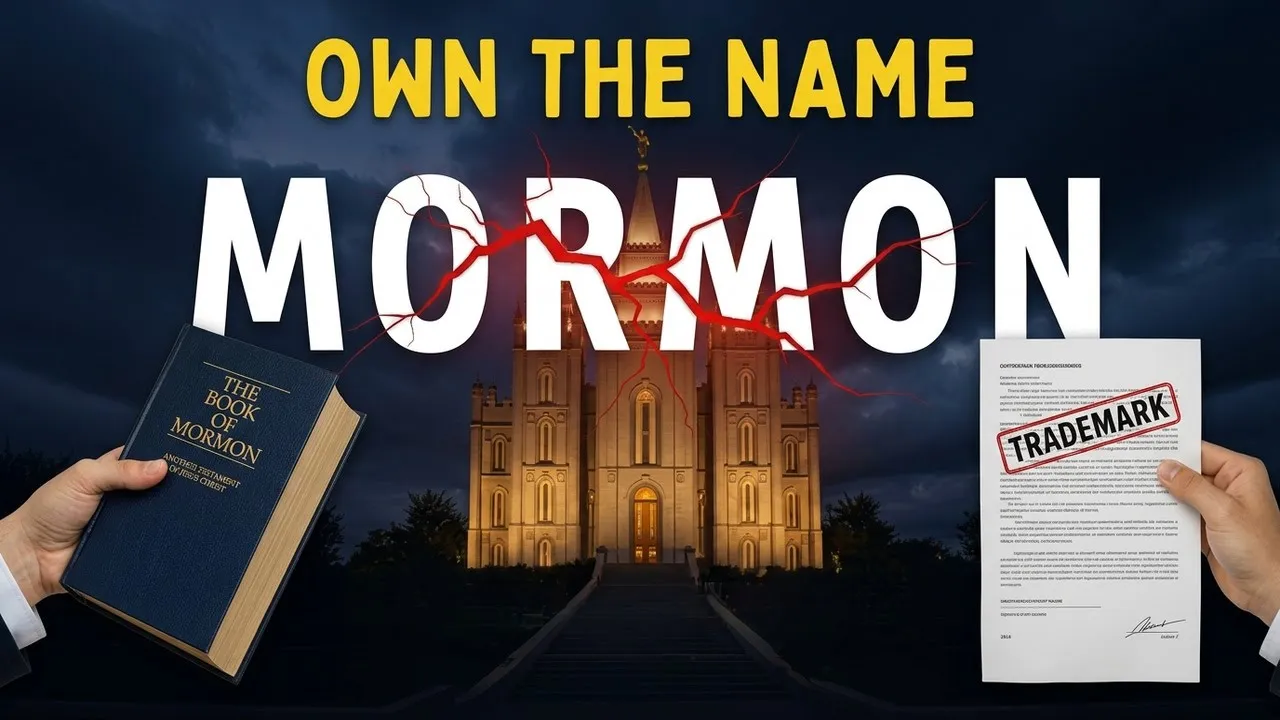
Source: Mormon Church Called ‘Mormon’ Satanic, Then Sued to Own It (2026 Hypocrisy) Channel: Mormon Deep Dive Published: February 24, 2026 | Archived: May 24, 2026
Video: Mormon Church Called ‘Mormon’ Satanic, Then Sued to Own It (2026 Hypocrisy)
Channel: Mormon Deep Dive
Published: February 24, 2026
Duration: 13:51
Views: 2,094
Category: Film & Animation
Video ID: 1I2naIDLBa8
Description
In 2018, the president of the Mormon Church stood before millions and declared that using the word “Mormon” was a victory for Satan. Not just wrong—a literal victory for the adversary. The church launched a massive rebrand. They renamed the Tabernacle Choir. They shut down Mormon.org. They told members to correct anyone who used the nickname.
Then in 2025, they started suing people for using it.
Small podcasters, critics, former members—all receiving legal letters demanding they stop using the word “Mormon” because the church owns the trademark. The same word they called satanic. The same word they publicly abandoned. The same word they spent millions telling people not to use. Now they’re claiming exclusive legal ownership.
In this video, we expose the full story:
Why Russell M. Nelson suddenly declared “Mormon” satanic in 2018 after 188 years of church usage
The massive rebrand: Mormon Tabernacle Choir renamed, Mormon.org shut down, members told to correct everyone
How the church secretly maintained trademark registrations through Intellectual Reserve, Inc.
The 2025 legal letters targeting Mormon Stories, Radio Free Mormon, Mormon Discussions, and others
The impossible trademark renewal problem coming in 2026-2027
What happens when they have to prove they still use a word their prophet called evil
The hypocrisy exposed:
They say “Mormon” offends God—but they won’t let anyone else use it. They claim free speech—but they weaponize trademark law against critics. They preach honesty—but they hide behind shell companies and legal threats.
Legal analysis from trademark attorneys explains why this case could force the church to choose:
Let the trademark lapse and lose control of 200 years of brand equity
Or prove they still use “Mormon” in commerce and admit the rebrand was never about revelation
Targets of the 2025 legal letters:
Mormon Stories (John Dehlin, 20 years of podcasting)
Radio Free Mormon (Bill Reel)
Mormon Discussions
Other independent podcasters and critics
What happens next? The trademark renewal deadline in 2026-2027 will force the church to explain under oath how a word can be both satanic and legally owned.
If you want to understand institutional hypocrisy at its highest level, this video breaks down the legal manipulation, the censorship disguised as trademark enforcement, and the gap between what the church says and what it actually does.
Subscribe to Mormon Deep Dive for daily investigations into the history, beliefs, money, and power of the Mormon Church.
#mormon #ldschurch #mormontrademark #exmormon #mormonchurch #russellmnelson #mormonstories #radiofreemormon #mormondeepdive #ldsnews #faithcrisis
Tags
bill reel church secrets church suing podcasters exmormon intellectual reserve john dehlin lds lds church lds trademark mormon mormon church mormon deep dive mormon hypocrisy mormon name change mormon rebrand mormon satanic mormon stories mormon tabernacle choir mormon trademark podcast war radio free mormon russell m nelson russell nelson leaving mormonism reason exmo logic church history
Transcript — YouTube panel (human-authored)
0:00 In 2018, the president of the Mormon Church stood before millions of followers and declared that using the word Mormon was a victory for Satan. Not just wrong, not just discouraged, a literal victory for the adversary. The church immediately launched a massive rebrand. They renamed their famous choir. They shut down Mormon.org. They told members to correct anyone who used the nickname. For seven years, they have told the world, “Do not call us Mormons.
0:28 that word offends God. And then in 2025, they started suing people for using it. Small podcasters, critics, former members, all receiving legal letters demanding they stop using the word Mormon because the church owns the trademark. The same word they called satanic. The same word they publicly abandoned. The same word they spent millions telling people not to use. Now they are claiming exclusive legal ownership. If you want to understand the level of institutional hypocrisy and legal manipulation happening here, subscribe to Mormon Deep Dive right now because this story reveals everything about how the Mormon church operates.
1:08 Say one thing publicly, do the opposite privately and use lawyers when people notice. Welcome to Mormon Deep Dive, where we explore the history, beliefs, money, and power of the Mormon church. I am your host and today we are exposing one of the most absurd legal battles in religious history. A church that publicly rejected a name then privately weaponized trademark law to control who can use it. We are going to examine why the church suddenly decided Mormon was satanic after 188 years. What their trademark claims actually mean legally.
1:42 Why they are targeting small podcasters while claiming they respect free speech. And what happens when their trademark comes up for renewal in 2026 and they have to prove they still use a word there profit called evil. Everything we discuss today is based on legal documents, trademark filings, public statements from church leaders and analysis from intellectual property attorneys. We go where the evidence leads. By the end of this investigation, you will understand that this is not about protecting a brand. This is about silencing critics while maintaining legal control over language itself. Let us begin. For 188 years from 1830 to 2018, the Mormon church embraced the word Mormon. It appeared in official church materials. The famous choir was called the Mormon Tabernacle Choir for over a century. Members proudly identified as Mormons. And from 2010 to 2018, the church spent millions of dollars on the I’m a Mormon campaign.
2:40 television commercials, billboards in Times Square, a feature film called Meet the Mormons in 2014. They were not just tolerating the nickname, they were actively promoting it as their primary brand identity. Then in January 2018, Russell M. Nelson became church president. He was 93 years old, a former heart surgeon who had been waiting for his turn to lead. And in October 2018, he made a stunning announcement. Using the word Mormon, he declared, was a major victory for Satan. Not a mistake, not unfortunate, a victory for Satan.
3:15 His reasoning was that the full name of the church contains Jesus Christ. When you use shortcuts like Mormon or LDS, you remove Christ from the equation, and that he said offends God. Within months, the church launched a complete rebrand. The Mormon Tabernacle Choir became the Tabernacle Choir at Temple Square. Mormon.org org was shut down. All official materials were updated. Members were instructed to correct anyone, including journalists and scholars who used the old terminology. Here is my first question for you. If using Mormon was always a victory for Satan, why did God wait 188 years to tell anyone? Why did he let the church spend millions promoting it from 2010 to 2018? Drop your answer in the comments. Now, here is where this gets legally absurd.
4:06 Despite publicly abandoning the Mormon brand and calling it satanic, the church never gave up its trademark registrations, Intellectual Reserve, Inc., the church’s intellectual property arm, continues to hold multiple trademarks on the word Mormon and related phrases. And in late 2025, they started using those trademarks to threaten critics. At least for podcasts, critical of the church received legal letters, Mormon stories, which has operated under that name for 20 years, Radio Free Mormon, Mormon discussions, and others. The letters were carefully worded. They acknowledged free speech rights. They claimed the church had no desire to censor content, but they demanded that these podcasters remove the word Mormon from their names and branding. Let me be very clear about what is happening here. The church is saying, “We have publicly abandoned this word. We have told the world it is satanic. But we still own it legally and you cannot use it without our permission. That is not trademark protection. That is language control
5:05 disguised as intellectual property enforcement. Here is my second question for you. Can you publicly reject something while privately hoarding legal rights to it? Should that be allowed? Let me know in the comments. Now, let us talk about the legal problem the church has created for itself. Under US trademark law, a trademark can be considered abandoned if the owner stops using it with no intent to resume use.
5:29 And the church has taken extraordinarily clear actions to abandon the Mormon brand. They renamed the choir. They shut down Mormon.org. Their president called the word a victory for Satan. For 7 years, they have actively told people not to use it. Trademark attorney Cara Swisser from the Electronic Frontier Foundation has pointed out that these are textbook examples of trademark abandonment. But here is where it gets even more interesting. The church’s trademark registrations must be renewed between 2026 and 2027. To renew, they must prove to the US patent and trademark office that they are still actively using the word Mormon in commerce. Not just holding the trademark, actually using it. So the church faces an impossible choice.
6:16 Either they let the trademark lapse, which means they lose legal control over the word, or they argue that they still actively use Mormon, which directly contradicts 7 years of messaging that using the word offends God. They cannot have it both ways. Either Mormon is satanic and they abandoned it, or Mormon is valuable and they still use it. The trademark renewal deadline will force them to choose. Here is my third question for you. What do you think the church will do? Let the trademark go or prove they still use a word their prophet called evil. Drop your prediction below. Now, let us talk about who the church is actually targeting because this is where the hypocrisy becomes most visible. The church is not going after major corporations using Mormon. They are not suing the Broadway show, The Book of Mormon. They are not threatening newspapers that use Mormon as shorthand. They are targeting small podcasters, critics, former members, people with audiences in the tens of
7:13 thousands, not millions. John Delin started Mormon Stories podcast in 2005. For 20 years, he has interviewed scholars, current members, former members, and church leaders. It is one of the most well-known platforms for honest discussion about Mormon issues. Suddenly, he receives a legal letter demanding he change the name. Bill Reel, who runs Radio Free Mormon, received a notice that the church will oppose his trademark applications.
7:41 These are not massive corporations with legal departments. These are individuals running podcasts from home offices. Why is the church targeting them specifically? Because they are critics. They provide platforms where people discuss uncomfortable truths about church history, finances, and policies. And the church wants to silence them without appearing to censor speech. So instead of saying we do not like what you say, they say you are violating our trademark. It is censorship dressed up as intellectual property protection and it reveals exactly how the church operates. Claim the moral high ground publicly. Use legal intimidation privately. Now let us examine what this reveals about the church’s real priorities. In 2018, President Nelson said that using Mormon removes Christ from the equation. It was framed as a spiritual issue, a matter of honoring God’s command. But if that was true, why
8:34 does the church still hold the trademark? Why not release it and let the word be used freely by anyone? The answer is obvious. They do not want anyone else controlling a term that has 200 years of history and global recognition. Even though they publicly reject it, they know Mormon has enormous brand value. Billions of dollars of recognition built over two centuries. So they keep the trademark just in case, just to make sure nobody else can have it. This is not about honoring Christ.
9:02 This is about corporate brand control and it exposes the fundamental contradiction at the heart of modern Mormonism. They claim to be led by prophets receiving revelation from God. But their actions look exactly like what any corporation would do to protect intellectual property. If God really commanded them to stop using Mormon, they would release the trademark immediately. The fact that they are fighting to keep it tells you this was never about revelation. It was about branding strategy. And when the strategy shifted, the revelation conveniently changed to let me show you the broader pattern this fits into. The Mormon church has a long history of saying one thing publicly while doing another privately. They publicly claim financial transparency. They privately hide a $100 billion investment fund. They publicly preach honesty. They privately ran shell companies to conceal the size of their wealth until a whistleblower exposed it
9:55 and the SEC finded them. They publicly say they love all of God’s children. They privately exclude LGBTQ members and fight against equal rights legislation. They publicly say they respect women. They privately exclude women from all meaningful institutional power. So when they publicly say Mormon is satanic but privately sued to control the trademark, it is perfectly consistent with decades of institutional behavior. Say what makes you look good. Do what protects your power. Hope nobody notices the contradiction. But people are noticing.
10:28 And cases like this make it impossible to ignore. So what is going to happen when the trademark renewal deadline arrives in 2026 to 2027? Option one, the church lets the trademark lapse. They quietly stop enforcing it and allow it to become generic. This would be legally consistent with their public messaging, but would mean losing control over a word with 200 years of brand equity.
10:52 Option two, the church argues they still actively use Mormon in commerce, but this directly contradicts their prophet’s statement that using the word offends God. it would expose the entire rebrand as corporate strategy rather than divine command. Option three, the church tries to thread the needle. They argue they use Mormon only defensively to prevent others from misusing it, but trademark law does not work that way.
11:18 Defensive use alone is not enough to maintain a trademark. Any option exposes institutional hypocrisy, which is probably why they have been avoiding the issue by just sending legal letters and hoping people comply without forcing a court case. But if even one podcaster fights back and forces this to trial, the church will have to explain under oath how they can claim a word is satanic while simultaneously claiming exclusive legal ownership. That is a deposition I would pay to watch.
11:48 So, what does this entire saga reveal about the Mormon church? It reveals an institution that values control more than consistency, that uses religious language to justify corporate behavior, that weaponizes trademark law to silence critics while claiming to respect free speech. It reveals a church that spent 188 years building a brand, 8 years heavily promoting it, then 7 years publicly rejecting it, all while privately maintaining legal ownership.
12:16 and it reveals leaders who claim divine revelation but whose revelations conveniently align with corporate strategy and personal preferences. Russell M. Nelson wanted to stop using Mormon for 28 years but God did not reveal it until Nelson became president. Then suddenly it was a divine command. That is not revelation. That is institutional politics and the trademark battle exposes it for everyone to see.
12:43 Before you go, I need three things from you. First, subscribe to Mormon Deep Dive right now. We are exposing institutional hypocrisy, legal manipulation, and the gap between what the church says and what the church does. Second, answer those three questions I asked. If Mormon was always satanic, why did God wait 188 years to say so? Can you reject something publicly while hoarding legal rights to it privately? What will the church do when trademark renewal forces them to choose? Third, share this with anyone who thinks the Mormon church is transparent and honest. Show them what happens when corporate interests collide with prophetic claims. I read every comment. I see every subscription. And I am grateful you are part of this community that refuses to let institutions get away with blatant hypocrisy. This is Mormon deep dive, where we follow the legal documents, examine the contradictions, and expose what institutions do when they think
13:40 nobody is watching. Thank you for watching. Thank you for thinking critically. Thank you for demanding consistency from institutions claiming divine authority. We will see you in the next investigation.
Looking for comments…
Searching Nostr relays. This may take a moment the first time this article is opened.
Looking for comments…
Searching Nostr relays. This may take a moment the first time this article is opened.