Mesoamerica vs. The Heartland: The Book of Mormon Geography Debate
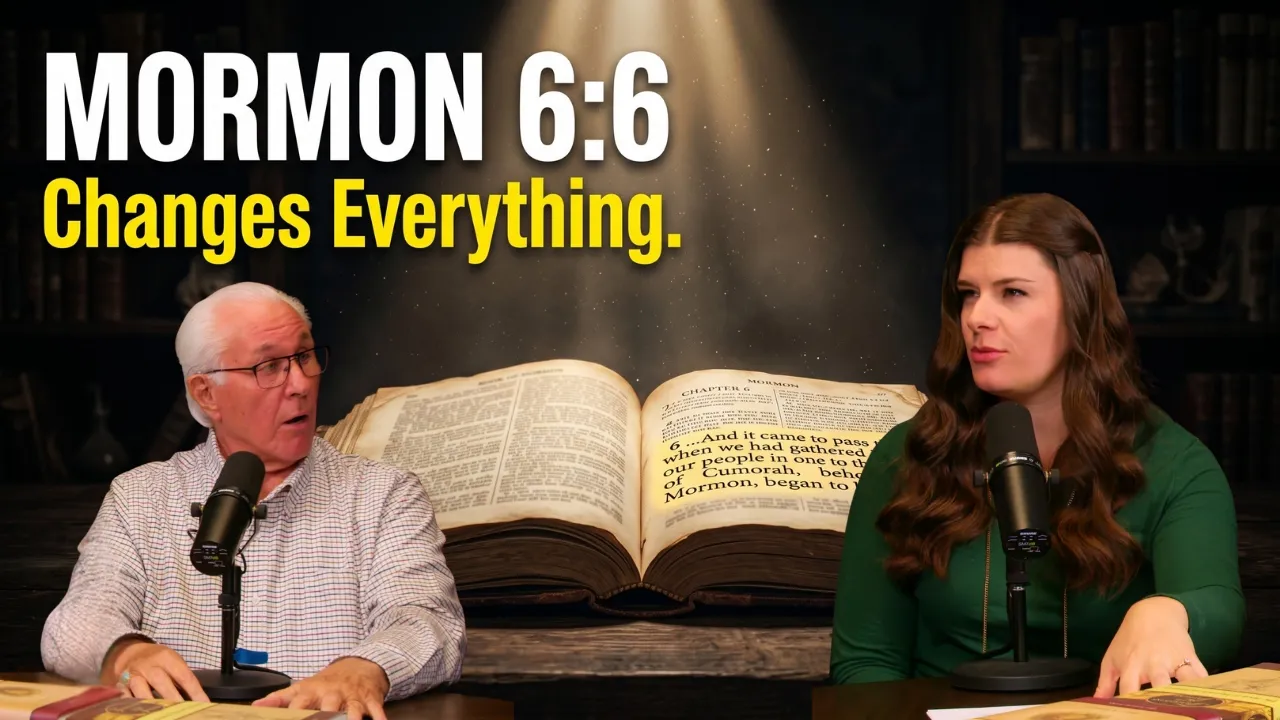
Source: Mesoamerica vs. The Heartland: The Book of Mormon Geography Debate Channel: Informed Saints Published: May 24, 2026 | Archived: May 24, 2026
Video: Mesoamerica vs. The Heartland: The Book of Mormon Geography Debate
Channel: Informed Saints
Published: May 24, 2026
Duration: 1:14:29
Views: 1,025
Category: People & Blogs
Video ID: lHEAG87wh9Y
Description
Where did the Book of Mormon actually take place? It’s one of the most divisive internal debates among Latter-day Saints — and one of the most misunderstood.
In this episode, Jasmin Rappleye, Neal Rappleye, and Stephen Smoot sit down with Brant Gardner — author of the six-volume Second Witness commentary on the Book of Mormon and one of the most widely published Book of Mormon scholars working today — to lay out the methodological, archaeological, anthropological, and textual case for Mesoamerica, and why the Heartland model doesn’t hold up under scrutiny.
Read Brant Gardner’s “Heartland vs. Mesoamerica” article series at The Interpreter Foundation, and check out his brand new book The Record and Explorations in Book of Mormon Authenticity, published by FAIR.
Use discount code INFORMED15 for 15% off at the FAIR bookstore. https://fairlatterdaysaints.org/store/product/the-record-and-the-reading-explorations-in-book-of-mormon-authenticity/
===Informed Saints Credits=== Produced by The Ancient America Foundation Producer: Spencer Clark Hosts: Stephen Smoot, Neal Rappleye, Jasmin Rappleye
Episode Resources: www.churchofjesuschrist.org/study/manual/gospel-topics/book-of-mormon-geography
arstechnica.com/science/2021/10/lidar-reveals-hundreds-of-long-lost-maya-and-olmec-ceremonial-centers/
www.sci.news/archaeology/lidar-olmec-maya-ceremonial-complexes-mexico-10206.html
www.cnn.com/2023/02/16/world/maya-civilization-causeways-lidar-discovery-scn
scripturecentral.org/knowhy/why-did-nephis-people-want-him-to-be-a-king
https://interpreterfoundation.org/journal/unavailable-genetic-evidence-multiple-simultaneous-promised-lands-and-lamanites-by-location-possible-ramifications-of-the-book-of-mormon-limited-geography-theory scripturecentral.org/knowhy/what-was-the-nature-of-nephite-fortifications
scripturecentral.org/archive/periodicals/journal-article/archaeological-trends-and-book-mormon-origins
bookofmormonresources.blogspot.com/2011/09/water-fight-on-river.html
scripturecentral.org/archive/periodicals/journal-article/hypothesis-concerning-three-days-darkness-among-nephites
scripturecentral.org/archive/periodicals/journal-article/in-thethirtyandfourthyearageologistsviewofthegreatdestructionin3nephi
bmslr.org/geology-of-the-book-of-mormon/
scripturecentral.org/archive/books/book-chapter/another-noteonthethreedaysofdarkness
scripturecentral.org/archive/books/book-chapter/another-noteonthethreedaysofdarkness
en.wikipedia.org/wiki/San_Martin_Tuxtla
bmslr.org/geology-of-the-book-of-mormon/
en.wikipedia.org/wiki/Los_Lunas_Decalogue_Stone
en.wikipedia.org/wiki/Michigan_relics
scripturecentral.org/archive/periodicals/journal-article/mormonisms-encounter-michigan-relics
scripturecentral.org/archive/periodicals/journal-article/mormonisms-encounter-michigan-relics
byustudies.byu.edu/article/tools-leave-marks-material-analysis-of-the-scotford-soper-savage-michigan-relics
bmslr.org/ziff-magic-goggles-and-golden-plates/
interpreterfoundation.org/journal/a-combinatorial-approach-to-modeling-all-possible-golden-plates
bhroberts.org/platemath/
www.josephsmithpapers.org/paper-summary/book-of-mormon-1830/56
en.wikipedia.org/wiki/Teotihuacan
commons.wikimedia.org/wiki/File:Tikal_Stela_31.jpg
interpreterfoundation.org/blog-the-heartland-versus-mesoamerica-part-1
Subscribe to Informed Saints for scholarly-grounded discussions of Latter-day Saint scripture, history, and archaeology. Study deeply, believe boldly.
===Discover=== If any of our thoughts resonated with you, consider learning more about the single most influential book in our lives. https://www.discoverbookofmormon.org/
===Content Disclaimer=== The views expressed represent ours alone and do not necessarily reflect the official position of The Church of Jesus Christ of Latter-day Saints.
#BookOfMormon #LDS #ComeFollowMe #BookOfMormonGeography #Mesoamerica #Heartland #HeartlandVsMesoamerica #BrantGardner #InformedSaints #LatterDaySaints #HillCumorah #JosephSmith #BookOfMormonEvidence #LDSScholarship #Mormon #ScriptureStudy #LDSChurch #AncientAmerica #Teotihuacan #Maya #FAIRMormon
Tags
heartland vs mesoamerica book of mormon geography brant gardner mesoamerica book of mormon heartland model book of mormon hill cumorah hill cumorah new york book of mormon final battle where did the book of mormon take place informed saints second witness book of mormon brant gardner interpreter joseph smith cumorah oliver cowdery cumorah book of mormon evidence lds scholarship book of mormon scholars sea east sea west mississippi river book of mormon tikal
Transcript — YouTube panel (human-authored)
0:00 One of the most controversial internal debates for members of the Church of Jesus Christ Latterday Saints is if the Book of Mormon is a real ancient record, where did it take place? Welcome to Informed Saints. Today we are tackling the question Heartland or Meso America specifically or more clearly why our guest here favors the Mesoamerican model and in his case for why this is he believes is the most likely place the Book of Mormon took place. Welcome Brent Gardner. Um, we are excited to have Brandt here because he is a widely published Book of Mormon author specializing in the cultural context of the Book of Mormon. He has a master’s degree in anthropology from the State University of New York. And he’s also widely published on a number of things.
0:43 Arguably your most famous book is probably your six volume commentary on the Book of Mormon, which is pretty much I mean the gold standard of commentaries even 20 years later. So before we like really get into the nitty-gritty because this can be so divisive, I want to start with the church’s statement on Book of Mormon geography and we don’t have to like read the whole thing word for word, but I do want to just point out that overall like the most important thing the church affirms is that this is an ancient record. And so it took place somewhere in the Americas, real people in a real place without saying where. Right.
1:14 Right. Right. And but then as we scroll down, the church does talk about how the church does not take a position on the specific geographic locations of Book of Mormon events in the ancient Americas. Speculation on the geography of the Book of Mormon may mislead instead of enlighten such a study can be a distraction from its divine purpose. Individuals may have their own opinions regarding Book of Mormon geography and other matters about which the Lord has not spoken. However, the First Presidency and the Quorum of the 12 apostles urge leaders and members not to advocate those personal theories in any setting or manner that would imply either prophetic or church support for those theories. All parties should strive to avoid contention on these matters. And then President Nelson includes this quote that these are really interesting things learning about the geography. Um but it is most rewarding when focuses on the primary purpose to testify of Jesus Christ.
2:05 Clearly there’s utility to understanding where the Book of Mormon take place. It’s useful. There are things we can learn, but how do we make sure we’re falling within the church’s guidelines? Why why how do we not make sure we’re crossing a line here? It is important to say that there’s a very big difference between contention and discussion, right? You know, there there’s nothing where they say, “Well, don’t do this.” Yeah.
2:26 Said, “Yeah, it could be useful.” Uh, you know, avoid contention because we don’t want to divide ourselves. Uh, we should be open to understanding. We should test all good things. we should find out. Now, the question then becomes, what model shall we use? And if we back away from, you know, what they’re saying we shouldn’t be doing, which is declaring that we have either church authority uh or revelation behind us, how do we then discuss things? You know, what what are our measures?
2:57 Well, you go to the sciences. You go to disciplines that have worked with history. You you go to anthropology. You go to what we know about the world and then you say, “Okay, let me take all of that information, bring it to the Book of Mormon, and see what I can do with it.” We’ve talked about the church’s statement. Let’s talk more about, you know, what how we actually what’s our methodology? How do we actually determine where to start, how to look, how to determine what models we should be considering here? I actually thought about that a lot several years back and I said, “Okay, if if I want to be fair to every model, I should come up with sort of a series of things that have to happen to fit the text.” And and I have to say that for many of us, the text is primary. We we really want to, you know, if we aren’t following what the text says, I think we’re in the wrong place, right? So when the Book of Mormon says like this site was number of days journey from that that’s what you mean by what the text is saying
4:05 right or that there was a river there and if if for example I say there’s a river and somebody comes up with the geography and there’s no river okay you’re wrong okay so I I I have to take the text as primary the people who wrote that knew where they lived and they knew what they were doing now they were also not writing for our geographical information right? You know, there’s other things they wanted to write for.
4:32 So, we have to be careful about going through the text and kind of reading carefully what they’re saying because they weren’t as interested in declaring the geography as we are trying to find it because they lived there. They didn’t and wasn’t a surprise to them. I I think along those lines, it’s also worth pointing out they never had a satellite uh imagery, bird’s eye view, Google maps.
4:54 Google maps, right? They’re they’re talking about their geography from an like an on the ground point of view that never has that kind of global perspective that we can gain. Yeah. A fun exercise is to go and look at historical maps even just from a couple hundred just from just from the the age of discovery, the age of Columbus, right? And to see how many successive generations of like specifically people that were dedicated to cgraphy were able to refine maps.
5:20 Back to the question of methodology. So, what I looked at is I said, you know, there’s several things that you can break down. One of them is you have to have a geography. I I have to come up with a geography. If I’m going to put the Book of Mormon on a place, I’ve got to have a place to put it on. And the Book of Mormon has some information about what that place is like. Uh I mentioned a river. We’ve got to have a river siden. If you don’t have a river, you’re in the wrong spot. I’ve got to have a narrow neck of land. Now, just so happens that because we all know we need a narrow neck of land, every model has a narrow neck of land. You cannot have a model without a narrow neck of land. And everybody defines it differently and everybody puts it in different places, but you got to have one.
6:03 And and everybody realizes that. But beyond that, there’s topography. So, I’ve got the overall geography, but then I’ve got the ups and the downs. There’s ups and downs in the Book of Mormon and they should be logical. Uh, you know, so if it says I’m going down in elevation, my model better have a down. And then once you’ve got a place, you say, “Okay, well, okay, I’ve got something that seems to fit. Now, what do you do?” You say, “Well, I’ve got to put people on the map.” And one of the first things you look at is, you know, does my model ever have people on it? And one of the biggest problems with the Baja is that they never have very many people there. Mhm.
6:43 Well, you can say that we just haven’t found them, but archaeologically, yeah, we we kind of know, you know, we would expect, I think, at this point, there are there are things that we know about civilization, and if you have a large number of people, it does leave a trace. You can find these civilizations and and you know, there were people there, but not very many. Uh, so, you know, I’ve got to put people on the map.
7:07 Well, how many people do I have to put on? Go back to the text. How many people do I have to have? Well, the Book of Mormon is pretty consistent in talking about lots of people. I got to have lots of people. By the time of Hil Kamora, we’ve got so and so in his 10,000 and so and so in his 10,000 and so and so and they were outnumbered by the Lammonites that were against them, right? Yeah. This is a lot of people, right? Okay.
7:33 The next thing is if you have a lot of people, how do you get a lot of people? Anthropologically, we know the answer to this. Okay. Uh, anthropologically, you go back to huntergatherer societies and you say, “Okay, if you’re a hunter gatherer, you’re going to have maybe 300 at the most people in the group because you can’t sustain any more than that because of the territory and you’ve got to move around.” You can’t sustain them on berries and deer that you’re trapping, right?
8:00 Yeah. Because you’ve got there there’s a there’s a range for these things and you can’t over hunt or else you all die. Yeah. uh and some and they know that some of these peoples would get together you know at a certain time and so you’d have a place where everybody would meet but then they split up again because you can’t sustain it and then you have incipient agriculture which says okay there’s I’m now able to stay in one place for a while but I don’t have sufficient calories in what I’m growing to sustain a large population so we still have to supplement with uh hunter gatherer. And in those cultures, we know throughout the world that these populations may get up to a thousand in a location, but really not more than that. In order to really get large populations, and this goes anywhere in the world, China, Egypt, you know, ancient near anywhere, you have to have crops that will provide sufficient calories that you can support a large population and have an excess. And if
9:12 you don’t have that kind of agriculture, it just doesn’t happen. And this is again going back to scientific principles. know this. Okay, going back to the question of heartland Meso America, right? Uh if you’re taking these principles and you’re saying, okay, what can we happen? Geography, we can argue about that. Okay, we can say yeah, okay, here’s hilamore here, here, there. We can argue about the nature and and perhaps we will do some of that. But the really important thing I think for me is you start putting people on the map and you say, “Okay, how many?” Well, Meso America many I mean in the last 10 years we keep finding more with LAR stuff right at least.
9:59 I mean you talked about how in the Baja model we just don’t have as many traces of civilization but it is true that recently Meso America has kind of been overturned with the scale of how big it was. And so in theory like anywhere could turn up all sorts of stuff with how we’re discovering more and more and more traces of civilization. Yeah. In in theory, um if you had a big pyramid in Kansas, you would notice it from miles away. Right.
10:23 Well, and and I also think along those lines, there is a difference in the fact that even before LiDAR, the scale of civilization known in Meso America was right was pretty substantial. Substantial. And so realizing that like oh it goes even bigger is one thing, but like the the the amount of scale you have to do for the Baja model to start to make sense. And I think Baja topographically and geographically is another one where if you have a large pyramid Yeah.
10:49 you’re gonna see it. But I think it’s similar in the like Yeah. in the Midwest and and the East, right? Uh the I mean I think this is what you’re leading up to, right? What’s the population scale of the Heartland area? Because it’s incipient agriculture, you don’t get large populations. You will get villages and the village maybe you’ll get up to a thousand people in a village but that’s really big really big.
11:18 Uh in a lot of the research that I was looking at in the archaeological sites they said yeah there were five houses in this village. Wow. What about there are some sites um in the Mississippi River Valley that heartland proponents will point to like Cahokia, right? And some of these that seem to have gotten to at least several thousand I think some estimates up to maybe 10,000 or something.
11:36 Oh yeah. It seems to me though, and you can correct me if I’m wrong, that sort of the the drawback with that is, and this is another methodological factor, is chronology. So, uh, my my study of the heartland theory and the sites they point to is potentially connected to the Book of Mormon. What I discover is a lot of the time it’s it’s well past Book of Mormon times. Yes. So, we we have sort of a window, an ideal window to try to fit our data if we can, which is roughly 600 BC to AD 400, right? Kahokian of these places I understand is well past that period and so correct.
12:10 What do you think about that methologically speaking? Yeah. If and that’s another part of the puzzle when you’re putting things together. You start with the geography. Okay. Well, this has to fit good. Now I’ve got to have population. Good. I’ve got to have population there at the right time. Okay. Okay. If I have a large population in the 1800s Yeah. And nobody is there in Book of Mormon times. And okay, wrong time.
12:37 Yeah, I can have a lot of people, but it’s the wrong time. Wrong time. Okay, the Book of Mormon from a chron chronological standpoint, although we can argue about certain aspects of it, it’s pretty well tied down as far as its general, you know, range. We’ve got a thousand years, but we know kind of when it begins and we know kind of when it ends. and and if you aren’t fitting that window, uh you’ve got to talk about what’s happening in that window, in that place, with that population. Those things all have to converge together. Well, the next thing is you’ve got another layer of information, which is culture.
13:14 You say, “Okay, I’ I’ve got a culture. Does the culture fit?” Well, let’s talk about an aspect of culture, which is political organization. Villages that have five houses do not have kings. That would be really strange. Really strange. Get 25 houses and you have a king. Not going to happen. You have to have a fairly large population before you can have a king. And and the Book of Mormon talks about kings over kings, right? Right. And so there’s a pretty complex political structure going on at least with the layman. So if if I’m comparing again, you know, what happens in the woodland culture in the heartland uh woodland cultures are simply not large enough to have anything other other than a village headman. You know that anthropologically we know that that size population that’s kind of leadership they’re going to have. They’ll have a village headman.
14:16 You might get up to chief if you have, but you kings require a larger population and they simply didn’t have them. Um, now you compare that to Meso America. What do we have? Well, we’ve got Nephi where the people are asking him to be a king. Well, this is when they first show up. You know, let’s say there’s only 30 people. Yeah. If there’s only 30 people and somebody says, “I think you should be king.” You go, “Wait a minute.” Yeah. a little little premature here.
14:48 I may be a branch president. I don’t know about King, right? Yeah. Yeah. But if you know we place them uh their arrival in Meso America, they’re coming into a place that is already extremely well populated and they’re taking a pop a portion of that and making a new city. And it’s the people who are in the new city that are requesting the king. Well, why would they do that? Well, in Meso America and again location, population and chronology. Now, we drop culture on top of it and we say what’s all happening at that point in time for the hundred years before and maybe a hundred years later in that time period is when the Mesoamerican cities are developing kingships.
15:34 Everybody’s creating a king. Why do they ask Nephi to be a king? Well, they’ve got a king. We want a king. Interesting. Okay. And it’s that time period, that place. Wow. Compare that to what I find in woodland culture, a village headman, right? The chief, right? Nobody’s going to worry about Yeah. Nobody’s going to ask for a king under find it. It’s not going to be there. I actually that’s that’s one of the insights I gained from reading your work that I really appreciated and and found interesting. But what I found particularly interesting and this is this relates to my own experience when I’ve tried to research both Meso America and Heartlander is when I actually started reading other textbooks about the Maya or things like that not just reading you know you or whatever that’s exactly what I found is I found scholars talking about that exact phenomena and that for me like having this experience where okay this is what
16:31 Brandt says this is what John Sasonson says and hey look this is what the scholars of Mesoamerica are actually and having it line up. That was a huge kind of moment for me in my own personal development to realize, okay, I can rely on these guys. They’re they’re they’re giving me credible information. Whereas, when I’ve gone to dig in a little deeper into Heartland stuff and and some of the claims they make, uh I have not found it to be consistent with what people in the field are actually saying. I was just going to say on that point of culture we have the political structure and we don’t have to get too much into this but I think it’s worth highlighting the Book of Mormon describes complex stratified society right so um in huntergatherer cultures everybody is chipping in to go gather berries and hunt the deer right in order that your 30 50 to 100 somehat people can survive. Um, if you get big enough, you have the peasants do that work and you can go and be a judge or a
17:27 lawyer or a priest or or a scribe, right? You have and and suddenly we’d see develop stratified social class and specialization of skills. Exactly. And with that comes certain perks and privileges, right? Uh the priesthood and the lawyers and the judges and the scribes, they get the kickbacks and they get to have the cushy life while the poor surfs for from the farms. And this is what the Book of Mormon describes, right? And we have these invectives against corrupt lawyers critiques of it.
17:54 Prophetic critiques of corrupt rich lawyers and judges who are corrupt in the government or whatever, right? Uh whereas King Benjamin, the egalitarian, has to assure his people, I’m working in the fields like you. I’m not getting kickbacks from the people. We seem not to have that from what we can tell in the heartland period in the early woodland, right? Uh we we’re you’re saying incipient agriculture. We don’t seem to have evidence at this point of um socialized specialized crafts or trade uh stratified society things like that that’s described in the Book of Mormon.
18:22 Not not uh not that kind of you know uh and the other thing is you know Book of Mormon talks about costly apparel a lot. Well you get costly apparel by trade with somebody else uh because costly means that it’s something I can’t normally create myself. Adelphia, it’s got to be economically different, but it always comes as a sign of social stratification. Every time you see costly apparel, it will be the harbinger of social stratification and people saying, “I’m better than you are,” which is the reason why uh the Book of Mormon says you shouldn’t have costly apparel.
18:58 They really don’t matter what kind of clothes we wear. That it’s not an argument about clothing. It’s an argument about status and about you thinking you’re better than someone else. And in antiquity, textiles are far more valuable than they are today in our world of fast fashion. Yeah. Yeah. So you mentioned that messameanists, they’ll look at the archaeology and then say this is how we understand the Book of Mormon whereas in the Heartland they will um look at the Book of Mormon and say this is why archaeologists are wrong. So could you speak a little bit more to the differences in how these two paradigms are working?
19:32 Yeah, really it boils down to the Hill Kamura, right? Uh the hill Kamora has traditionally been seen as the location of the final battles and there have been prophets, there have been apostles who have said that this was the location. This is the site where Joseph Smith got the gold plates in upstate New York and it’s the site where we’ve had the Hilamora pageant for years. Yes. And and and and nobody disputes that that’s where the plates came from. That’s right. you know, Mesoamericanists, everybody says, “Yeah, we agree plates came from there. That one’s that one’s solid. It’s it’s where was the final battle?” And traditionally, uh, it has been thought, uh, until people really started looking at the Mesoamerican model. Uh, it was thought that that was where the final battle took place. Uh, and so what happens with the Heartland is they said, “No, we’re not backing away from that. where this is the hill we will die on. Yeah. Literally. Right.
20:34 And and so it becomes the pin in the map and and frankly it is the strongest piece of evidence they have. Yeah. Yeah. The strongest. Uh now is it strong? Well, yeah, that raises a question because it it’s their strongest piece of evidence. I I I concur with that, right, for the H Heartland model, but specifically in the context of the assumption that um when prophets speak about Book of Mormon geography, at least some prophets, the ones that we want to cherrypick that we like, when they speak about Book of Mormon geography, their words carry prophetic weight. And um if I were to uh play the devil’s advocate here as a Mesoamerican, you know, um sympathizer myself, if I had to play the devil’s advocate for the heartland, I would say, look, we do have Joseph Smith, we do have Oliver Cowry, we do have Brigham Y. Young and Hebrac Kimble and plenty of other prophets who have said, “Yeah, this is where the battle took place.” But that seems to really only work if you prioritize
21:37 modern statements from prophets over the text, which seems to be your methodology. you want to prioritize. So, it seems to become a question of whose statements do we prioritize, the text or the prophet? At some point, something’s got to give out and it’s either got to be statements from the Book of Mormon or statements perhaps well-considered and sincere statements from Oliver Cowry or Joseph Smith that may or may not be in harmony with the Book of Mormon. And and even there you have to say you know what what is if I’m taking statements and we’re now into history okay forget geography forget anthropology we are now into history which means now we have the cannons of how you do historical research to deal with and the historians know how to do this and we have trained historians in the church uh who have been through the Joseph Smith papers and they say okay here is what the actual ual information
22:31 is. And we find out that Joseph Smith himself does not recognize Kamora as the name for the hill until about 10 years after the translation of the Book of Mormon. So he’s not calling it the Hill Kamura. He’s not the one that originates this. Who is? Well, it looks like it was Oliver. Well, Oliver got it from Joseph. Well, if Oliver got it from Joseph, why doesn’t Joseph say so? Yeah.
22:56 And he never he doesn’t. Now why does he eventually do it? Well, because Joseph picked up the vocabulary that everybody else was using. Uh why does Joseph call the sear stone a yurman thumbum? Because everybody was calling it the yurman thumbum. And so that’s what he called it. That’s how it became uh the vocabulary of the time. That is not theology, you know, that is not revelation. That’s human.
23:20 And I think I think it’s worth at this point maybe circling back to a couple things. One is the church’s geography statement. like we talked about to to circle back to that the church does not take a position on the specific geographic locations of Book of Mormon events in the ancient Americas. They don’t make an exception there. They don’t say, “Well, except the final battle, we know the Hilora, we know where that is. There’s no exception.” So, the church does not actually have an official position contrary to contrary to how some and and then the other point to make here is they also say we should not advocate for our personal theories in any setting or manner that would imply either prophetic or church support. And so when when you turn around you say well Joseph Smith said and Oliver Cry said and by the way Oliver Cry was in the first presidency when he said this. So he was you know he was he was president Oliver
24:08 Cry he was second elder Oliver when that line of argumentation is starting to creep into this territory that the church says we don’t do that do or they they don’t say we don’t do that they say you shouldn’t do that. They’re telling us not to do that. Right. Yeah. And um I like your point about historical methodology because if we’re going to do historical methodology about Book of Mormon geography, well, who are our firsthand witnesses, right? Mormon, Moroni, Elma, so forth. They’re not It’s not Joseph Smith. It’s not Oliver Cry.
24:38 You can say Joseph Smith talked to a firsthand witness. He had a vision. He he spoke to Moroni. The only geographic information we know Moroni ever revealed to Joseph Smith, though, was where the plates were buried, not where any particular event took place. We don’t have any record of Oliver Cowry directly corresponding with Here’s here’s a here’s a thing that we have. We have the story that says that, you know, prior to the publication of the Book of Mormon, Joseph had been instructed and he would then tell his family, you know, here are, you know, he would describe their manner of his mother.
25:12 Yeah. Their customs, right? Some Yeah. and and some of what uh what’s in that statement as an historian you look at you say okay some of that uh is being affected by the Book of Mormon text itself or by assumptions about it so the animals on which they wrote which is not in the Book of Mormon they don’t write animals in the Book of Mormon right not there at all so you know it’s historically you know that there’s you know some influence there but let’s go back to that and say just in the setting regardless of what the specifics are it does appear that Joseph Smith had some sort of visionary experience where he would see something about these people.
25:49 Okay. Have you ever taken those tests on the internet where they show you a picture and they say, “Where do you think this took place?” Okay. How good are you? Well, I’ve taken those tests because it’s fun. Every once in a while, I get some because I see Chinese writing and I say, “Pretty sure.” Yeah. Because I can see text. But without text, Yeah. Okay. Yeah. How do you know where these places are if you have never had a con context in which to look at it than to know?
26:21 Okay. But what I’m very interested to know is like why couldn’t the Hill Kamura be in upstate New York? Why do you feel like it has to be somewhere else? Is there something in the Book of Mormon that kind of insists that? Uh two reasons. One, if you start with a geography that says we’re building a logical geography, and one of the things you want to do in a logical geography is get some concepts of distance. There are no mileage markers in the Book of Mormon. The only markers we have are days journey. And so this is everybody’s gone through this when we look at day’s journey because that’s how we measure how far away something would be. So how far do people go in a day? And you can argue this um and one of the reasons why Neville’s model for the heartland has had some um influence is because he says those days travel are on rivers and so they go farther in a day than they would have if they’re on foot. Now the Book of Mormon never mentions how you travel it, you know, they just assume. Uh it does say
27:29 frequently however as they’re going here that they’re driving, you know, herds with them, right? Uh and if they’re doing that, it’s really hard to figure out how you’re doing that on canoes. Drive a drive a flocks of herds on rivers. And if you’re going up, I mean, if you’re going with downstream with the river, you’re going a lot faster. If you’re going upstream, it’s a lot slower. So a double-edged sword with Yeah, it’s a problem. But part of the the answer is we’ve got to have distances. And if you look at the geography there, you take a reasonable distance for days travel, you are limited. And what Sorenson pointed out is you’re limited to an area that’s maybe 600 miles long by about 200 miles wide. And he said, oddly enough, same area as ancient Israel. H so if the book of or the Bible, the Old Testament, the New Testament are going to occur, you know, in an area and we have that rich history in an area that’s about 600 by 200, there’s no reason why the Book of Mormon could not have happened. Uh and so from the only
28:36 information we have for getting distances in the Book of Mormon, days travel, that limits us. If everything else is happening in Meso America, Hill Kamar is just plain too far away. It just takes too long to get there and because everything else works and it doesn’t work up in that area from the culture, the geography, etc. Okay, distance is one of the reasons why it couldn’t be there. But it’s not the only reason.
29:03 Not the only reason because then you go to archaeology. Ah, if you’re going to have that many people die on the hill, you should know. There should be indications. First of all, if you have that many people, I’m not sure that many people fit on the hill Kamora. The hill isn’t that big. And and and to be clear about how many people we’re talking, there were 24 Nephite commanders who had 10,000 men. Yeah.
29:30 So, we’re talking like 240,000 people approximately, assuming no exaggeration. that we know is that and and I think there was some you I really do I don’t think I don’t think 10,000 was really 10,000 but but the order of magnitude is inact multiple thousand right yeah we’re not talking the difference between 10,000 and 10 right you know right there were a lot more than 10 people there you know 20 even 2400 whatever it’s going to be a lot more than that well the hill kamora ju you’re you’re stepping on people if you’re trying to be on the hill kamora with that many people and you have if They’re there for any length of time. There’s going to be you’ve got to have civilizations going to leave a trace. And the archaeologists who’ve worked at that area, this is a clean hill. There was nothing there.
30:16 There’s nothing around. Well, we have the room, you know, all the stories of arrowheads. Bushels of arrows. Well, first of all, we don’t know how accurate it is. We don’t have them. And because we don’t have them and we don’t have them in C2, we can’t date them. We don’t know. We do know that there were plenty of Native Americans who were there for a very long period of time hunting. Uh so yeah, there could be lots of them around that had nothing to do with war. Now let’s go to warfare.
30:47 Okay, warfare is an important one. Book of Mormon talks about warfare. If you have kings, you have large populations. If you have large populations, you can have enough population that you can pull off a portion of them, still have food for the people home, and still have food to send to the army. And you can have armies that will fight each other, and you can have war. You can’t have war if my village only has 500 people and you’ve only got 500.
31:19 I can’t lose that many people before I can’t feed anybody. Small places like that, like the woodland territory, don’t have warfare. You can have a raid. Somebody will go in and, you know, raid to get a well in in later history, they raid to get some horses. So, you might raid for something, but you don’t have warfare. It’s economically infeasible to have warfare people. warfare that goes on in the case of the second Amalachalaite war that starts like in you know around Elma 45 or something it goes on for like eight years or something the one where with Malachi and Amaron who takes over right after Tienkum that whole war the the second half of the war chapters right yeah they they go on for like eight years this war and it’s this cycle and Sorenson has a wonderful article on this they they go home and they grow their food and then they go back to fighting with each other and they have these like cyclical patterns of doing this exactly exactly as you’re describing.
32:17 So I I want to talk a little bit more about this because this is actually something when I was at Scripture Central, I wrote a no- why on fortifications in the Book of Mormon. Yeah. And uh and because we wanted to be fair to all geographical models, I did research on fortifications uh in both Central America and in North America. And I included footnotes that talk about some of those different things. But one of the things I found is pretty consistently the fortifications that match Book of Mormon descriptions in in the North America territory are all late. They’re all after about a th000 AD.
32:51 Uh at least all the ones I could find dated information on. Um, but I also found specific references to talking about how in the woodland area, uh, during the specific time periods where Book of Mormon talks about massive warfare and has these large fortifications, archaeologists were saying there’s no it all all indications are a relatively peaceful existence. Yeah. For the Hopewell during that time.
33:16 Uh, can you maybe speak to that a little bit? Yeah, they have places that were called forts because there somebody in the late 1800s called them a fort. They called them forts because there were walls. And then people started looking at it. And the modern archaeologists look at it and say, “Okay, well, first of all, if they are forts, you would find occupation inside because they’re going to be walled up and you’re going to protect a civiliz you’re going to protect a city, which means you have people living there.” Nobody was living there. So you got a wall that’s not protecting anything. Next, when you build fortifications and and this happens in many places in the world, you have what’s called a borrow pit, which is I’m digging up all of this dirt and I’m going to mound it up here. And what you do is you then have kind of a moat. And the moat makes your wall even taller and makes it more difficult so that when your enemy attacks, they’ve got to go down and then come back up because that borrow pit now becomes part of the defensive structure.
34:19 And that’s that’s exactly what’s described in Elma when Moroni has the Lammonite prisoners do, right? Uh fortify the cities, right? And there is a borrow pit for these forts on the inside of the wall. Okay, which is not where it’s supposed to be. Not very useful for defense. Not useful for defense. It’s not logical. And there’s no evidence that it defended anybody. Mhm. So yeah, there there are walled off enclosures, but they’re not military. Uh the military stuff is coming much later.
34:53 And again, if you’re going to be serious about trying to put the Book of Mormon in a real place, you also have to be in a real time. You can’t borrow things from later and pretend that they happened earlier if there’s no evidence for it. Yeah. Okay. Well, I I’m curious, Brandt, because in addition to the differences of the um the the the the difficulties with the distances described in the Book of Mormon to get you up to upstate New York for the Hill Kamura, there seems to be an indication in the text itself that uh the Hill Kamora, meaning where the battle happened, is not the place where we should expect Joseph Smith to find the plates that Moroni entrusts to him.
35:33 I’m sure you know what I’m talking about. Mormon 6:6. I’ll read it for the benefit of our listeners. Please do. Um, so this Mormon, and it came to pass that when we had gathered in all our people in one to the land of Komorrah, behold, I Mormon began to be old, and knowing it to be the last struggle of my people, and having been commanded of the Lord, that I should not suffer the records which had been handed down by our fathers, which were sacred, to fall into the hands of the Lammonites, for the Lammonites would destroy them.
36:01 Therefore, I made this record out of the plates of Nephi, and hid up in the hill, all the records which had been entrusted to me by the hand of the Lord, save it were these few plates which I gave unto my son Moroni. Correct me if I’m wrong here, Brent, but what it sounds like what Mormon is saying, these pl this record out of the plates of Nephi, that’s the plates of Mormon, right?
36:25 That’s Mormon’s abrbridgement of the record of Nephi. We’re missing the first chunk of it because all the Martin Harris thoughts, but we have the rest of it starting with Mosiah chapter 3. And then he hands these few plates unto my son Moroni and he finishes off the rest of Mormon ether Moroni. It sounds like what it’s saying in other words is literally all the records except the one that Joseph Smith got he hit up in quote the hill Kamora at the final struggle in battle. Am I reading that wrong or what’s happening?
36:53 There’s no way the gold plates even could be in the same site cuz he literally talks about taking them away. the the the one the only thing you can say for sure is that according to the Book of Mormon, the only information we have is that the plates were not in Kamura. Yeah, that’s the last piece of information we have from Mormon specifically saying that these plates were not in the hill Kamora.
37:17 Now, I’ve talked to people who support a heartland theory and they say, “Well, Mormon brought them back or Moroni brought them back and buried them in that.” Well, yeah, you can say that, but the Book of Mormon doesn’t say that. The text does not say that. Also seems counterintuitive because the whole point was to get the records out of the land of Kamora so the Lammonites wouldn’t destroy them, right? Well, not only that, but if he’s fleeing northward to get away from the people who are trying to kill him, going back south to where the people are trying to kill him, right, seems a little counterintuitive.
37:52 And this is also a comment that I think John Clark made that I I resonate with very greatly. Joseph Smith is an interpreter of the Book of Mormon as much as he is the translator of the Book of Mormon. though we we acknowledge that Joseph Smith was given the gift and power of God to translate the record for into our modern English language but that doesn’t necessarily guarantee that he just omnisiently knows its contents perfectly and how to perfectly interpret it and he and others around him have to like anybody else use their deductive reasoning as they’re reading the text to figure out how it works. I think this could explain why and Jasmine mentioned this in her framing of this question.
38:29 You see land northward, narrow neck, land southward must be describing the hemisphere. Yeah. And I could I could very understandably see why. And for the record, for our Heartlander friends, this is what the historical record indicates about the earliest theories about Book of Mormon geography. Yes. Joseph and Oliver thought Kamora was in New York. They also thought the narrow neck of land was in Panama and that and that, you know, like they and that and that Lehi landed in Chile. They they had this this assumption that that model lasted for a long time because I grew up with it.
38:57 Yeah. And and look and and I want to be I I’m not here to bag on anybody historically or otherwise any saints that may have just assumed this model. It’s an understandable assumption if you just come to the text sight unseen. Right. And so I what I’m grateful for the work that you and others have done is to question some of these assumptions. And by saying that we’re not saying that Joseph Smith was a false prophet or that he was some kind of an idiot or whatever. We are not disparaging the prophet at all. We’re just acknowledging the reality that human beings come to texts with certain biases and assumptions in mind. We all do it. We all do it at this table even.
39:29 No one’s immune from it. We just have to acknowledge that. Be careful not to conflate Joseph’s and Oliver’s statements uh that may or may not jive with your particular Book of Mormon geography. Um if you’re Brent, I like your methodology. Let the text take precedence. Right? If that’s your starting go, then these statements are interesting and we need to countenance them, but they don’t become dispositive on this is what the text must mean and we have to shoehorn the text to match those statements.
39:53 And then the Book of Mormon also talks about having like a sea east and a sea west. And in Meso America at least, that’s fairly self-explanatory. You’ve got the big giant Atlantic Ocean on one side, the big giant Pacific Ocean on the other side. Um, how do they make that work in the heartland where the heartland is taking place kind of landlocked with great difficulty? Um, east sea they do I mean there’s an east sea because they they use the Atlantic and because they don’t really worry about distances. The fact that the Book of Mormon has wars that occur along the eastern seabboard and that people are easily moving back and forth there.
40:31 all those cities that that are captured by Mal by Morona and then Malachi, right? Those like there’s like seven cities on the east sea in the first Amalachia. I think it’s important to note that the whole purpose of that military maneuver to go along the east sea is to try to get up into the land northward. Yeah. Uh and I don’t know how that functionally works when all your geography all like the center of your action, your cities and everything are over in the Mississippi River Valley.
40:57 What’s the point of this military action all the way over to go capture New Jersey and Connecticut or whatever. I mean, if you’re trying to go around, I mean, you don’t have to go all the way to the eastern seabboard or you could go up the middle. Yeah. Yeah. Yeah. Uh and so distances a problem, but that’s where the EC is. It becomes even more complicated when you get to the West Sea because they’re Pacific’s really far away and and even the Heartland model understands that the Pacific is far away. And so when Neville uh tries to figure that one out, the upper Mississippi is the Riverside and then the lower Mississippi is the West Sea.
41:33 So it’s one river is two bodies of water. Yes. Defined in different ways for different purposes. But isn’t one of the Great Lakes also one of the West seas in this model? Yes, you have multiple West seas. Yes. And he actually has two sidens. I mean I’m not sure everybody agrees with him on that, but he has he has two West Seas and he has two river sidens. Okay. If you’re listening and you disagree with any of this, here’s what I would do. I encourage you to read Alma 22 and and reason from there how there isn’t a continuous west sea all going from land of Nephi to the land of Zer Hemla up to Bountiful. Like there is it seems pretty clear, not just from Alma 22, but from so many other references that there needs to be a continuous west sea along the western coast. And here’s the other catch here is all of those west seas are east of Zerahhemla in in the Heartland model. And oh because that’s right because Zarahhemla is supposed to be in Iowa allegedly, right? Yeah.
42:29 And yeah, I thought about that. Yeah. The account I think it’s Alma 55 where it talks about the the the strippling warriors and they’re supposed to be near the west sea south west of Zarahhemla. Um, and there’s this there’s this action going on. And this is this is kind of like I haven’t seen a Heartland map that makes this make sense for me at least. Yeah. Where you just you go you go south and west of Zerahhemla there and you should you should be in the in Texas or something.
43:03 You should be you should be in the region you should be you should be in the region between Manti and the West Sea, right? That’s where the action’s taking place. And you cannot put anything between Manti and the West Sea. in any heartland model that I’ve ever seen and have it be south of their hemland like that. One thing that struck me as I was learning more about the heartland model is how often they employ rivers specifically like the Mississippi. And granted like the Great Lakes, those are large bodies of water that if I didn’t know better, I could mistake for a sea.
43:32 Even the Mississippi is a very very wide river and you can you know it’s it’s hard to even see across it at points. But at the same time like these are people who actually crossed an ocean. And so I personally had a hard 20,000 miles. And so I have a hard time conceptualizing them counting a river as an actual sea. Whereas like in Meso America, I mean you have people you you’ve got your east and your west sea that are are big oceans, but then they also have the river siden which depending on your model you assign to either the gravo river or the usmen river. And so like it’s a fairly simple way straightforward way I should say of saying okay you’ve got seas and you’ve got rivers. Whereas in the Heartland, it strikes me at least that there’s a lot of like, well, the Mississippi can double as multiple bodies of water and it might be a sea, it might be a river, and then this other thing might also be a sea and a river. And it just it was hard for me to really wrap my mind around
44:21 in a lot of it. It is forcing the text onto the geography rather than reading the text against a geography. Um, you know, I I have this and therefore I’ve got to find a way to make the geography fit. And so you manipulate your geography to the text. Uh which is not the way it should be done as a historian. You you a scientist, a geographer, anybody, you’re going to start with the text and then work out.
44:49 Uh if you start with saying, “Well, I know I have to be here and therefore I’m going to make the text fit, you’re going the wrong way.” One of the most common comments I get whenever I bring up geography on my own content is, “Isn’t this all futile anyway?” Because in Third Nephi, it talks about how there’s so much destruction. It changed the whole face of the land. So, wouldn’t we not even be able to tell where this takes place based on that?
45:15 The the problem again there is that we bring to the text some ideas. We say, “Oh, the whole face of the land changed. That must mean that everything was different.” Well, the whole face of Mount Etna changed dramatically. It doesn’t look the same anymore. M it didn’t move, right? You know, it’s not in a different location. A lot of it’s missing now. And some of the things that were there, you know, blown off to a different, you know, some of the dirt’s in a different place and the rocks are in a different place, but it didn’t move.
45:47 So, yeah, the face of face of the land is the top. It’s what you see. Well, the face can change because you’ll have an earthquake and you’ll have some problem. I mean, buildings being knocked down is changing the face. hurricanes sweeping out trees. The city is being sunk in the sea, right? Decision 35. Yeah. Uhhuh. But north doesn’t become south. So it might be more superficial changes, not seismic.
46:11 It’s worth noting that uh our primary abridger uh who gives us most of our geographic information, Mormon, and then our second Moroni, they’re both post third Nephi, right? And so by a couple hundred years, by a couple hundred years. So their information about the geography is primarily based I mean obviously they’re using some earlier source material but like Brandt points out like they’re able to correlate the locations and places in that earlier source material with what they know right now the Elma 22 section that you were talking about most of that is Mormon’s insertion into his text that’s Mormon’s description of geography. Yeah.
46:49 Well if he didn’t know where anything was how did he tell us where everything was? And particularly why did he put it back at that point in time? because he thought that’s, you know, where it was. Now, I can see a Mormon uh thinking that, you know, the people wore the same clothing, you know, 500 years prior because, you know, he would he wouldn’t have known. There’s no photographs, there’s no pictures. Uh so, you know, he may have some presantism in certain things, but not in whether north is south or there’s a city here or there’s a city there. Uh Mormon is pretty certain about the geography.
47:26 I think there’s only one quote unquote error, like one or two where the one that we know of. It’s in it’s in one of it’s in the war chapters. One of the cities, he gets the wrong city that had already been captured already. He says it got captured again or something like that, right? So the geography is pretty airtight. Uh it’s very consistent. While we’re while we’re on the subject of the face of the land changing though, that is another point that you talk about in your discussion of Heartland versus Meso America. Um, and you talk about how that does in in your view at least.
47:57 Yeah. How does Meso America versus Heartland account for the massive destruction? Oh, yeah. This is a good one. The the Heartland uh has it an earthquake and they they point to u the Madrid earthquake uh that was extensive and and it was you know it was dramatic. Here’s the problem with the saying it was uh an earthquake. Again, if you go to the Book of Mormon text, what does it say? Well, it says that these groanings and loud things and the rumblings and and all of these things are lasting for hours.
48:36 Earthquakes last for a minute at most. You know, your your 30 seconds. They just don’t last for hours. And this isn’t me saying it. This is geologists saying this. of the scientists are saying, “Yeah, earthquakes just don’t last that long.” That earthquake that they point to, which was, by the way, it’s not a contemporary earthquake that took place in Book of Mormon times. Oh, no.
48:58 It’s an earthquake from like 1811 or something that they that they cite as saying like here’s what could have happened. That earthquake, it literally was it was minutes maybe. Yeah. Right. It wasn’t hours. It just you can’t get to hours. And so, the nature of an earthquake does not fit the description. Well, what does fit the description? And we have had, let’s see, I think at least three Latter-day Saint geologists who have looked at that. Uh, Terry Ball, Bar Kowalis, uh, Jerry Grover, and all three of them independently say this is a volcanic eruption. That’s what fits. Okay. If I’m taking a professional geologist whose training is knowing how to interpret these things and they’re all telling me that this is it can’t be anything except massive volcanic eruption, I kind of got to go with the geologists. They kind of seem to know what they’re talking about. Well, why volcanic activity? Well, because all of these other uh aspects of not being able to light fire because of um the uh
50:07 the thick vapor, right, that comes out and yeah, there just all kinds of things that that fit and we even have historical things where it works and it was uh Bart Koalas that I remember uh has an account from a different volcanic eruption from much later on where they describe the problem of this darkness where you can’t light fires. Um, so we know that this happens. This is we have real accounts.
50:33 We do have accounts from antiquity of volcanic eruption. There’s the famous tempest stila. Um, yeah, it’s an Egyptian stila that uh some Egyptologists have argued is describing a volcanic eruption happening I think up up in like Anatolia or Greece. Yeah, Pompei. Yeah, even Pompei. So, we do have these accounts. The Carneakila though specifically says like for three days there was darkness over the land or maybe it’s two days. I I don’t remember exactly but it multiple days of darkness.
51:01 Um and we don’t have account well I don’t know do we have accounts coming from Meso America about No we don’t we don’t have accounts but I people who have done the volcanology have said that there were massive volcanic eruptions. Yeah. Gary Grover is the one who who actually went through this and said, “Okay, let let’s get as finely detailed as we can. Let’s look at specific volcanoes that might be candidates and, you know, get dating.” Well, you can’t date a volcano, a volcanic eruption precisely, right down to Yeah. I mean, so you’ve got a range. Yeah.
51:36 But there are several that, you know, could have happened. And and so he points to one. And he says, “Yeah, here is this particular volcano that is known to have erupted in the correct time period and is the kind that erupts with that type of force because you can’t have a pitlinin little volcano. I mean, you get to have one that’s explosive.” Um, and he said this, and I believe it’s San Martin. Yeah.
52:00 Uh, in Veraracruz, he says, you know, this is the one that would have fit those descriptions. Now, what I really like about what Jerry Grover also said, he said, you know, here here is everything that’s happening, but remember the story is being told from people who are up in Bountiful, and they don’t have the problem. They’re north of all of this. All the destruction seems to be happening around them, but not there.
52:26 Why? He says, you know, why is it that bountiful is not being destroyed where everything else was? He says, because it’s on a different kind of plate. And he said, that one is stable. And if you go to that region, he says in Meso America, the place that Zerahhem is would have been affected. The place where we think Bountiful was was on a different plate than would be stable. And that tells you why Bountiful survived. Interesting. When you can put those kinds of factors together, you start layering pieces of information on top of pieces of information and everything fits.
53:00 It becomes much more parsimmonious to explain what’s in the text. I guess like you know again strictly speaking we can’t totally rule out an earthquake I guess like within the realm of broad possibility but a better explanation one that accounts for the data better would be a volcanic completely more completely and has evidence for the correct time period. So in Meso America we’ve got complex civilizations we’ve got political structures we’ve even got like writing systems that aren’t necessarily existing in the heartland. You’ve got all sorts of marks of a civilization that matches what the Book of Mormon explains.
53:34 However, what we don’t have is any Stila or pottery shard that says I Nephi was here or Zarahhemla is here. We and the Heartland doesn’t have that either. But we in Mesoameric don’t even have something that says like here is an ancient Mesome America dealing with Hebrew writing or with a worship of Jesus Christ. But in the heartland they have a few artifacts that they do claim kind of shows evidence of Hebrew writing of Christian worship and iconography. Can you tell us a little bit about that?
54:06 Here is a question of what authority do we cite when we look at these things? Who knows? You have people who are scholars who have studied these things, who know the languages, know the scripts, and know the stories. And all of those scholars who know what they’re talking about will tell you that the things that have the Hebrew scripts are all fake. Every one of them. Of course, that doesn’t fit the story that the Heartland would like to tell.
54:38 And so they will say that, you know, these were found in such and such a place and there are people that think they’re accurate, etc. Uh, and I can’t I think it’s one of the New York stones that has an authentic Hebrew script inscription on it. Uh, which really looks pretty interesting until you realize that it was copied straight out of a Masonic book. Yeah. That had that same text.
55:00 That’s not ancient. Okay. Well, that doesn’t that doesn’t make it ancient. So, is it a fraud, a forgery? There was so much happening at the time. Uh, so many people were coming up with so many things. One of them that I really like because it’s not far from where I live in Albuquerque is the Las Luna Stone. Los Luna Stone is supposed to have the decalogue on it and it’s supposed to there’s some problems. Um, number one, my first clue that there was a problem with the Los Luna stone is not too long after I moved to Albuquerque Albuquerque, there was an article in the Albuquerque Journal that had a photograph of the stone without any writing on it. Let that sink in for a moment.
55:42 Oh, there was a photograph of the stone without writing. That sink in. Oh dear. Uh and then uh it turned out that one of the professors at uh University of New Mexico was caught forging a few other things. Oh dear. Happened to be LDS. Uh oh. See, that’s not good. It wasn’t good. No. No. Now I I have to ask just because I know it’s a silly question, but like why is it bad to rely on forgeries for your Book of Mormon model, right? Like let’s be very clear-headed about this because it’s always exciting. There’s lots of internet sensation, especially among some stuff, faith promoting rumors about we found ancient Hebrew inscriptions in Mississippi or we found the Decalogue in in uh New Mexico. Um let’s take it from we can take it one of two places. Why is it bad to rely on that for your model and why is it bad to rely on that for your faith in the Book of Mormon?
56:38 You don’t want to build your faith on sand. You don’t want to build your house on sand. You want it on solid rock. And forgeries aren’t solid. Um now we have for example uh this large collection of the Michigan artifacts and if you are any kind of an art historian uh any kind of historian you look at those things and immediately your first reaction is forgeries. Yeah. I mean the first time I saw them I said you know that’s European art that has that’s not the way Native Americans drew things. They that wasn’t their artistic perspective. It just never looks like that ever. this is you know a European who’s writing something. Now in that particular case uh they actually did subject them to scientific uh examination and they found that the slate was uh slate from roof tiles.
57:32 Mhm. Uh they found the saw marks on them and after somebody said by the way there’s saw marks on here after that somebody invented a saw. Sure enough, sure enough, they found a saw where they looked at the saw and they said, “Yeah, here’s the problem with that saw.” Yeah. Won’t cut. By the way, uh there was a prominent Latter-day Saint scientist who looked at the Michigan relics. You may have heard of him scientist.
57:55 You may have heard of him before. Fellow by the name of James E. Talmage who uh the church actually was earnestly interested in these things understandably and and he sincerely was interested in like, hey, can this be used as evidence for the Book of Mormon, right? But he did what scientists are supposed to do and he scrutinized it and the unfortunate conclusion he came to was these are modern forgeries.
58:15 And uh for what it’s worth for for people listening and we’ll maybe include the link in the description. The testing that you’re talking about was also done and published uh by Latterday Saints in in BYU studies. Yeah. Uh if I’m recalling correctly, Patrick uh Stamps Patrick Stamps. Yeah. My Stamps. Yeah. Richard Stamps Stamps. Yeah. Here’s my favorite one out of all of that. Um he he was talking about the metal objects that have been found and talking about the the fascination of the um the chisel that had the mushroomed head like you’ve been pounding on it, but the edge the cutting edge showed no wear whatsoever. Um and he said these were all artificially created to have a patina so that they looked old, but it was a a liquid that had been put on them. And the reason you knew it was a liquid because one of them still had a fly wing in it.
59:09 Oh no. Wow. Because Oh, yeah. The fly had his wings stuck in it. This isn’t a natural way to get that color. You know, they they made it and the flywing is there. So, it’s really obvious. On uh on the subject of metal artifacts though, there are legitimate metal artifacts from the Heartland area. The Hopewell did use copper and things like that. Some people have appealed to that as evidence of metallurgy uh that better fits the Book of Mormon than Meso America. Could you maybe comment on that?
59:43 Yeah, the Book of Mormon requires metallurgy and metallurgy is a manipulation of the ores where you’re combining metals and you’re bringing heat and you’re transforming things. What happened with Michigan copper is that it was naturally found copper and it was pounded. They never did any metallergy with it. So yes, it’s metal. Yes, it’s copper. Uh but it’s pounded copper. Uh cold pounded that is cold pounded. Yeah.
1:00:12 So it doesn’t fit with the descriptions that we have in the Book of Mormon of how you would make plates melting or they talk about there’s no alloying or anything like that. Does Messameica have that kind of metallergy happening? Not that we have yet found in the correct time period. Okay. So that’s still kind of a gap for both models. That’s yeah, that is a gap for both models. And I will say that that is I’m down to that one thing. Yeah.
1:00:38 And of all the things about the Book of Mormon, I can explain absolutely everything and everything fits except that one. I haven’t found it yet. And and everything else fits well enough that I’m willing to wait. If metallurgy is your hang-up, by the way, then the place to go is South America. That’s where they do have it in spades for Book of Mormon times. Yeah. Now, and they have it in the northern part of South America, which means it’s not that far away by coastal trade.
1:01:04 True. And even uh in my research at least has shown that even in southern Central America, uh Panama, Costa Rica, and stuff, they have they have metallurgy at least by the early centuries AD. Uh so it is close. It’s close. It’s close. Now, here’s here’s what you also need to know. The gold working also is is tumbaga and tumbaga is an alloy of gold, silver, and copper. Copper. Okay.
1:01:35 Uh Jerry Grover’s done some work on that to try and find out what the percentages were. Uh Josh Coats has done some work on that. Uh so we’ve got some pretty good people who have looked at it and been able to recreate that and say, “Yeah, it is plausible that the golden plates uh were tumbaga rather than solid gold.” Solid gold wouldn’t be a very durable economical way. No, I mean that’s why you don’t make things you you don’t make utilitarian things out of gold because it’s too soft.
1:02:08 Anyway, my ring’s not made out of gold despite it’s my golden wedding ring, right? Well, it’s gold, but it’s only like 12% or 12 karat or whatever, right? Yeah. Um, but here is here’s what I find fascinating. You have gold, silver, copper, right? This gets obscured by our modern chapters. Mhm. In the original chapters, you have a verse that says, you know, we came to the new world and we found it and we found ore and we found gold, silver, and copper. Yeah.
1:02:41 And then right after that chapter break that messes it up so you don’t man. He and I have a conversation. Um, but right after that, Nephi goes off on a tangent and starts talking about making golden plates. Why does he go off on a tangent right there? Because he just talked about gold, silver, copper, and copper and finding them. And that’s what he used to make the plates. Yeah.
1:03:10 And so that reference, okay, we haven’t found it, but the text kind of indicates that we should. And the metal that was closest to them at that time period would have been Tumbaga. Yeah. Now, we haven’t found it. Okay. I I do think it is worth noting while we haven’t found it for Book of Mormon times, they did have metallurgy in Meso America pre-Colombian. Uh it’s it’s post Book of Mormon, but it’s pre-Colombian.
1:03:35 And there is no point pre-Colombian or pre-cont in in the North American region where there’s actual like metal alloying going on. No, that’s true. in uh that region. So, it’s just a matter of did it happen maybe earlier than we thought in Meso America? I I know one uh Mesoamerican archaeologist and specialist who has told me he says he expects within our lifetime that we’re going to find it based on the trends of the discoveries we’re finding it. Now, who knows? We’ll see. And we’ll talk about anacronisms another time, you know, maybe with Matt Roer because this is one of the big ones, but in terms of trending positively, uh this seems to be one of those indications.
1:04:12 Yeah. And and as I said before with the Mesoamerican model, you we’re starting with the best information from nonlatter-day saint archaeologists. We’re not saying, you know, we’re going to prejudice this information before we get it. We’re saying, yeah, okay, here’s what the archaeologist says say. We’re not saying that um that the people who should know these things don’t know what they’re talking about. You know, we’re actually saying that experts kind of have a reason for knowing what they’re talking about. Historians are good at their job. Church historians actually know what they’re talking about. Uh archaeologists actually know what they’re talking about. Now, do things change or do we learn things from the Joseph Smith papers that we didn’t know before? Absolutely we did.
1:04:57 You know, do we learn things from new digs that we didn’t know before? Absolutely. What we don’t find is anything that changes the Book of Mormon. And I’ve been working now trying to set the Book of Mormon in the context of Messo America for, you know, I I got to be 30 years into this project, if not longer. Probably thinking about it longer. I give it 40 years I’ve been working on this kind of thing where, you know, you get the information and things keep getting discovered. Do you know how many things that have been discovered a new that have changed and disqualified the Book of Mormon as having taken place in in Meso America? Zero. Zero.
1:05:44 Nice. You know, that should not happen. You know, if if this were not a true book coming from history, if it it should have been disproven years and years ago, we should not have things that make so much sense. Now, we’ve talked about, you know, fitting the Book of Mormon in, and we’ve talked about some of these comparisons. Let me give you one that has nothing to do with heartland because there is no heartland uh counterpoint to it or uh or explanation. The Book of Mormon ends it ends with the destruction of the Nephi people. Why? They lived to they fought Lamemonites for a thousand years.
1:06:30 For a thousand years they were able to fend off the the Lammonites. Even in Mormon’s time, his father was able to fight Lamemonites and fend them off and there was no problem. They won their wars. And then all of a sudden, the Gadant show up and and the world ends. And why does the Book of Mormon end at all? And why, if it’s going to end, does it end when it does? Why didn’t it end a hundred years earlier? Why didn’t end a hundred years later? Okay. Well, you could say, well, it because it did. You know, the Book of Mormon just says it ended and so it did. And you can not ask the question. But if you are an historian, you’re saying, “Oh, this this Book of Mormon really happened to real people in a real place and in real time.” As a historian, I’ve got to know why. Not just it happened, but what what were the conditions that make that happen? Well, what we happen to know is that at the time period where the Book of Mormon is going to end, uh, we have a very powerful citystate of
1:07:38 Tatiwakan in central Mexico. We have very large city states in Guatemala. One of the major ones being Tekal. Teal is in Guatemala, south of the ismas of Tuantipek, the narrow neck of land. Mexico City, north of, right? Who’s sitting across that narrow neck of land? Who’s in between those two people? Nephites. We have And now I don’t remember how long ago it is. Probably 20 years, less than 20 because I didn’t talk about it um earlier. So less than 20 years ago um they found a stella that says that Khan uh invaded and basically took over Tikall in 378 AD. 378 AD.
1:08:26 Wow. That’s that’s a date that seems to resonate with the Book of Mormon. And what happens is you now have this very powerful uh citystate in the north wanting to create trade relations with the South. and you have a potentially hostile uh group that doesn’t believe in the gods or whatever sitting right on the trade route where they have a chance to throttle it. Wars of extermination are expensive.
1:08:56 They’re expensive in people and time and money and you just don’t do that unless you have a good economic reason and to establish and protect that trade route now that they have that ti has come down. That’s now a good reason to do it and to say, “Okay, let’s put it together.” And I believe that Mormon points Gadant towards the north in ways that I really think he’s pointing it directly and pointedly uh at Teatiwakan.
1:09:26 Now, Teatiwakan is an Aztec word. It’s after it’s a a post post Book of Mormon name that’s been applied. It’s a post Book of Mormon name. We don’t know what they called themselves. So we call it we don’t know what they called themselves. We’re not even 100% certain that we know their language. Though there are some indications that it might have been some form of uh of idolastc and nawa.
1:09:53 Um but we don’t know what it was but I think Mormon calls them gadons. Well why is it that he said that all of a sudden the gadant show up and now we’re afraid. Well, the takam were the consmate warriors of the time. They were the people that were dominating everything. And they had very distinctive uniforms, if you will. You could, you know, when you see the art, you see, yeah, that’s Sati Wakano. You know, that’s one of those warriors.
1:10:22 So, yeah, of course, they recognize them. So, they would see that. So, why is it? Because now you have this combined army. What does Mormon say about who is responsible for ending the Nephites? not the Lammonites. He says, “In the end of this book, not the book of Heliliman, but the end of this book that I’m writing, you will see that it was the Gadant that destroyed us.” Well, I think if he was pointing to Teot Wakan, he would see absolutely right.
1:10:49 Wow. Now, that tells us why, when, and you know, in in that location, specifically that location, at that time period, these conditions were the reason why the Book of Mormon ended. find that anywhere in North America. Brent, what about your testimony? Why do you believe in the Book of Mormon? Is it because of archaeology in Meso America? You know, that’s a really hard one to answer. Do I believe that the New Testament was a real book? Because I because it fits in the culture. Well, yeah, kind of. Yeah, that’s that’s part of it. Now, do I think that because I think it’s a real book that happened at a real point in time with real people that I don’t get anything spiritual out of it? No, no, that’s that’s not it at all. So, yeah, I I certainly think that putting the Book of Mormon in a real place enriches my testimony that I already had. Um I I think there’s so many things in the Book of Mormon that
1:11:49 it teaches us about how to live. uh you know what kinds of things to to understand about faith um you know those things are are really important but yeah I think it’s a real book um and that strengthens my testimony of Joseph Smith where I know that he didn’t make it up you know I mean there are any number of reasons why I could say you know as a scholar I could decide that maybe I don’t have to believe what the church says because you know it scholars might not want to do said, “I can’t get around the Book of Mormon.
1:12:24 I I can’t.“ That is a real book. It really happened. Everything I know about the ancient world, about how they wrote, what they wrote, uh how it fits into the time periods and the location, I can’t get around it. You know, I cannot say I would leave the church for any reason because dog gone it, that Book of Mormon, it just draws me back in. It says, “Yep, that’s a real book. That means that Joseph Smith was a prophet.” Joseph Smith was a prophet and speaking for God. Okay.
1:12:54 Sounds like you’ve been listening to Elder Holland. I remember his famous talk about how if you’re going to leave the church, you have to do it crawling over or under around the Book of Mormon. And I’m right there with him. Yeah. I love it. Well, Brent, thank you so much for sharing all your knowledge with us. Clearly, there’s a lot more we could be discussing and go into, and so we’ll have to do another episode where we go into more detail at some other point.
1:13:13 Um, this is a big debate, though. So if you want to learn more about the specifics of like geography or heartland versus meamerica, Brent Gardner recently published a series of articles with the interpreterfoundation.org called Heartland versus Meso America and it goes through all sorts of different points. You can learn a lot from those articles. We highly recommend you check them out and we will see you next time.
1:13:34 Hey guys, if you enjoyed this discussion with Brandt Gardner, then we thought you’d be interested to know about his brand new book, The Record and the Reading: Explorations in Book of Mormon Authenticity, recently published by Fair. This book is kind of a greatest hits of his last 25 years of presenting and publishing on the Book of Mormon, and it also includes some previously unpublished material. It’s available on Amazon and in the fair bookstore, which we’ll provide a link to down below. And if you use the discount code informed15, you can get 15% off. So go check it out and we hope you have a nice day.
Looking for comments…
Searching Nostr relays. This may take a moment the first time this article is opened.
Looking for comments…
Searching Nostr relays. This may take a moment the first time this article is opened.