Amia Srinivasan on Utopian Feminism | Conversations with Tyler
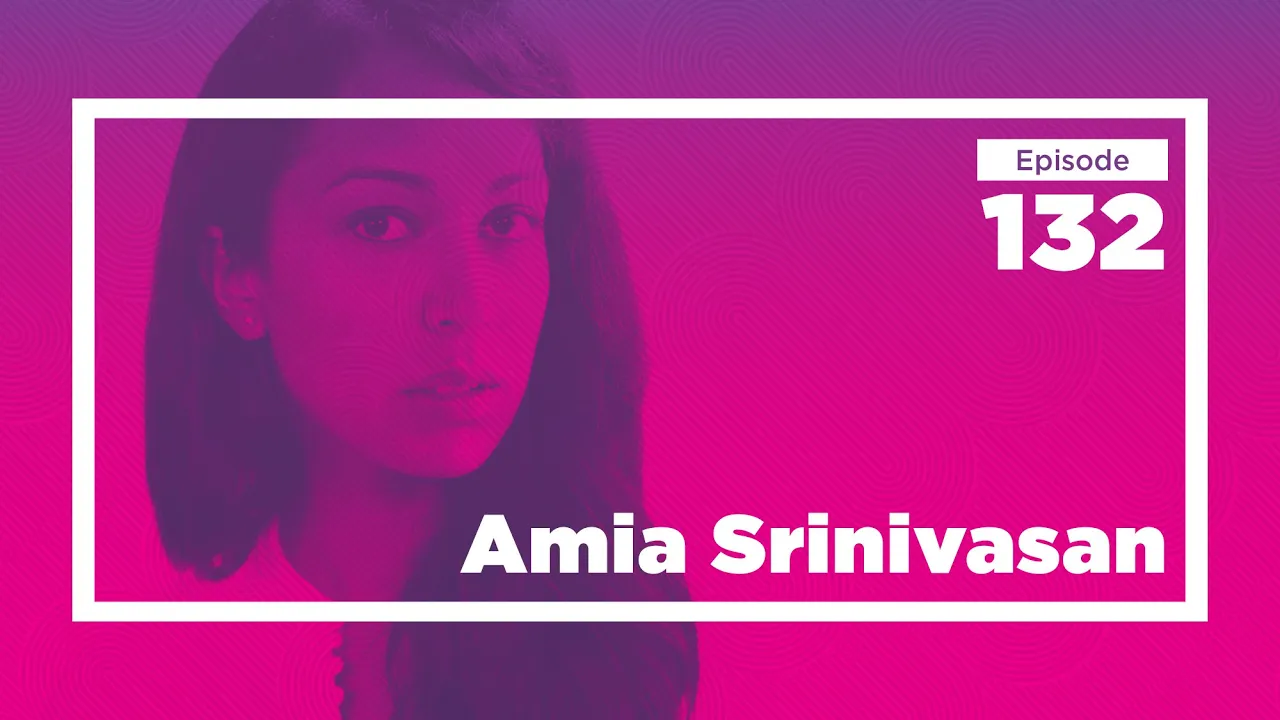
Source: Amia Srinivasan on Utopian Feminism | Conversations with Tyler Channel: Mercatus Center Published: November 21, 2023 | Archived: April 23, 2026
Video: Amia Srinivasan on Utopian Feminism | Conversations with Tyler
Channel: Mercatus Center
Published: November 21, 2023
Duration: 1:05:02
Views: 5,148
Category: News & Politics
Video ID: 4vVsp1-Zs0A
Description
What is our right to be desired? How are our sexual desires shaped by the society around us? Is consent sufficient for a sexual relationship? In the wake of the #MeToo movement, public debates about sex work, and the rise in popularity of “incel culture”, philosopher Amia Srinivasan explores these questions and more in her new book of essays, The Right to Sex: Feminism in the Twenty-First Century (https://us.macmillan.com/books/9780374721039). Amia’s interests lay in how our internal perspectives and desires are shaped by external forces, and the question of how we might alter those forces to achieve a more just, equitable society.
Amia joined Tyler to discuss the importance of context in her vision of feminism, what social conservatives are right about, why she’s skeptical about extrapolating from the experience of women in Nordic countries, the feminist critique of the role of consent in sex, whether disabled individuals should be given sex vouchers, how to address falling fertility rates, what women learned about egalitarianism during the pandemic, why progress requires regress, her thoughts on Susan Sontag, the stroke of fate that stopped her from pursuing a law degree, the “profound dialectic” in Walt Whitman’s poetry, how Hinduism has shaped her metaphysics, how Bernard Williams and Derek Parfit influenced her, the anarchic strain in her philosophy, why she calls herself a socialist, her next book on genealogy, and more.
Transcript and links: https://conversationswithtyler.com/episodes/amia-srinivasan/
Recorded September 8th, 2021
Stay connected: Follow us on X, IG, and Facebook: @cowenconvos https://www.twitter.com/cowenconvos https://www.facebook.com/cowenconvos https://www.instagram.com/cowenconvos
Join us on Discord: https://discord.gg/JAVWP7vTxt
https://conversationswithtyler.com
Thumbnail photo credit: Nina Subin
Tags
Economics Policy Lifestyle Culture Feminism
Transcript — YouTube panel (English (auto-generated)
0:00 [Applause] [Music] [Applause] [Music] conversations with Tyler is produced by the mercada center at George Mason University Bridging the Gap between academic ideas and real world problems learn more at arcades.in conversations withth tyler.com hello everyone and welcome back to conversations with Tyler today I’m here chatting with Amia reason who has rapidly become one of the best and best known philosophers she’s a professor at Oxford University she has a new book out which has made bestseller lists everywhere called the right to sex it has been one of the huge big hit books of the Year Amia welcome thank you so much for having me Tyler I’m really pleased to be here now you’ve described yourself as a utopian feminist so in your vision of utopian feminism how much room is there for what I would call compartmentalization so just to give a simple example if you look at say standup comedy a lot of it is sexist or
1:08 racist or even if it’s not it’s perceived as such what happens to that in the Utopia do we just compartmentalize and let it continue or how do you treat it I’m not sure about room for compartmentalization I do think there’s a lot of room for context so for example you know when you’re thinking about the violence in rap lyrics right an obsession that began in the kind of conservative Pearl clutching right in the80s you’ve got to think about what those invocations of violence are doing performatively in a piece of art that is rap music and it’s not the same thing as someone standing up in the middle of the Town Square you know trying to deliberately incite violence against people right so I think not even speaking about the Utopia of just speaking about you know how we should think about performative utterance is right now I think we need to address them with a great deal of contextual sensitivity and think about in general
2:09 what is happening in these particular cases right so what seems to be problematic might not be but then let’s be honest like if youve spent any time in a comedy club and I recently did that when I was last in in La I mean there is just a lot of quite naked sexism there it’s pretty shocking despite the fact of this kind of feminist revolution in in comedy just how much standup comedy is just really quite comedically boring in sexist now there’s this question about I take it that one of the thoughts you have is something like humor right which is a brutal element to it how humor fits into Utopia is a long-standing puzzle because humor is often brutal right look I don’t think the Utopia or the kind of post-revolutionary world is a place without any form of brutality and it’s certainly not a place without humor it’s going to have disappoint ointment and heart AE and tragedy and tragic comedy
3:04 human foibles will still exist heartbreak will exist and so with all of those things you have humor I mean what I think is very limited is the thought I’m not suggesting that you’re advocating for this thought which is that what you basically need structures of organized political oppression like racism to have humor I mean the Greeks had humor without having racism right they had other systems of domination but they had a great and advanced set of humor often directed at intellectuals and philosophers who I think are often very much a worthy Target I think there can be this view on which ending forms of domination and oppression somehow drains life of all that is special and textured about it humor love intimacy friendship I just don’t think that’s true I think in fact what the end of domination would do is release us more fully into the specific things that make human life worth living including humor now there’s an interview with you where you described your own work and book and
4:04 I quote as discomfort ambivalence and truth-telling I thought that was a good take but I suppose my thought is this if you’re always carving out space for context and ambivalence is there some path along which you end up in a kind of social conservatism admittedly a feminist social conservatism but let me ask like what parameter values would have to be different for you to end up as mostly a social conservative you don’t have to think the values are that way but what does that counterfactual look like where I amas and I’m a social you end up as a social conservative because there’s always context there’s always ambivalence you’re carving out these spaces with multiple perspectives right building these worlds and sort of without intending it you create all these spaces where there’s plenty of room for social conservatism which is then respected and intact so I mean I should say that while
4:56 I’m ambivalent about some things I am very adamant about some other things in the book right so it’s not that my general take is one where we should be ambivalent about every question or we feel like we can’t come down on certain sides so for example I have very strong and I think you know within the American mainstream very controversial views about the decriminalization of sex work for example I think there’s a very clear case grounded in basic political considerations and ethical considerations for why we should decriminalize sex work totally but I do think there are other cases for example where we’re thinking about how to deal with sexually abusive men or the relationship between radical politics and state power where we have to be more circumspect and ambivalent right and so I don’t want to say that I just my general kind of political Outlook is one of ambivalence so what’s the closest path
5:48 counterfactually right is that the question between me and sort of like a conservative worldview I mean I can tell you the parts of conservativism that are sort of most attractive to me but to get you sort of all the way there like someone might say well if the costs of single parent families were much higher than I thought I would be a social conservative I’m not saying that has to be your answer but that would be a kind of answer to the question yeah it’s a interesting really interesting question I’m not sure I’m going to give a very good answer to it I think there are interesting questions about the place of community tradition rituality in human life and their relationship to value and I think conservatives in the true sense of conservatives are sometimes correctly criticize the left for not paying enough attention to some of those things that really do give human life life value and there’s a question about how you make
6:45 room for those things in a society that’s also radically Democratic and plural I think liberalism’s answer hasn’t been a hugely successful one and so the left has to offer an alternative right an alternative Vision on which you can have real Community Affinity certain forms of collective ritual tradition but in ways that aren’t oppressive and I suppose that my closest path to conservatism would be you know if I were the kind of person which I’m not who just thinks that actually the only plausible model for those things is a kind of nonsecular you know broadly speaking religious but also culturally and ethnically insular vision of community I in no way endorse that but I think that I have and we on the left generally I’m not including you people who are on the left generally you know do have more time for that part of the conservative critique than just sort of liberals who think that well no you can just have a
7:46 basic pluralistic society in which everyone is within certain constraints able to like live their vision of The Good Life so long as it doesn’t impinge on anyone else’s ability to do the same and that’s totally workable I think think that Vision has left us in a place of mass alienation unhappiness and a certain kind of spiritual vacuity and you can have that starting point and go in very different ways and you can go very right-wing from that starting point that’s just not the way I go it seems to me that as we move closer to what you call a feminist Utopia or just in general make improvements of the world that men in women will become more different so there’s an empirical literature it suggests in more egalitarian societies personalities of men and women are more different the evidence on stem right there’s more stem Majors per capita or proportionally in Iran than in Sweden so when things are very bad men and women in certain ways are forced to become similar as things
8:43 get better they seem to become more different right so I mean are you comfortable with the probable reality that in a feminist Utopia men and women will be more different than they are today overall on average I would just deny the premise I mean I think there’s so many confounds in the contrast between Iran and Sweden but it holds for countries in general right in countries with less gender egalitarianism women are more likely to be stem Majors countries with a high degree of gender egalitarianism such as the nordics have relatively low proportions of women as stem Majors yeah relatively I don’t think those places are I mean in the Nordic countries I mean single mothers are still the worst off demographic you still have very entrenched like gender stereotypes you still have very high rates of sexual violence I mean when we’re talking about gender equality yes they are better in some ways but I don’t think these differences are profound enough to be able to give us any deep
9:41 sense of what it would look like to do something that many feminists like me would like to do which is abolish gender as such I think it would be just as Mill thought it was ridiculous to try and ascertain what women were kind of innately oriented towards doing or what their capacities were for doing what their capacities were under the conditions of 19th century patriarchal England I think it’s pretty ridiculous to try and read it off of like the differentials between Iran and the Nordic countries so I’m imagining a world in which gender doesn’t exist right so you have people with varying different kinds of bodies so to restate your hypothetical is the question how would I feel about a world in which people who are you know quote unquote female bodied were like gravitated towards certain things and people who are male body gravitated towards other things is this sure like men seem to Value women’s looks more highly in gender egalitarian societies also
10:37 there’s a lot of independent bodies of literature Sor I just got to stop you here we are not going to have a productive conversation If You Begin by just describing the Nordic countries as gender egalitarian countries and relative parents they are no that’s like calling them socialists like yes they are slightly more socialist as compared with the us but the idea that they are gender egalitarian is to just massively underst understand what it is that feminist and what it is they Envision when they’re talking about Liberation from patriarchy it’s much more than just slightly lower rates of sexual violence a smaller wage Gap I mean these are the kind of things that the feminists of the late 60s and the early 7s the radical feminists of the women’s Liberation movement they thought those things were just trivial they demanded them but they thought that they should be answerable very quickly now they were wrong about that they were
11:29 wrong about just How Deeply entrenched the status quo was and they were also wrong about the rise of the new right in the US and the UK but their sites have always been set on something far more demanding than what we see in the Nordic countries today but if we think of male subjection of women or Mills writings in general he’s really a master at using cross-sectional variation from what he observes to draw inferences and I’m worried that in your view we don’t really have access to evidence you don’t see enough variation in the data period that strikes me as epistemologically nihilistic in a way and that sooner or later you’re going to use cross-sectional evidence such as comparing sex workers in New Zealand to sex workers in Germany in ways that are inconsistent with your broader skepticism about cross-sectional evidence no well no so there is great variation in legal regimes right in how they treat sex work so you have a country like the US where sex work is
12:24 almost entirely criminalized and very heavily criminalized as well so laws against sex work are routinely enforced by a very powerful police system and then you have countries like the Nordic countries which experiment with the so-called Nordic model which are supposed to attack demand but not supply you have countries like the US where you again have sex work but it has a different regulatory form New Zealand New South Wales and there have been very intensive studies about the different effects on sex workers in these different regimes and sex workers write about the these things all the time so it’s not like I’m an nihilist whatsoever or certainly not a skeptic I mean I think we should look at the evidence but I think we should also be like intensely cautious about drawing precisely those conclusions that have been drawn over and over again in the history of thinking about women and men and thinking about gender conclusions that
13:20 would want to suggest that you know women are innately drawn towards certain forms of activity and labor and self-expression so just to give you some examples here have you looked at the data on gendering in infancy the way in which you can get young children and by the way this happens in the Nordic countries as well they can actually identify those toys that are associated with girls and boys like preverbally there’s also data that shows that the way that parents interact with their infants differs greatly depending on the Infant sex right so boy children are allowed to roam more freely on the ground they are like picked up less often held less often they’re described in different terms so boys are like bold and energetic and creative you know girls are like sweet and pretty I mean the idea that this sort of thing that there is any example of a known Society where we’re so distant from that such that we can start to get a good grip on
14:21 what women and men are innately like I think is epistemically naive I’m not saying that this stuff isn’t interesting and you might you might end up being right in the end I might end up being wrong that would be a parameter value that might get you closer to social conservatism maybe no it really wouldn’t part of why I find this whole kind of discourse problematic is because I mean I think we should be suspicious when we find ourselves attracted to data very very thin and weak data that seems to justify beliefs that have held great currency in lots of societies throughout history in a way that is conducive to the oppression of large segments of the population in this particular case women but I also think one era that is consistently made in this discourse in this kind of conversation about what’s innate or what’s natural is to think about what’s natural in terms of what’s necessary so this is a point that schuth Firestone made a very long time ago but that very few people register which is
15:24 that and it was actually made again to me recently by a philosopher of science a philosopher of biology which is that look what’s natural isn’t what’s necessary I mean it’s not even like what’s natural offers a kind of good equilibrium point I mean think about how much time you and I just spend sitting around completely unnatural for humans to sit around and yet we’re in this kind of equilibrium point where vast majority of humans just sit around all day so I think there’s just a kind of separate question about what humans as essentially social cultured acculturating creatures what our world should look like and that’s distinct from the question of what natural predispositions we might have it’s not unrelated but I don’t think any of us think we should just be forming societies that simply allow us to express our most quote unquote natural orientations should women’s chess as a segregated activity continue to exist we
16:20 don’t segregate chess tournaments by race or or by anything well sometimes by age but anything other than gender yet women’s chess is a whole separate thing like should that be offensive to us or is that great I don’t really have a view on that but you’re opposed to segregation more generally right isn’t it odd not to have a view on that no I don’t think it’s odd to not have a view on something about which there has been a great deal of ink spilled so there are philosophers Deus of games and sports in general who spend a lot of time thinking about how we should organize competitions gaming competitions in particular and I don’t know what it means to be opposed to segregation as such I mean I’m opposed to racial segregation that is true I’m not opposed to other forms of quote unquote segregation like age segregation so I think for example that like it’s okay for certain amusement parks like clubs
17:10 nightclubs shouldn’t allow like kids under 18 if you’re in this country or under 21 I think there are interesting questions here I don’t play chess and I don’t follow competitive chess so I don’t really have a view what’s the role of self-ownership in your moral framework so on one hand I have deep respect for an a notion to which we might be gesturing when we talk about self- ownership in terms of the sovereignty of the body and maybe a certain set of Rights about disposing of one’s like body and labor as one chooses I don’t love the talk of self ownership I mean I think that is to import a property model which doesn’t totally get our relationship to the self quite right if you want to know more you can you can ask me but you could Envision it as a kind of inviolable conent autonomy doesn’t have to be locky in ownership but I think what I’m getting at is once you buy into enough self- ownership say to have that as a first line of defense against slavery or restrictions on what
18:14 you can do with your body how do you square that with a certain skepticism about consent models like what stops you from moving from self- ownership to consent I mean my skepticism about consent models is very specific in nature so basically the way I think that sex exists in our society which is say like a broadly patriarchal society at the moment consent effectively operates as a necessary though not sufficient condition on ethically permissible sexual activity probably not with oneself I don’t think one really sort of asks and gives consent to sex with oneself but with other people right a necessary condition but I think not sufficient because I think there are cases of ethically problematic sex that are consensual so one example I talk about in the book is Professor student sex obviously sometimes Professor student sex like sex between adults in general can be non-consensual but I think there are
19:16 plenty of cases of Professor student sex which are uncontroversially or should be uncontroversially understood to be consensual but nonetheless are problematic there’s a deeper feminist critique of the role of consent in sex which objects to the preconditions that make the ritual of consent asking and consent giving necessary in the first place so when you say to someone well imagine sexual interaction without the ritual of consent giving and consent asking they just imagine sexual violation but think about all of the times you interact with I don’t know an really old friend right so a really old friend your like old high school or college buddy like loses a child right and you like put your arm around them and you console them something we haven’t done a huge amount of under the pandemic you don’t ask for that consent you don’t ask for consent to be able to put your arm around your buddy and the reason is because the nature of your relationship as friends
20:22 involves a fine Attunement to your friends desires and needs and wants right you don’t go into that interaction with the friend thinking I want something that they might not want right there isn’t a kind of implicit presupposed mismatch of desires or wants right so it’s not a contractual exchange it’s not a negotiation it’s like you wouldn’t want to put your arm around your friend if that’s not what your friend needed at that moment right so the very fact that we have such an emphasis on consent when it comes to sexual relations I think reveals a certain set of background conditions about how we interact sexually which is to say there are lots and lots of cases where one party basically wants to have something that the other person doesn’t really want in some sense to give whether there’s a kind of misalliance there isn’t that same kind of level of Attunement I mean to put it really crudely lots of people are turned on by the fact that another person in some sense doesn’t really want
21:25 to have that sex right so then the ritual of consent becomes necessary it’s not the only reason consent matters right the other reason consent might matter and you see this very clearly in kind of BDSM practices is that sometimes we just don’t know what the other person wants because sex is really complex and people kind of perform in different ways and so sometimes it’s really important to just ask someone straight up right as you know disabled individuals in the Netherlands often receive a kind of sex voucher right to transact with sex workers is this a good idea or a bad idea they’re a kind of incels not the way the word is usually used right but they’re at least in some cases invt call them incels well but the literal meaning of the word right yeah but but a good idea or a bad idea no no Tyler I want to get clear on this because it doesn’t matter that that’s the literal meaning of the word right it’s not the literal meaning that’s the atmology of the word
22:17 the atmology of the word is involuntary celibate but in cells for example deny that there are women in cells right I mean on your view definitionally there are women in cells right so long as there is at least one woman who is not having sex and would like to be having sex incell names a member of a certain particular subculture and I think this is really politically important because there are lots of men not just men with disabilities lots of men lots of women who are romantically and sexually lonely in various kinds of ways fall under the descriptor involuntary celibate but like wouldn’t describe themselves as incels and certainly wouldn’t subscribe to a kind of incel ideology olog so I think it’s of extraordinary political importance not to use the word Insel to Simply mean involuntary celibate good idea or bad idea I see why you don’t want to use the word because you’re already seeing ahead to the reductio right well no I’m just going to answer the question do I think it’s a good idea
23:13 or a bad idea I think it’s a really difficult idea I think we have to start with the perspective of sex workers so why is it that most women engage in sex work well most women who engage in sex work typically do it because they need the money they can’t get better forms of work often because of their status as trans women or a lack of documentation or disability the rates of women with disabilities are really high in sex work so when you take a population of women who are doing sex work because of those reasons and then you create a voucher system of the kind you’re describing I mean I think you’re in problematic territory I think in in general also um which isn’t to say let’s raise the price right you could you could make the voucher work sorry can I just finish my thoughts Sor right go ahead that’s not to say that in a kind of utopian society you wouldn’t have people who operate as sexual surrogates right so Charles fer the utopian socialist imagined precisely
24:18 this so he thought that there would be a class of people a kind of amorous nobility who would have sex with you know elderly and infirm people who wanted to have sex but who weren’t otherwise sexually desired and these people would do it out of the goodness of their hearts right they would do it because they were kind of amorous nobility a kind of no bless obl the problem is thinking about something like that or thinking more generally about the redistribution of sex or thinking about sex as a thing to be potentially redistributed is that like we’re working against a background a patriarchal backdrop on which men routinely think that they are sexually entitled to women’s bodies right and when that that’s the real social backdrop it becomes I think very difficult to have these further questions about things like sexual surrogacy in a way that doesn’t problematically feed in to the reinscription of women as having a role to play in the sexual servicing of men and this is the view you get from sex
25:18 workers so you know radical sex workers like Juno Ma and Molly Smith who are the authors of revolting prostitutes are very uninterested in answering the question of well you know should we in an ideal or even in the real world have sex workers being subsidized by the state to have sex with disabled people because they think it’s a massive distraction from the reality of sex work for the vast majority of sex workers which is true it seems there’s a simple David braybrook like basic needs argument that you know disabled individuals in the Netherlands there’s something very good we could do for them that also lowers the stigma from them having this kind of fulfillment or enjoyment and then to site this big external ideological debate and say well we’re not going to do this for you because we don’t like its symbolism in some other set of debates that we think are more important for you that strikes me as wrong so Tyler let me ask you this
26:11 why are you interested in the question of disabled men having State subsidies for sex well I said disabled individuals right no you just said disabled men okay well that’s what most of it has been right right why is that in my view men and women are interest ically different for biological reasons including in their attitudes toward sex and more disabled men are interested in taking up that offer than are disabled women what are the biological drivers of these intrinsic differences between male and female attitudes towards sex on your view probably ultimately darwinian the fact that there’s a different investment in child creating and child raising with men than with women so we’ve evolved to be somewhat different right so you think for men sex is a basic need but for women it’s not no that’s it’s not my view at all I’m not always sure what basic need means but I certainly think if there’s a voucher system it should be
27:03 available to Men Women other genders however one wishes to talk about it not just men right so let me just say you were asking like when we’re thinking about this policy question why should we bring in like a whole like completely orthogonal ideological question it’s like no that’s what it is to do politics what it is to do politics and also to like do policymaking is to think about the real world consequences of policies that you put into place so what I want to know and I don’t know enough about is what are the effects of the actual women who engage in sex work in the Netherlands how much do they get paid for this are they happy to be doing this to what extent are they subjected to sexual violence because of this I mean how does this change and inflect their like labor rights that is the question this is not an orthogonal ideological issue but yeah I think I would just get off at the very start when you’re just thinking like sex is this basic need for
27:57 men I mean if we’re talking about pernicious ideology like I think that is very much aive of a pernicious patriarchal ideology that thinks that you know for men sex is this basic good like it’s like food or water the women who refuse to have sex with men are depriving them of like a basic necessity women are both that necessity and The Gatekeepers of it I mean part of the reason this is such bullish is that if you look at the incels who spend all of their time ranting in precisely these terms online they are not interested on the whole in having sex with sex workers and you know who else they aren’t interested in having sex with they’re not interested in having sex with non-white women with women who are not stereotypically attractive women who are fat women who are shy women who are on the autistic Spectrum women who are socially awkward why well because they claim that what they’re upset about is the deprivation of this basic need which is sex but what they’re actually upset
28:55 about is their perceived loow status in a sexual hierarchy right a hierarchy that rewards men who supposedly get to have sex or are attractive to high status women so yes I do think that you cannot have these conversations about sex work and how to legislate it without centrally engaging with questions about patriarchy now I’m a utopian of a sort myself though may be different than the way you’re a utopian and I worry about a world where every generation or a country there might just be few fewer people including fewer women so this is already happening in Japan in Italy fertility rates are falling in many different places and if we have a world where this population keeps on falling number of people living is smaller smaller smaller that’s a problem so let me ask you what should we do to increase fertility rates or is it part of your Utopia that we just let population keep on shrinking well you know as you yourself just kind of implied although glossed
29:54 over there are countries where population are increasing right so poor countries right very far from Utopia as countries get richer so in Sahel part of western Africa right there’s seven children to a family but no one wants that as countries develop it seems they fall below replacement rates sorry I’m not addressing the question I’ll get to that in a second the question about what drives falling fertility rates I was just pointing out that if a country like the US is worried about its population issue it should be thinking about its immigration policies this is actually a point that’s made by a very right-wing Catholic like Adrien verule right and it’s one of the things that I think he’s right about of course he only wants to allow Catholics in but in any case look the anxiety in so many of these countries about dwindling population is about demographic threat right it’s not about population as such it’s not about having more workers it’s not about having but address the anxiety about
30:53 population as such because I would gladly triple immigration but I understand full well the world as a whole cannot rely on immigration to replenish population and more and more countries are moving into the zone so you’re addressing some other criticism that bugs you politically but just for the world as a whole as fertility rates fall what do you think we should do about it Tyler the reason I was addressing this question is because I think that some of the ways you frame debates and I’m a very much an admirer of yours but they unthinkingly just replicate I mean profoundly misogynistic and racist ways of thinking that come from the American like mainstream I’m not saying that you’re like invoking some kind of alt-right ways of thinking I’m like this is just the way that people talk about this in the US mainstream is just extraordinary exhibit a is Japan not a white country hold on no you’re trying a kind of guilt by
31:44 association no Tyler I’m not no I was just saying I want to get specific on the question the specific problem you were asking is like what do we do about dropping fertility rates in certain countries now I will get on to the question of what you do at as such on the question of correlation between development and dropping fertility rates I’ll get there in one second I do have thoughts but I just wanted to say because so many people listen to your podcast that the first thing we should do when we’re talking about dropping fertility rates is think about immigration policy I’m delighted to hear that you are an open borders person okay let’s go on to the next question as the world moves into utopian territory yeah what do you do to boost fertility rates feminists for so long the country in which you live since the late 19 60s have been writing at Great length about the extraordinary difficulty of childbearing
32:35 and social reproduction and child birth in the US okay and there are similar things that you find by the way in the Italian feminist tradition if Italy wants to think about this in the British tradition so I mean someone like Adrien rich wants to distinguish between the potentiality of human reproduction from the actual political institution that is motherhood what is that institution it’s an institution that has privatized the responsibility of child birth Child Care Child rearing into individual families right there’s still no Universal 24-hour child care the idea that you’re doing everything you could to encourage people to have children in a society in which precisely because you implicitly recognize as as every good Economist that social reproduction is a form of Labor right on which society depends but at the same time don’t compensate women who disproportionately perform that labor in any way and make their lives harder than ever before that’s just a
33:35 kind of central contradiction of you know early 21st century political life in a place like the US okay so what are some things you want Universal 24-hour child care Universal excellent prek education you want non- stagnating wages that don’t presuppose to full-time workers right you want uh better maternal Health Care you want free Universal Health Care I mean all of these basic social Provisions now you might think okay but you know Scandinavian countries which have some of this stuff like don’t well you know they have some of this stuff I think you’re already anticipating a settlement right so you’re reading off the data and saying oh it doesn’t matter if we did all of that even if we did all of that we would have dwindling fertility rates and I want to say TR and see I think you have to rethink also like the nuclear family I think you have to rethink pattern of family making I mean look at what happened during the pandemic every woman who thought she was an egalitarian
34:32 relationship with a man like almost every woman found out that she wasn’t why well because she still did all of her employment work and then also had to take the vast majority of social reproduction and child care right that work is systematically undervalued it’s also systematically undervalued when it’s privatized in the form of healthcare and nursing a lot would need to change now you might want to just hold out and say well you know it’s only under conditions of intense coercion and Desperation that women are willing to have children and if that turns out to be right I’ll bite the bullet and just say fine let me ask you a longer question this is about your work I’m going to start by reading two quotations from you the first is and I quote one thing history might show us is that it is the prophets and not the mere pragmatists who are the most powerful World makers here’s the other quote one
35:23 might hope to take a similar attitude about philosophy in general its job we might think not to get the world right but rather to get ourselves right now those two passages from your work really struck me let me continue if I think about everything you’ve done your interest in the genealogical fallacy what seems to be a broader interest in the biographical origins of ideas as evidenced by your love for Dan chia’s poetry book your interest in our own mental States not being transparently known to us your a book called the right to sex what’s your best account of the bigger picture of how all that fits together like is it you as profit and World maker and these are different parts of the bigger picture or just tell me let it make sense for me because I see there’s something there and you haven’t spelled it out yet yeah I neither a prophet nor a world maker I was really hoping you were going to tell me because that’s where this felt like this was leading up was like a grand theory of how these things are united I
36:21 mean I share with you the feeling that there is something that unites these different parts of my work and not just the trivial fact that they’re all produced by me I don’t think I have a great account of what that is and this speaks in part to one of my preoccupations which you identified which is the non-transparency of ourselves to ourselves right the extent to which we can not know ourselves and in some cases I think that can lead to what I’ve called a kind of tragic world view but it also implies the kind of necessity of social relations for forms of self-standing right so that’s kind of why I was hoping you were going to give me the answer to how this all links up but maybe I can say I can kind of point to a couple of themes that I think speak across maybe the kind of more epistemological parts of my work and more feminist parts and you can tell me if any of this Rings any bells so I have
37:10 this preoccupation this is what my dissertation was on with the limits of self- knowledge which is not to say that we never know ourselves but that this kind of what’s called this cartisian picture although it’s unfairly attributed to decart this cartisian picture on which our minds are this kind of theater that’s totally knowable which operates as a kind of compensation for the potential unknowability of the external world I think that’s a bad picture of the mind not for the reasons Freud says I mean I think those reasons are right but those weren’t the reasons I gave I gave a kind of more technical argument in epistemology and once one has that picture for a reason I won’t totally go into here it implies that agents can do as best as they can by their own lights right and still get things kind of very wrong whatever whatever the normative system is right no matter how much you try to kind of
38:00 index normative truths to how things seem from the internal perspective it’s still going to be the case that our normative performance is sort of Hostage to these external forces so it gives you this kind of tragic world viw where how we do in the world depends sort of radically on where we find ourselves in the world how we’re positioned with relation to the world and I think that same Spirit of kind of tragedy is built into my feminist Outlook so you called me a utopian and you know I think in some sense that’s right but I also have a view on which there’s really no progress without regress so for example I mean take decriminalization of sex work right so I told you I’m adamantly in favor of it but I think there’s an interesting question about whether decriminalizing sex work would have the hoped for utopian effect of transforming the basic relationship the wage relation the relation women have to work would allow sex workers to refuse sex work
39:03 right whether decriminalization has this kind of transformative ability or whether all it would do would be to make sex workers better off as workers but kind of reinscribe sex work into a capitalist order that might be tragically true right but we should nonetheless do it or I mean take the mass entry of women into the workforce and the way in which that on one hand has kind of obvious benefits for women on the other hand contributes to the demise of the family wage and entraps lots of women in forms of work that are alienating and atomizing and in particular and this is something that black feminists warned against right when middle class white feminists were arguing for Mass entry into the workforce black feminists were arguing for their right to stay at home right and to actually be the beneficiaries of a family W which they had never been so I suppose there’s that kind of of tragic worldview that maybe crosses over from epistemology into feminism and then
40:02 there’s also the interest in in genealogy as a method and world making as a method which I have a kind of epistemological interest in but I’m also drawn to the history of feminist thought because I think of lots of the theorists and the feminist tradition as being those kinds of profits and World makers right trying to do something where they were engaged in forms of kind of conceptual Innovation which were supposed to actually restructure materiality in some sort of sense right so I think you know when for example prostitutes started calling sex work work right calling it sex work they weren’t simply trying to give a new name to something right they were trying to do something reorient our relationship to this practice and have lots of kind of Downstream material effects in how we relate to that practice so the history of feminism is full of these attempts at prophecy and world making let me give you my answer to my own question and just to be clear I am not at all a
40:58 canonical Source here I’m just making this up like this is not you but I guess I read you as a consilience theorist so there are all these complexities and ambivalences in your own orc which you’re well aware of so to be sure of what you’re doing point is to change the world in a marxian sense you want consilience from a lot of different directions so you’re sort of broadly feminist Marxist so you see Marxism which has too much emphasis on the objective and then you see Continental philosophy that has too much emphasis sometimes on the subjective so the interest in biography genealogical fallacy is somehow sinking your subjective experience with what you feel you know is true and then there are these broader social structures determining things and we can’t quite be sure of our own supposedly cartisian knowledge and you want to bring together all those different forces in this broadly consilient picture in a way that
41:56 lets you move forward in the marxian sense of someone determined to change the world be a prophet be a world maker rather than just writing about it but because you see complexities you need all those things to feed into this big river does that at least make some sense to you that makes some sense I’m not sure about the word consilience in particular just because it suggests a perfect coherence whereas I think I see myself as sometimes just embracing fundamental tensions without trying to offer a perfect synthesis what you describe is also just very recognizable from lots of feminist theorists who you know as you say you know found marks either too objective or too obsessed with like quote unquote material right insufficiently interested in the psyche and the psychoanalytic right so then you bring in Freud but then Freud and Marx both have their problems right there either an unwillingness to read the family or an over reading a misreading
42:54 right so I think that General desire to pick up these various kinds of intellectual strains which often come out of mass male Traditions or Traditions founded by men and then re sort of creatively appropriate them and put them in conversation with each other and do something new is very much a kind of feminist tradition of its own what’s the best Brian Eno album what do you think is the best Bri new album another green world I think by a long mile but I love many of them and then music for airports especially the bang on the can version not the original release those would be my two picks those seem good I think another green world is up there definitely what do you think of Susan sag I haven’t read sag since I was an early graduate student she made a very sort of strong impression on me as the stylist I loved reading the whole volume that is against interpretation I think she’s due for a
43:50 revisiting from me certainly there was much about her life that was I think very cool and EnV able there’s an extraordinary essay though if you have an interest in the sonag by Terry castle in the lrb about sonag which offers quite an extraordinary and very humorous perspective how does your work as a playwright feed into your work as a philosopher well I haven’t written plays since I was an undergrad but you’ve written them it’s a lot of work right so it mattered to you matters to you it certainly mattered to me a great deal and I loved writing plays and I had a very close friend of mine who was a director when we were undergrads and he would direct them and that was a really lovely partnership and I’ve always loved the theater and I love reading plays the plays though themselves they were very much inflected by the philosophy I was reading at the time I think the last one of the last plays I wrote was about a
44:44 philosophy Professor who had just read too much kard and then so one day when he’s out for a run with his son in Central Park he tries to sacrifice him like reliving the kind of Abraham and Isaac story that a cute guard meditates on in fear and trembling and I think the best theater even when grounded in a certain kind of philosophical tradition is one that carries its philosophy very lightly which I don’t think my plays did could you have become a lawyer as you once suggested might have been the case or was that just a mistaken view that never could have happened so you ask me my view on modality in general not on philosophical but your view on you oh my view on view so maybe when I was eight I thought I could have been a fireman but I couldn’t have actually been a fireman right so your view is an undergrad that you might have been a lawyer is it like me thinking about being a fireman or is there a coherent version of you that’s now a lawyer I think there a very
45:38 coherent though less happy version of me that’s a lawyer in part just because it’s such a common trajectory for American undergraduate students who especially major in philosophy which I did you know you go to law school if you don’t really know what else you were going to do and I very nearly did that that was my plan and then what happened was I won a scholarship to Oxford so ended up doing graduate school in philosophy and that’s basically what stopped me from going to law school it’s not totally clear to me what I would have done with a law degree it’s more likely that I would have ended up a legal academic I think than an actual practicing lawyer giving my dispositions is marquee dad strong as a philosopher or just a writer is he strong as a writer I don’t know that’s the question any is he strong in any regard I haven’t read the mar the sad since I was an undergraduate because I was acting as a dramaturge for a play about sad but you could argue he
46:33 sees there’s something wrong with the enlightenment or liberal understanding of desire and that it actually leads to untenable places or are we reading too much into him no I mean I think that’s an interesting reading and I don’t really think I’m not very preoccupied by the question of what his intentions were I think if it’s a useful dramatization of that important observation then it’s useful but I would have to reread some to be able to comment any further Why does Walt Whitman interest you you have done a deep dive this gets us back to the autobiographical side of your writings which to me is always under the surface never quite comes out it is but people over time will bug you enough that in one way or another it will probably come out right and thus you love Whitman yes I do love Whitman I mean for one thing is I read Whitman deeply as an undergraduate I didn’t know when I read him first I took a class with Harold Bloom and Bloom is an
47:28 enormous was an enormous fan and admirer of Whitman’s I think what I love in Whitman most of all is the combination of this bombastic plural all-encompassing deeply American deeply Democratic with a lowercase D desire to commune with life in all its complexity but that feeling gives way in Whitman to these moments of revolt and withdrawal and a desire to preserve The Sovereign self and I think that is a profound dialectic one that I can feel play out in my own life but also seems to me Central to much social and political drama but he’s also just a beautiful crafter of lines how has Hinduism shaped your metaphysics I remember walking into a metaphysics class Yale has this a shopping period like lots of us universities so I didn’t end up taking this class and part of the reason I didn’t end up taking this class was because I don’t remember exactly how the professor started but very soon into the class there was a description of the common sense that everyone had everyone
48:44 in the class surely believes that there are middle-sized objects right there are tables and chairs here there are people maybe the people are somehow special and different from the tables and chairs but we live in this material universe and this is reality and maybe there’s a higher reality as well but this is the kind of Common Sense View and I was just kind of shocked because that wasn’t my view at all it wasn’t the view I’d been raised to have I mean I quite literally believed that you know material reality was Maya was illusion and that the separateness of persons was also an important illusion and you know I believed in some sort of metaphysical monism and this is sort of why I’ve never really done analytic metaphysics even though I’ve done a huge amount of epistemology the metaphysics has always seemed to me to start from a starting point that I just find very difficult to get behind what are my metaphysics now I don’t have a worked out metaphysics I
49:44 think I’m more inclined now I’ve sort of been beded into the kind of what Peter Van inwagen called the common Western metaphysics the kind of Common Sense there are middle-sized dry goods there are ch and tables I’m sitting on one at the same time I think that roughly speaking Hindu perspective is very much with me I just don’t think it can really be philosophically articulated and I don’t think it’s very at least for me not interestingly put into conversation with kind of analytic arguments about what there is what’s the biggest influence of Bernard Williams on you his writing style and specifically his or you look disappointed by that answer well substantively like is there a problem in him that you feel you’re trying to solve because I find him quite open-ended and he’s a big influence on so many people he’s come into contact with right yeah I mean I never came into contact with him but well let me just say something about the writing style and then I’ll say something about the substantive thing because I don’t think they’re actually that separate I mean I
50:43 think he really does practice philosophy as a humanistic or he did as a humanistic discipline and if you look at his essays in for example the London Review of Books they’re very different from what goes under the named public philosophy today they are real works of philosophy right what they aren’t is a philosopher coming down from his Olympian Heights and Wheeling out a couple of philosophical distinctions which are supposed to help you know the masses get clear on things it’s rather Williams just doing philosophy in a way that’s respectful of an audience that expects them to do some work but that also does some work on his own part so I think that’s very important as a model of how to write about philosophy and how to write for a wider philosophical audience so substantively there are lots of things that Williams was interested in that I’m interested in but just to take one enduring preoccupation Williams
51:34 is very interested in the question of perspective and of points of view and he’s very interested in the aspiration to a perfectly neutral scientific description of the world and very interested in the question of what that leaves out at the same time he very much wants to resist a view put forward by Richard VY right which begins from a recognition of the contingency of World Views to a kind of nihilistic or skeptical conclusion about the ability to achieve sort of common understanding and so I’m very interested in that specific dialectic because Williams isn’t some knee-jerk realist who just wants to dismiss Roy and say well look Common Sense reasoning just gets us on to the true picture of the world right he thinks that you know a purely scientific picture of the world leaves out essential parts of the nature of of the world right so there you have to take up a certain kind of normatively loaded perspective to be able to describe the world correctly he’s in
52:35 this again in this kind of ambivalent position with respect to these questions about objectivity and value and perspective and I’m very much interested in that locus of problems what’s the biggest influence of Derek parfit on you I’m worried because I feel like you want me to offer an example of a substantive philosophical no method the way in which was philosophical I think is the greatest influence of his on most people but your answer may be different yes no that’s absolutely right the truth be told I think his greatest influence on me was just his quite indiscriminate kindness and generosity philosophically speaking right so he was just wanted to know what everyone thought philosophically and treated each and every person he encountered whether a philosopher or not as someone who could contribute to his own Endeavor of making sense of the world and it was profoundly Democratic I mean almost whitmanian right and very
53:33 startling to encounter so I knew him well as much as anyone knew him you know I knew Derek pretty well he was my adviser as a graduate student which isn’t the same thing as being my supervisor so he had no formal kind of pedagogical relationship but he read a lot of my work and commented on it but he also just asked me to comment on his work all of the time and he did this with everyone there was a kind of generos ity and openness and genuine horizontalism about his approach to philosophy that I think is extraordinary let me try another read on your work and this occurred to me when I read Judith Butler’s very good review of your book it struck me that you’re I think quite a bit more libertarian small L libertarian than the mainstream gives you credit for this comes out of your view on sex workers you’re trying to rebuild some new kind of utopian libertarianism based not on capitalism you see the the Vanguard here as trans individuals who precisely because to so
54:31 many people it’s shocking represent something that is new and breaking down a hierarchy and that trans is fundamental to your notion of how to undo previous hierarchies which are anything but emancipatory and to rebuild the foundations of some non capitalistic libertarianism on this idea of ambivalence complexity and context and the sense of kind of novelty difference diversity even shock from the trans movement and that those are are your New Foundations now again I’m not the canonical sourcer but how would you respond to that I think that’s interesting I think you’ve absolutely identified a strain in my thinking which I think I I’d be tempted to call it anarchic more than libertarian but I why you call it libertarian Libertarians typically have a very particular but forget about them we know what they are no no no I was talking about the state in particular so I think the thing you’re observing is that I have a huge amount of anxiety about state power and
55:33 about different forms of domination including State domination which distinguishes me from a certain kind of socialist perspective but I also have and I think you’re also noticing this a kind of more not just an anxiety about state power forms of authority but also an active Embrace of forms of dissensus innovation novelty boundary breaking boundary Crossing and I think that’s absolutely right and I think trans people specifically but queer people more broadly often participate in a kind of politics of a dissident politics right a politics that wants to SLO off certain forms of boundaries and constraints not always right and I don’t think that the rights of queer people have to rest on them being a kind of any kind of political Vanguard just to be clear but I do think it’s true that lots of people who have been active in queer politics and queer Theory Judith Butler is one of them are interested in articulating the way in which trans lives and queer lives
56:35 can be seen and read as a form of dissidence against gender but also against class against racial domination and so on but I think there’s another part of me and this gets back to your earlier question about what’s the closest version of Amia that’s a social conservative who isn’t totally ready to just just Embrace a picture that’s fully founded on dissidence and breaking down of hierarchies and norms and boundaries and that’s just about the pursuit of novelty and playfulness well I think this is a certain kind of philosophical foundationalism in me that is attracted to the idea of certain human universals and Universal forms of human flourishing now I think when we try and articulate what the conditions of human flourishing are beyond the kind of basic most basic necessities like food and water and safety and shelter we start getting ourselves into certain forms of political trouble right this has
57:35 historically been a problem for marxists right where the theory can seem to rest on a particular vision of species being right a particular kind of humanistic picture of what it is to be human and to live a human life well but I’m attracted to that thought as well there is that strong part of me as well that thinks that there is some content to the question of what it means to live well with each other and it’s not simply about free exploration and the challenging and disruption of boundaries so I’m ambivalent between those two things as we move toward close let me just see if I can push you a bit and where I suspect I disagree with you most though I’m not sure I know what your actual view is you said you’re very suspicious of the state and if I just look say at the last 30 Nobel laurates in economics not one of them will endorse socialism though they have highly diverse views and backgrounds so
58:28 if you’re suspicious of the state and if what we know of Economics is not so friendly toward actual socialism why be a socialist or am I misunderstanding what kind of socialist you are or if indeed if you are a socialist but I take it from your writings that you call yourself one I don’t know if I’ve ever called myself one in writing but I certainly do identify as a socialist that broadly identify as a Democratic Socialist so I’m not particularly impressed I’ve got got to say by the fact that the last 30 Nobel prize winning economists haven’t been in favor of socialism I mean you’d be hard pressed to find many socialists in the academy broadly for always hearing about the way in which the university has been overtaken by marxists but I mean look at philosophy you almost get none why is this well because universities are for all I love them and admire them and think they play or or can play an important social function you know are pretty class
59:25 selecting it’s no surprise to me that they skew very liberal and very Centrist on the whole so I mean I suppose the question is look what do you do about 21st century capitalism I think it’s uncontroversial or should be uncontroversial that capitalism understood not just as an economic system that Embraces markets right because at least on how I would use the notion you can have Market socialism but an economic and a social system that is founded critically on a class distinction right and we can also talk about racialized and gendered forms of capitalism we won’t go into that though here or we don’t have to it’s uncontroversial or should be that capitalism so understood has been an extraordinary driver trivially of growth but also of innovation of the alleviation of mass Poverty of you know technology of medicine I mean you know there’s no question I think about that I just am pessimistic about the induction
1:00:28 from that to the conclusion that capitalism is what we should be doing now I mean what are the other Hallmarks of capitalism well poverty like amidst super abundance I think that’s uncontroversial a tendency to crisis and break which always disproportionately harms the already worst off the pandemic is a great example of this A system that produces forms of work that are and we won’t even have to talk about the question of exploitation but just are subjectively very alienating and am miserating for increasingly many people and finally A system that has produced the single most potent crisis Humanity has ever faced which is climate change so my question is what’s next what do you think do you think capitalism is going to solve all of those problems I think scientific innovation supported by government to be clear is our best chance of solving climate change as a problem but I would put it this way I’m a little worried that you’re resorting
1:01:28 to a kind of genealogical fallacy and dismissing the 30 Nobel orates as from a particular class background I would agree they are but they’re also really very very smart people who’ve looked at the evidence and they think it’s about tradeoffs and it’s comparative and they think that true socialist economies perform worse on all or at least most of the metrics you site so like what is it empirically that you know that like they don’t or I don’t that’s I see a big gap between us sorry what I know and fact I think they know and you know is that we are in an extraordinary state of Crisis I mean the other thing I haven’t even mentioned is the profound deficit of democracy that capitalism entails I mean the idea that the US is a democratic system is just a complete joke and the idea that what you’re going to have is just some campaign Finance reform to fix that is ridiculous I mean you know the most important institutions of American
1:02:25 political and social life aren’t democratically run that’s true not just of the Supreme Court but it’s also true of Corporations so are there tradeoffs could it be that there would be less growth yes is that okay yes I think we need to be thinking about a degrowth economy is it the case that you’re going to maybe have less Innovation possibly are we going to keep on going full steam ahead with a system that causes Mass am miseration that’s exploitative deeply alienating is not not solving the problems that it says that the profit motive is somehow supposed to magically solve I mean I think that’s the question now when you’re asking about what kind of socialist models I mean I’m not proposing and I don’t think any plausible socialist does propose that what we need is a form of kind of you know Soviet state socialism I think what we need to be thinking about is the radical democratization of the institutions that shape political and
1:03:21 social and family life you’re very very far away from that in the US but what I’m fundamentally interested in is power of people to make decisions directly not indirectly through a rigged voting system which allows them to cast a symbolic every four years for one of basically two identical candidates I mean that’s not what we mean by democracy I would hope you would agree as well so my question is how do we have people exercising more direct control over the institutions that shape their lives including corporate institutions very last question after all the fervor surrounding your book dies down what do you hope to be doing next I hope to be getting back to my book on genealogy which we’ve spoken about a little bit the project on genealogy I’ve been working on it for many years now I sort of set it aside for a little bit to complete this feminism book but it’s a book that begins by thinking about the history of
1:04:20 genealogical thinking and then dwells in some of the epistemological problems that we were discussing and finally tries to think about the politics of genealogical arguments Amon thank you very much and again listeners and readers her new book is called the right to sex thank you so much thanks for listening to conversations with Tyler you can subscribe to the podcast in iTunes Stitcher or your favorite podcast app and if you like this podcast please consider rating it on iTunes and leaving a review this helps other people find the [Music] show
Looking for comments…
Searching Nostr relays. This may take a moment the first time this article is opened.
Looking for comments…
Searching Nostr relays. This may take a moment the first time this article is opened.