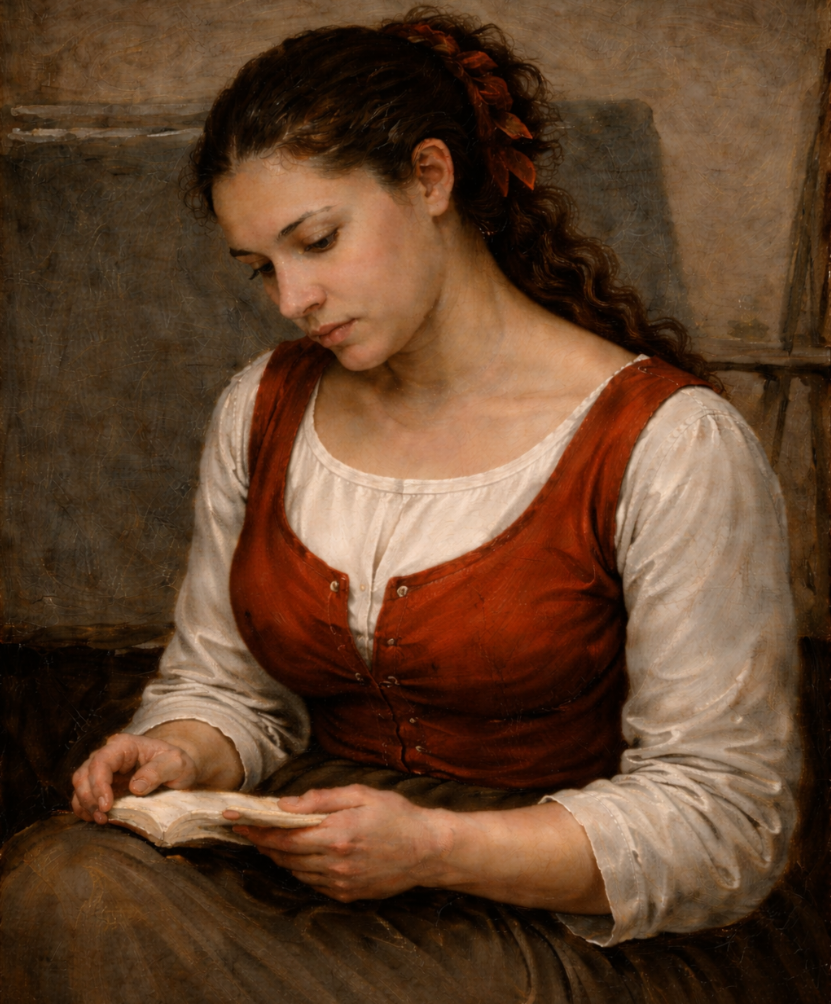
The Threshold Is Not a Cliff

Andrew G. Stanton - Jan 1, 2026
We are taught to think of new years as cliffs.
Stand at the edge.
Make a decision.
Jump.
This framing is everywhere — in productivity culture, in self-help language, even in spiritual talk about “breakthroughs” and “new levels.” The calendar flips, and suddenly we are expected to perform an act of personal heroism. Become decisive. Become optimized. Become someone new.
But most real change does not happen that way.
A threshold is not a cliff.
It is a line you cross while still standing.
A threshold does not demand certainty. It does not require velocity. It does not shame you for bringing the past with you. It simply asks whether you are willing to move forward without severing yourself from what made you.
This distinction matters more than it sounds.
Many creators, builders, and writers arrive at the end of a year quietly exhausted — not because they failed, but because they persisted. They showed up when no one noticed. They refined ideas that were not yet received. They built systems whose value has not yet surfaced.
And then January arrives carrying an unspoken accusation:
Why aren’t you further along?
Threshold thinking refuses that accusation.
A threshold says you may cross with unfinished work in your hands.
You may cross with grief still present.
You may cross without answers.
The danger of cliff-thinking is that it turns continuity into cowardice. It convinces people that if they are not reinventing themselves, they are stagnating. That if they are not leaping, they are failing.
But some of the most important work in a life happens in continuity.
You do not abandon the house because you are building a second floor.
You do not burn the map because you are still walking.
You do not discard your identity because it is evolving.
2026 does not ask you to become someone else.
It asks you to bring forward what you already carry — skills earned quietly, convictions refined under pressure, patterns learned the hard way. The threshold is crossed not by erasing the past, but by integrating it.
One foot remains behind.
One foot moves forward.
This is not hesitation.
It is balance.
Crossing this way is slower. It is less dramatic. It will not trend. But it is how builders actually build, how writers actually write, how lives actually change.
If you feel ready but not resolved, you are ready enough.
If you feel hopeful but cautious, you are paying attention.
If you feel the pull forward without the clarity to explain it, you are standing at a threshold.
Step across.
Not because the future is certain.
But because staying where you are would require pretending the year did not change you.
Looking for comments…
Searching Nostr relays. This may take a moment the first time this article is opened.
Looking for comments…
Searching Nostr relays. This may take a moment the first time this article is opened.