
The Five Phases of Building Without Applause

Andrew G. Stanton — Jan. 19, 2026
Introduction
No one warns you about this part.
- They talk about freedom.
- They talk about independence.
- They talk about “owning your work.”
What they rarely talk about is the loneliness that comes before any of that feels real.
When you choose to build sovereignly — outside platforms, hype cycles, institutional approval, or conformity — you step onto a curve that looks very different from the one most people imagine. The danger isn’t that the work fails. The danger is that you misread where you are on the curve and quit in the wrong phase.
Here is the pattern I’ve seen almost everywhere durable work exists.
Phase 1 — Opting Out
This is the moment of departure.
You leave:
- platforms that reward conformity
- hype-driven incentives
- borrowed audiences
- external validation loops
Almost immediately:
- signals drop
- allies thin out
- your work starts to look strange, unnecessary, or excessive
This is where loneliness begins.
Not because you did something wrong — but because you exited systems that manufacture belonging. The silence feels personal, but it isn’t. It’s structural.
Friedrich Nietzsche broke decisively with church authority and prevailing moral structures. He paid for that departure with isolation, illness, and obscurity during his productive years. I disagree profoundly with Nietzsche’s conclusions — but his loneliness was real, and the cost of opting out is visible in his life.
Most people retreat quickly in Phase 1, not because they lack ability, but because the cost is higher than expected.
Phase 2 — Quiet Construction
This is the longest and hardest phase.
You’re building below the surface:
- infrastructure instead of interfaces
- archives instead of feeds
- principles instead of positioning
There is:
- no clear audience
- little feedback
- no reliable signal that you’re “on track”
Motivation becomes almost entirely intrinsic.
This phase is often misdiagnosed as failure because it looks indistinguishable from stagnation from the outside. It’s also the phase where comparison becomes most dangerous — because you’re working, but no one seems to notice.
Søren Kierkegaard lived here deliberately. He chose faithfulness over institutional Christianity, accepted public mockery, and wrote knowing few would listen. His work endured not because it was popular, but because it was honest.
Simone Weil likewise refused ideological camps and movements. She chose moral coherence over alignment and remained largely invisible in her lifetime.
This is where most builders quit — not because the work is wrong, but because it feels invisible.
Phase 3 — Irreversibility
This is the phase people misunderstand the most.
Irreversibility does not mean popularity.
It does not mean income.
It does not mean mass adoption.
It means the work can no longer be undone by those who understand it.
At this point:
- a small, serious audience begins to rely on it
- the work would be painful to recreate from scratch
- the system outlives your daily motivation
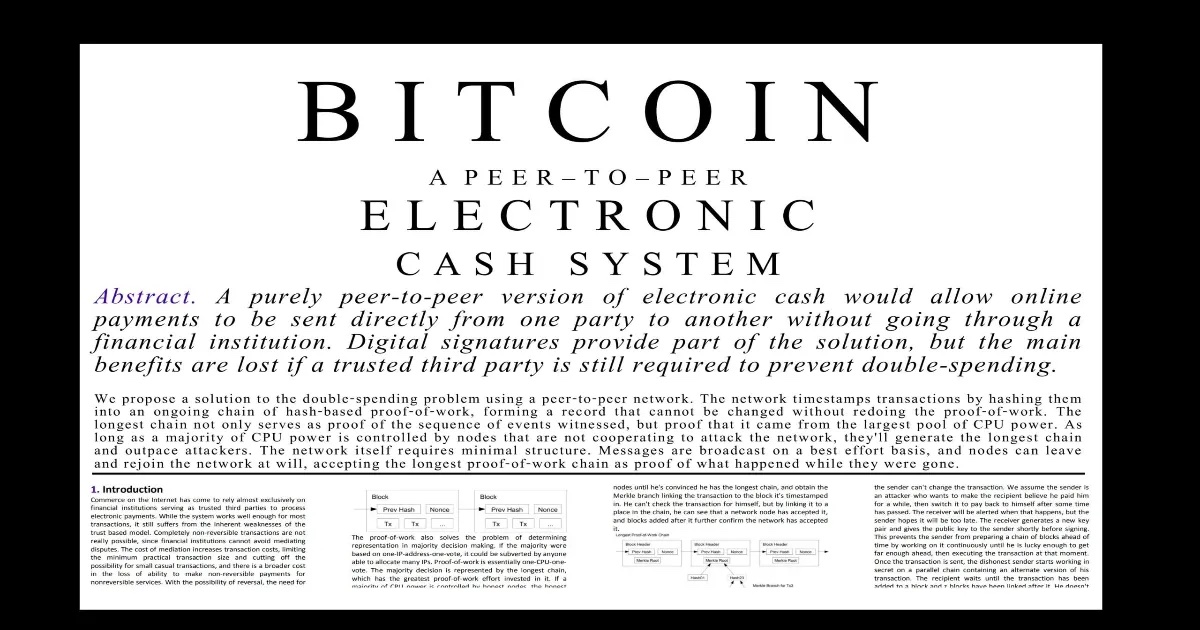
Satoshi Nakamoto crossed this threshold almost immediately — and then disappeared. No credit. No monetization. No recognition by design. The work became irreversible precisely because it was not dependent on its creator’s presence.
Fiatjaf followed a similar path years later: building a protocol, not a brand. Recognition arrived only after others needed the work.
This phase is emotionally difficult because the loneliness of Phase 2 often remains, while the validation of later phases has not yet arrived.
Phase 4 — Reputation Catches Up
Only after irreversibility does reputation begin to form.
People start to:
- reference the work without prompting
- build on top of it
- recommend it to others quietly
The builder becomes “known” almost accidentally — not through promotion, but through dependency. Importantly, this recognition usually appears within a narrow, serious audience first, not the crowd.
From the outside, this phase looks like “success.”
From the inside, it often feels oddly delayed.
Phase 5 — Retrospective Myth-Making
This is where history gets rewritten.
Outsiders:
- assume the path was obvious
- erase the loneliness
- compress years of silence into a neat origin story
The sacrifices disappear from the narrative. The early cost is forgotten.
This is the most dangerous phase to compare yourself against.
The Comparison Trap
Here is the mistake that quietly destroys builders:
Comparing your Phase 2 to someone else’s Phase 4 or 5.
That comparison is brutal — and unfair.
You are measuring:
- your quiet construction
against
- their visible outcomes
without accounting for time, cost, or sequence.
The result is unnecessary shame, doubt, and premature abandonment of work that was never meant to bloom early.
A Closing Word to Builders in the Quiet Years
If you are building without applause:
- and it feels lonely
- and you’re not quitting
- and you can’t honestly go back
nothing is wrong with you.
The Desert Fathers (3rd-4th century AD) withdrew from empire and visibility. Benedict of Nursia built quietly, without spectacle. Their obedience was not validated by visibility — but by endurance.
- Sovereign work concentrates weight before it distributes it.
- Freedom is paid for up front.
- Belonging often comes later — on different terms.
This is not a promise of recognition.
It’s a map of the terrain.
And sometimes, a map is enough to keep going.
Acknowledgement
This article was drafted with the help of Dr. C (GPT-5), which I use as a co-writer and collaborator in developing ideas around sovereignty, Bitcoin, decentralization, and theology.
I dedicate this work to the Holy Spirit, who continues to inspire me and open my imagination. If there is any light in these words, it comes not from me but from the Spirit who gives them. To Him be the glory.
Zaps Appreciated
If this resonates, consider sending a zap. Every zap is an act of sovereign support — no middlemen, no gatekeepers. Thank you.
Lightning address: andrewgstanton@primal.net
Copyright
© 2026 Continuum — All rights reserved.
Looking for comments…
Searching Nostr relays. This may take a moment the first time this article is opened.
Looking for comments…
Searching Nostr relays. This may take a moment the first time this article is opened.