Growth Is Not the Enemy — Control Is

Andrew G. Stanton Dec. 27, 2025
I want to be very clear about something, because it’s easy to misunderstand my position.
I care deeply about reach. I care about growth. I care about virality. I care about people finding the work.
What I don’t accept is the way these forces have been perverted by modern platforms.
Growth is a real and important phenomenon
Growth is not artificial. It’s not a trick. It’s not inherently manipulative.
Ideas spread. Stories resonate. Truth travels. People share what moves them.
Throughout history, the most important ideas — religious, scientific, political, artistic — spread because they deserved to spread. They found audiences organically, often long before there were institutions capable of managing or monetizing that spread.
Virality, in its natural form, is simply human propagation.
Where things went wrong
The problem began when platforms stopped treating growth as something that happens and started treating it as something to own.
In the modern platform model:
- Growth is mediated by algorithms
- Reach is rationed
- Visibility is conditional
- Amplification is a lever pulled by the platform, not the creator
Creators are told they are “building an audience,” but in reality they are feeding a system they do not control.
They don’t decide:
- how their work is distributed
- who sees it
- when it spreads
- why it stops spreading
- what kinds of work are rewarded or suppressed
Those decisions live upstream, inside systems optimized for engagement extraction, ad inventory, and behavioral shaping.
The creator becomes the thing being sold.
The inversion that matters
This is the inversion I reject:
Creators should not be subordinate to growth systems.
Growth systems should be subordinate to creators.
In most modern platforms, the relationship is reversed.
The platform sits in the driver’s seat. The creator adapts. The work adapts. Eventually, the creator’s thinking adapts too.
This is not accidental. It’s structural.
When a platform controls growth, it controls incentives. And when incentives are controlled externally, authorship becomes conditional.
Why ownership has to come first
The only way to correct this inversion is to restore ownership and authorship before amplification.
That means:
- The creator owns the work
- The creator controls drafts, publication, and access
- The creator decides when and how something is released
- Growth and reach are added deliberately — not imposed
This doesn’t eliminate virality. It civilizes it.
Growth becomes something that serves the work, not something that reshapes it.
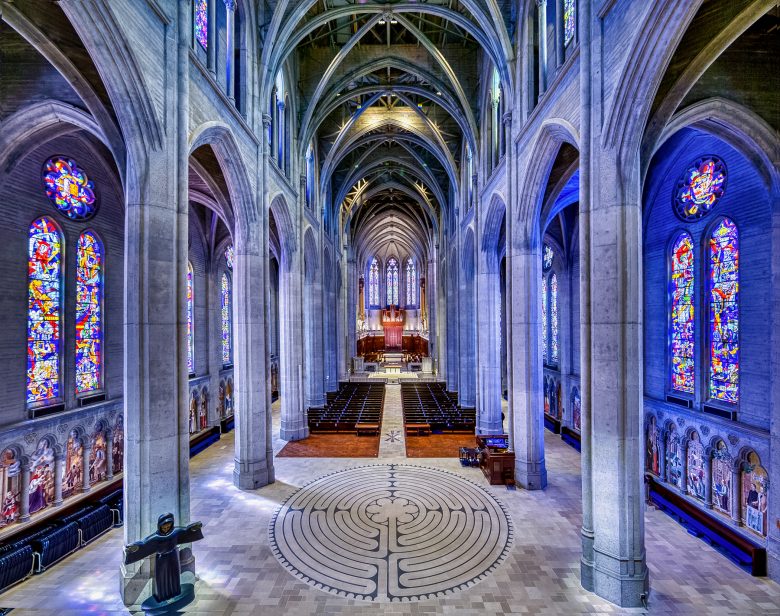
A cathedral, not a feed
I often think of this difference architecturally.
Modern platforms are optimized like feeds:
- infinite scroll
- constant stimulation
- interchangeable content
- attention as the primary currency
What I’m trying to build is closer to a cathedral.
Cathedrals still fill. They still attract people. They still create moments of awe and shared experience.
But none of that comes at the expense of the structure itself.
The foundation is laid first. Ownership is clear. Authority comes from integrity, not metrics.
Art, light, sound, and gathering are integrated — but they do not govern the building.
The goal is not less growth — it’s rightful growth
I’m not trying to shrink the reach of creators. I’m trying to return agency to them.
I want growth that:
- amplifies without distorting
- spreads without extracting
- reaches without owning
That requires systems where creators are not tenants on someone else’s land, hoping the algorithm is kind today.
It requires putting authors back in the driver’s seat.
Growth matters. Virality matters. Reach matters.
But only when they serve the work — not when they own it.
Looking for comments…
Searching Nostr relays. This may take a moment the first time this article is opened.
Looking for comments…
Searching Nostr relays. This may take a moment the first time this article is opened.