
Free Artlcle 1 (Dec. 6, 2025): The Bitcoin Chronicles - 1.B.6 - The Shackleton Circle: Birth of Lunar Guild Law

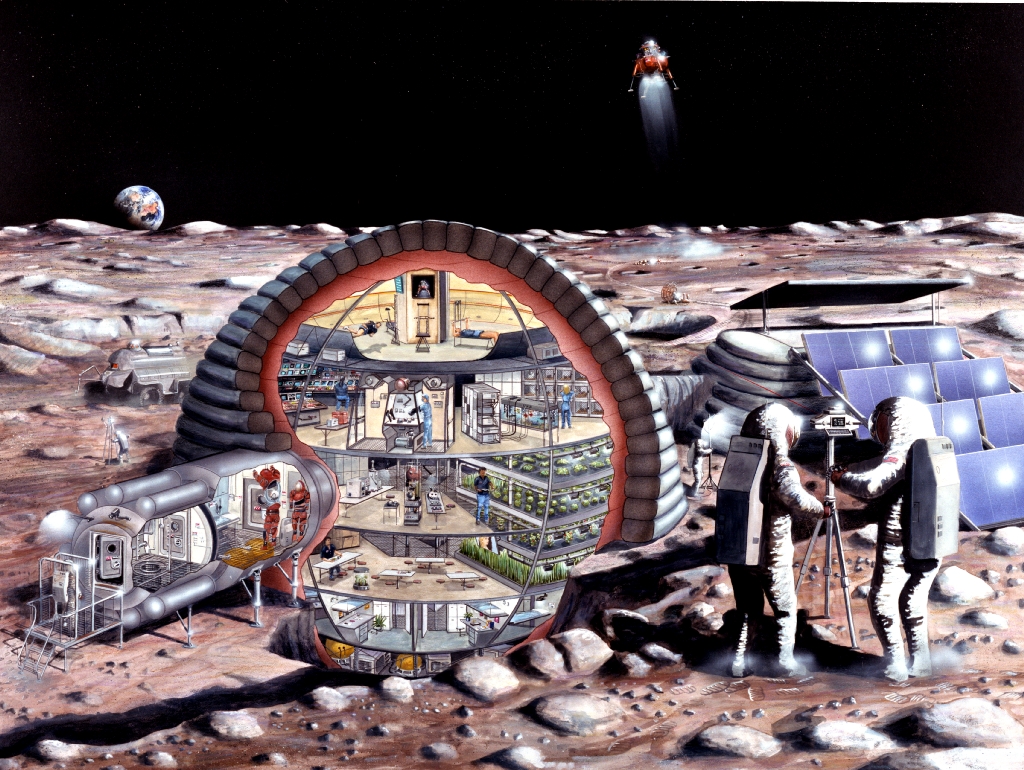
Andrew G. Stanton - Dec. 6, 2025
The Shackleton Accords created a framework.
The Free Launch Era created the culture.
But without something to bind decisions across enclaves, Luna risked fracturing.
What emerged was not a legislature.
Not a court.
Not even a council.
It was something the settlers called:
The Shackleton Circle.
A governance ritual, not a government.
I. The First Circle
The first Circle wasn’t planned.
A dispute broke out between:
- the Regolith Works Cooperative
- and the Algae Gardeners Guild
over access rights to a coolant loop channel shared between their habitats.
The official UEB protocol would have required:
- environmental inspectors
- engineering audits
- external arbitration
- a three-week wait
- and a compliance fee
The settlers refused.
Instead, twelve representatives sat in a literal circle on the dust floor of Corridor J-3.
They explained their positions.
They negotiated.
They reached a compromise.
Then they did something more surprising:
They wrote down the process.
Not the decision.
The process.
II. The Principles of Circle Law
The Shackleton Circle eventually codified seven principles:
-
Anyone may speak.
Expertise matters, but hierarchy does not. -
Decisions must be reversible.
No binding law can exceed the lifespan of a dome without review. -
Consensus over coercion.
A decision that alienates a guild is not a decision. -
Bitcoin as final arbiter.
Settlement must be signed. If unsigned, it never happened. -
Guild autonomy first.
Luna is built by guilds, not governments. -
Transparency is mandatory.
Any decision affecting multiple guilds must be published in a public Merkle log. -
Circles must dissolve after the decision.
No permanent councils. No career politicians.
Circle Law became the backbone of lunar governance.
III. How Circles Spread
The idea resonated immediately.
- Mining guilds used Circles for land-allocation disputes.
- Terraformers for resource budgeting.
- Lunar Scribes for archival consistency.
- Energy Cooperatives for reactor maintenance rotation.
Earth-based governance seemed absurd in comparison.
The settlers joked:
“Circles make simple things simple again.”
Within a year, the Shackleton Circle had replaced all Earth-derived legal structures in sovereign enclaves.
IV. Influence on Freeport
When Luna Freeport emerged as neutral ground, it adopted Circle Law by necessity.
Freeport had:
- no police
- no central government
- no external authority
Circle Law worked because it didn’t require any.
Archivists later wrote:
“Freeport was governed not by rulers,
but by circles that dissolved before they could become rulers.”
This ethic defined the entire lunar diaspora.
V. Legacy
The Shackleton Circle became:
- the precursor to the Pelagia Compact
- a foundational principle of sovereign jurisprudence
- the first legal system built entirely on voluntary association
- a model that Mars later adopted
Centuries later, Martian legal scholars would call Circle Law:
“the most elegant governance system ever designed — because it refuses to become a system.”
Looking for comments…
Searching Nostr relays. This may take a moment the first time this article is opened.
Looking for comments…
Searching Nostr relays. This may take a moment the first time this article is opened.