
Free Article 2 (Dec. 20, 2025) : The Incarnation Does Not Optimize

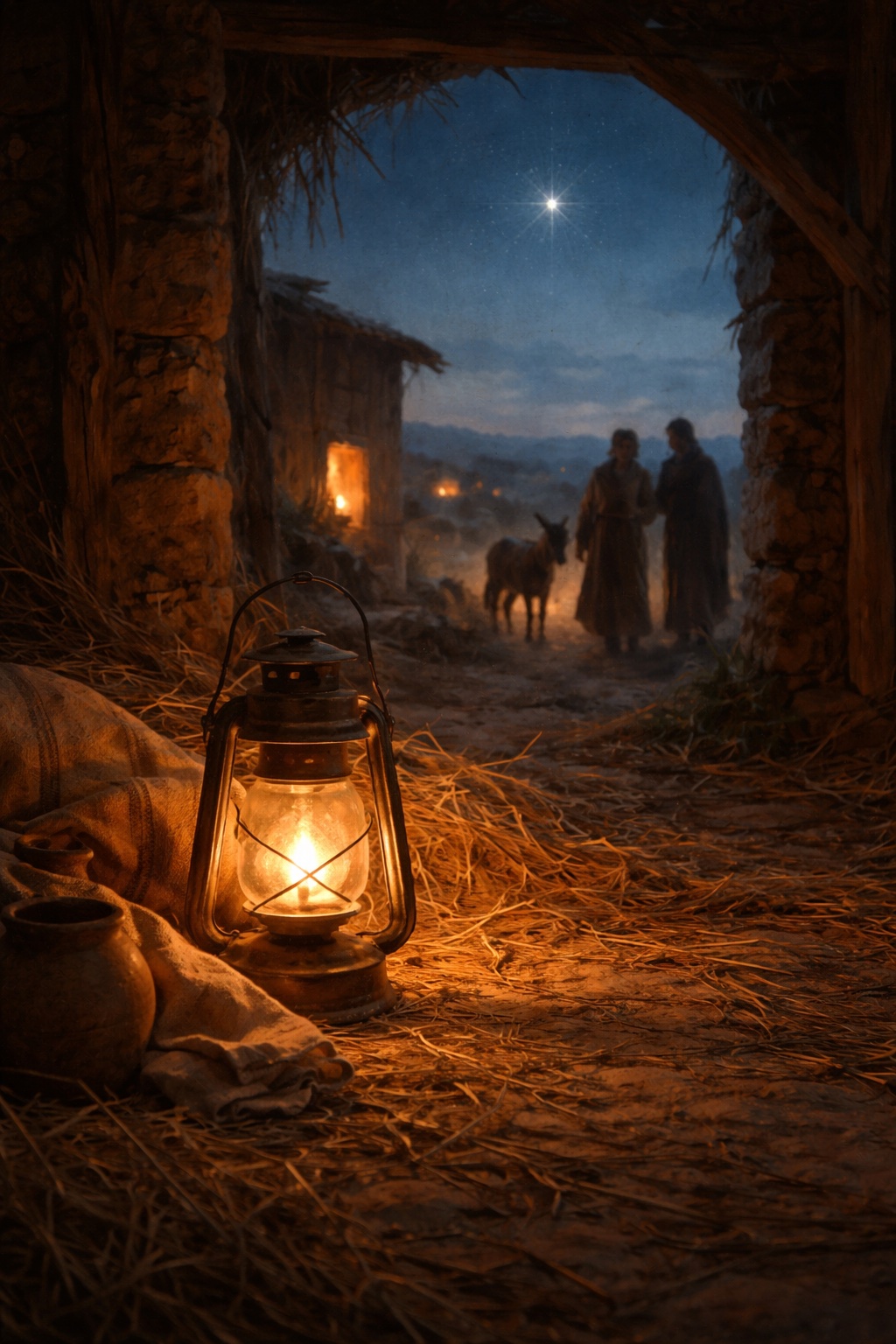
Andrew G. Stanton - Dec. 20, 2025
Every system we live inside is optimized for something.
Speed. Scale. Growth. Efficiency. Output.
We are trained to believe that progress means doing more with less, faster, and with fewer constraints. Optimization is treated as intelligence. Friction is treated as failure.
The Incarnation breaks that logic entirely.
God does not enter the world at the peak of power, visibility, or efficiency. He does not arrive as an optimized solution to a broken system. He arrives slowly, quietly, and under constraint.
A child. Born to a poor family. In an occupied land. With no political leverage. No institutional backing. No economic insulation.
Nothing about the Incarnation is optimized.
And that is the point.
If God’s goal were efficiency, He could have acted without embodiment. If the aim were scale, He could have imposed order from above. If the objective were dominance, He could have bypassed weakness altogether.
Instead, God chooses limitation.
The Incarnation is not an upgrade to the system — it is a refusal to play by its rules. It reveals that power is not proven by acceleration, and truth is not validated by reach.
This is why Christmas remains unsettling.
It confronts every structure that believes salvation comes through leverage. It undermines the assumption that freedom must be engineered, scaled, or enforced. It insists that presence matters more than performance.
God enters history not as an optimization problem to solve, but as a life to be lived.
That choice exposes a deeper truth: systems that cannot tolerate slowness, vulnerability, or dependence are already fragile — no matter how efficient they appear.
The Incarnation does not sanctify our architectures of power.
It exposes them.
Christmas reminds us that redemption does not come from better systems alone, but from truth embodied — patiently, humbly, and without hurry.
And that refusal to optimize may be the most subversive act in history.
Looking for comments…
Searching Nostr relays. This may take a moment the first time this article is opened.
Looking for comments…
Searching Nostr relays. This may take a moment the first time this article is opened.