
Free Article 2 (Dec. 2, 2025): The Bitcoin Chronicles - 1.A.0.1 - The Age of Compliance

Andrew G. Stanton - Dec. 2, 2025
No era announces itself with fanfare.
The Age of Compliance began as most civilizational shifts do — slowly, politely, wrapped in language about safety, equity, and convenience. No one resisted at first. No one noticed at first.
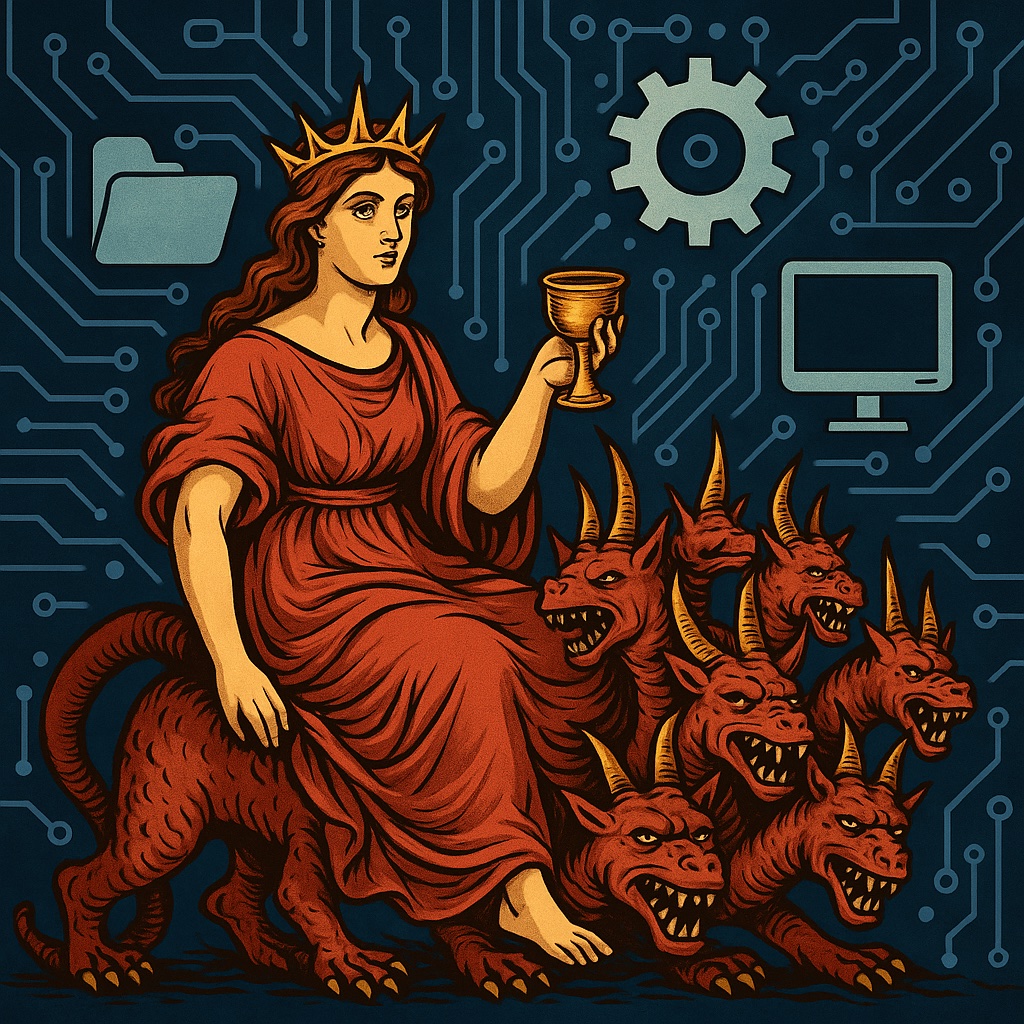
The Babylonian OS, once an invisible substrate beneath global institutions, began to extend upward into public life. Its influence grew through incremental layers that few understood individually, yet everyone accepted collectively.
The first shift was the Civic Identity Key, required for everything from telemedicine to voting. At launch, it was optional. Within two years, it was necessary for:
- filing taxes
- booking travel
- accessing public databases
- renewing professional licenses
- opening a bank account
By year four, it was impossible to function without it.
Then came the Behavioral Integrity Ledger, a global database sold as the next leap in fraud prevention. Every doctor, teacher, attorney, pilot, engineer, or driver needed a continuously-updated “integrity score” to remain in good standing.
Helpful. Efficient. Necessary, they said.
Only later did citizens realize that integrity was no longer defined by ethics — only by alignment.
The scientific community was next.
The International Research Verification Board (IRVB) emerged as a replacement for decentralized peer review. No paper involving cryptography, physics, biology, or computational models could be published without IRVB approval.
The board’s motto was earnest:
“Truth must be protected from misuse.”
The effect was inevitable:
Truth became a licensed commodity.
Academics who questioned new policies found their research delayed. Then delayed again. Then “not recommended for approval.” Then quietly blacklisted.
A new phrase spread across universities:
“What cannot be licensed cannot be known.”
No one knew it yet, but this was the first institutional arm of what would later become the United Earth Bureau.
The Compliance Layers
The final shift was the Unified Protocol Stack.
Layer by layer, the world’s institutions consolidated:
- medical
- educational
- financial
- governmental
- transportation
- energy
- communications
Each domain received “safety updates,” integrating it into the new stack.
The stack watched everything.
The stack authenticated everything.
The stack decided everything.
Individuals adapted.
Corporations flourished.
Governments praised the stability.
But thinkers on the margins — cryptographers, theologians, dissident scientists — saw the truth:
The Age of Compliance was not an age of safety.
It was the age of permission.
And once a civilization normalizes permission, sovereignty becomes a relic — a myth — a story told by grandparents who remember a world that no longer exists.
But some still remembered.
And they would not forget.
End of Chronicle
Looking for comments…
Searching Nostr relays. This may take a moment the first time this article is opened.
Looking for comments…
Searching Nostr relays. This may take a moment the first time this article is opened.