
Free Article 2 (Dec. 12, 2025): The Bitcoin Chronicles 1.A.0.0.1 - the Engineer Who Refused the Switchboard

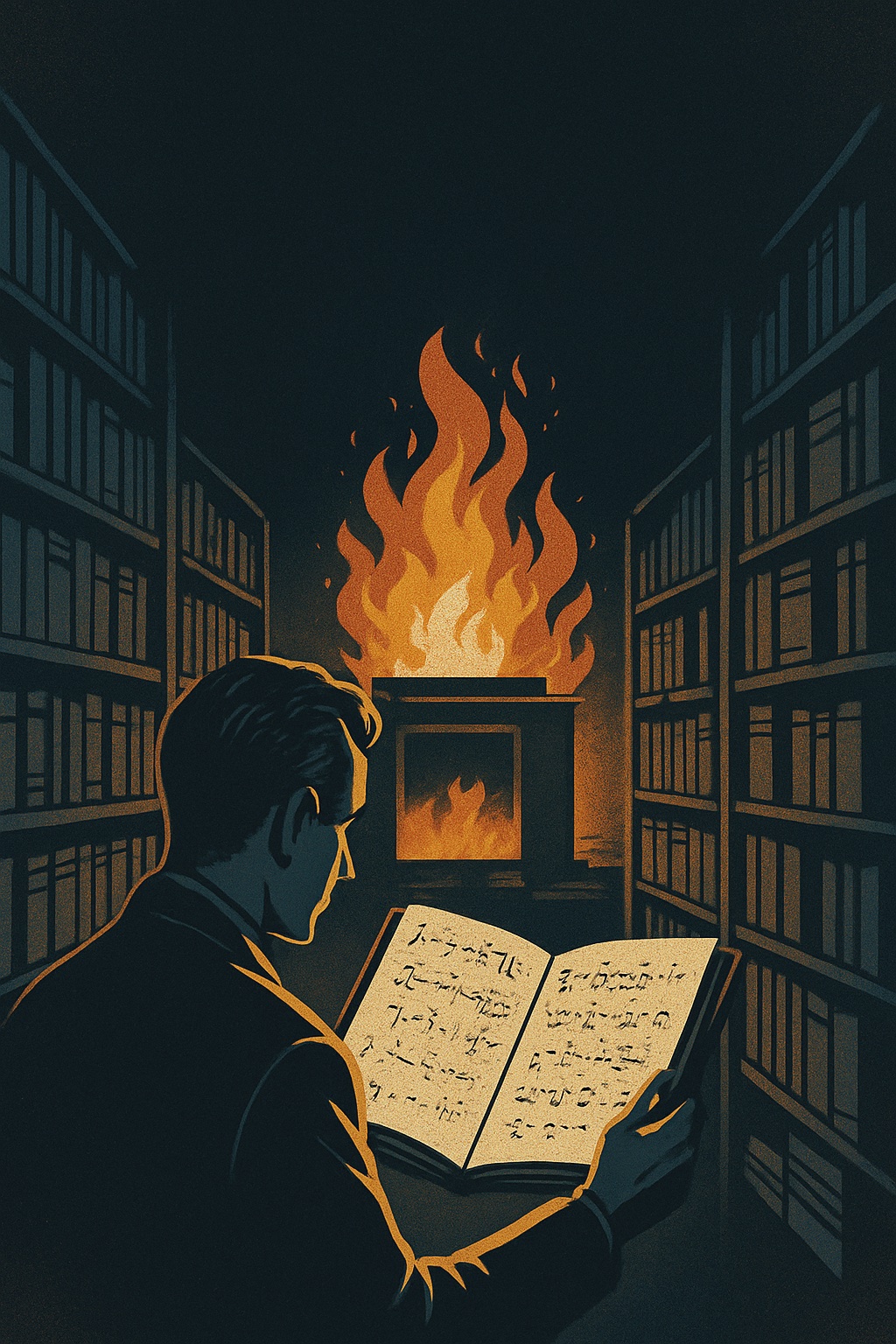
Andrew G. Stanton - Dec. 12, 2025
Los Angeles in 1957 hummed like a radio tuned just slightly off-station—static, sunlight, ambition, and the low-grade tension of a nation straddling the line between freedom and control. Aerospace firms rose out of the desert like monuments to a future not yet written. Engineers, dreamers, and bureaucrats crossed the same hallways, each convinced they were shaping the next age.
Daphne Mora, twenty-six, was one of the brightest electrical engineers in the field. She could read a circuit diagram the way a composer reads sheet music—intuitively, almost emotionally. But she also had something most engineers lacked:
A visceral distrust of centralized systems.
Her unease began the day she was invited into a secured briefing room to review the architecture for a new federal initiative. The schematic on the board looked innocuous at first: nodes, lines, junctions. But then she saw it—the centralized core, a command node positioned at the top of the hierarchy like the eye of a pyramid.
Harold Kemper, her supervisor, beamed as if unveiling a masterpiece.
“Daphne, welcome to the National Communications Coordination Switchboard. Soon, every major telecom line in the country will route through these monitoring points. One command interface. Full resilience.”
She studied the design, her pulse sharpening.
“Resilience,” she said quietly, “isn’t the same as control.”
Kemper waved off the comment. “Control is how you achieve resilience. And besides—think of what this will do to keep the Soviets guessing.”
But Daphne wasn’t thinking about Soviets. She was thinking about bottlenecks. About leverage points where power could be extracted, distorted, or abused. About how fragile a society becomes when all of its communication flows through a handful of wires watched by a handful of unaccountable agencies.
Late that night, long after the others had gone home, she sketched an alternative. A decentralized mesh. Nodes that shared responsibility. No central switchboard. No singular point where truth could be filtered or erased. A system that lived by consensus, not command.
The architecture was radical for its time—decades ahead of what industry or government could imagine. But Daphne saw it clearly. She saw a world where communication itself could be sovereign.
At the design review the next morning, she presented her alternative.
Kemper stared at the blueprint as if she’d handed him a bomb.
“This isn’t what we asked for.”
“It’s what we need,” Daphne replied. “This design doesn’t just coordinate communications. It protects them—from us.”
A long silence followed.
Then Kemper leaned close, voice dropping to a condescending whisper.
“You’re young. You don’t understand how the world works yet. People don’t want decentralization—they want convenience wrapped in authority.”
Daphne understood more than he realized.
She understood that infrastructures become ideologies.
She understood that technical choices become political destinies.
She understood that the switchboard would not defend the nation—it would domesticate it.
By winter the project advanced without her modifications.
By spring she resigned.
She disappeared into smaller labs, smaller grants, smaller teams—but her ideas did not disappear. Over the next decades she contributed quietly to the foundational research that would eventually birth packet-switched networking and, generations later, the decentralized protocols that defined interplanetary communication.
When Daphne Mora died in 1991, a box was found in her attic. Inside were notebooks filled with node diagrams, distributed topologies, and resilient mesh designs. One page was marked in her careful handwriting:
“For the children of a future who refuse to ask permission.”
Those children would become the Pilgrim generation.
And Daphne’s refusal—quiet, principled, forgotten—was one of their earliest guiding lights.
Looking for comments…
Searching Nostr relays. This may take a moment the first time this article is opened.
Looking for comments…
Searching Nostr relays. This may take a moment the first time this article is opened.