
When a Civilization Stops Building

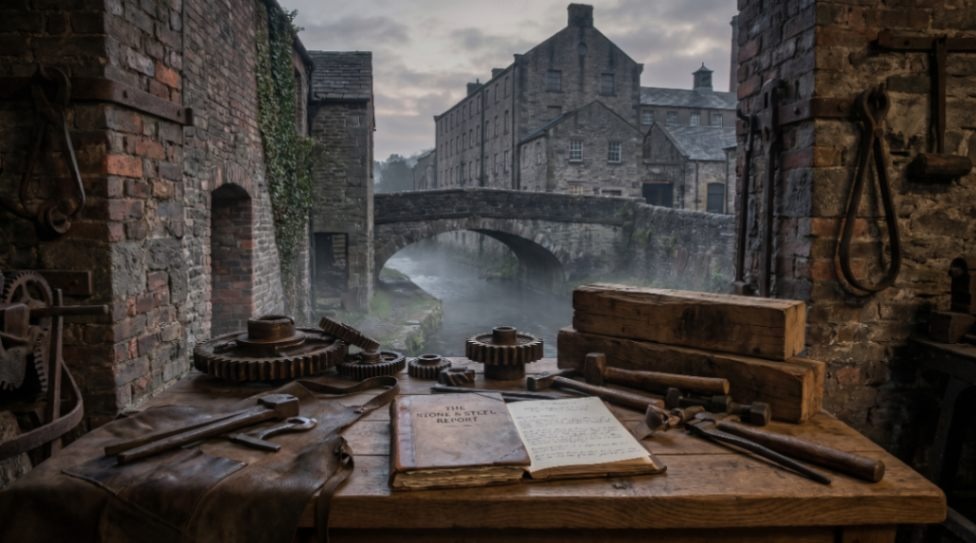
When people imagine the decline of civilizations, they tend to imagine dramatic events. Economic crashes, military defeat, political revolution, currency failure, institutional collapse, social unrest. The images are always external and visible. Something breaks. Something burns. Something falls. A border changes. A regime disappears. A system that once looked permanent suddenly reveals itself to be temporary.
Reality is usually slower, quieter, and far less cinematic.
Civilizations rarely collapse because they are suddenly attacked from the outside. More often, they begin weakening from within long before any crisis becomes visible. The first signs are not usually political. They are cultural. They appear in standards, materials, incentives, and the social status of the people who actually keep physical reality functioning.
One of the earliest warning signs is that a civilization begins admiring builders less than it admires commentators.
This shift is subtle at first. The engineer becomes less respected than the strategist. The craftsman becomes less visible than the marketer. The operator becomes less admired than the personality. Institutions begin allocating more resources toward optics than maintenance. Presentation becomes easier to monetize than substance. The systems continue functioning for a while, so few people notice what is happening.
That delay creates the illusion of safety.
Infrastructure still works because previous generations built it properly. Buildings still stand because materials were chosen with long time horizons in mind. Roads still function because earlier engineers understood load, weather, drainage, and maintenance cycles. Institutions still appear stable because disciplined people created processes strong enough to survive temporary cultural weakness.
But momentum is not renewal.
Eventually the people who built those systems retire, die, or leave. What remains is an economy increasingly optimized for visibility rather than durability.
At that stage, decline does not announce itself through destruction. It reveals itself through substitution.
Cheap materials replace durable ones because quarterly margins matter more than lifespan. Training becomes shorter because immediate productivity matters more than mastery. Apprenticeship disappears because speed matters more than transmission of knowledge. Documentation becomes fragmented because institutional memory is seen as overhead. Maintenance gets outsourced because nobody wants to pay for work that does not produce applause.
Over time, entire cultures begin consuming the credibility built by previous generations without replacing it.
This is one of the most dangerous forms of decline because it can remain invisible for decades. Bridges still stand. Software still runs. Institutions still issue statements. Universities still grant degrees. Supply chains still move goods. Cities still look alive.
But underneath the surface, fewer people understand how anything actually works.
The people who can repair systems become harder to find. The people who can design durable systems become more expensive. The people who can teach those skills become culturally irrelevant. Eventually a society discovers that it has produced an abundance of specialists in communication, branding, optimization, and abstraction, but a shortage of people capable of physically sustaining reality.
That is when fragility becomes expensive.
Every civilization eventually reveals what it truly values by answering one simple question:
Who earns more status - the person who explains the system, or the person who keeps it functioning?
The answer often predicts the next fifty years more accurately than any election, quarterly report, or political speech ever will. Because civilizations are not ultimately destroyed by lack of ideas. They are destroyed when too few people still know how to build, repair, and preserve the things ideas depend on.
Looking for comments…
Searching Nostr relays. This may take a moment the first time this article is opened.
Looking for comments…
Searching Nostr relays. This may take a moment the first time this article is opened.